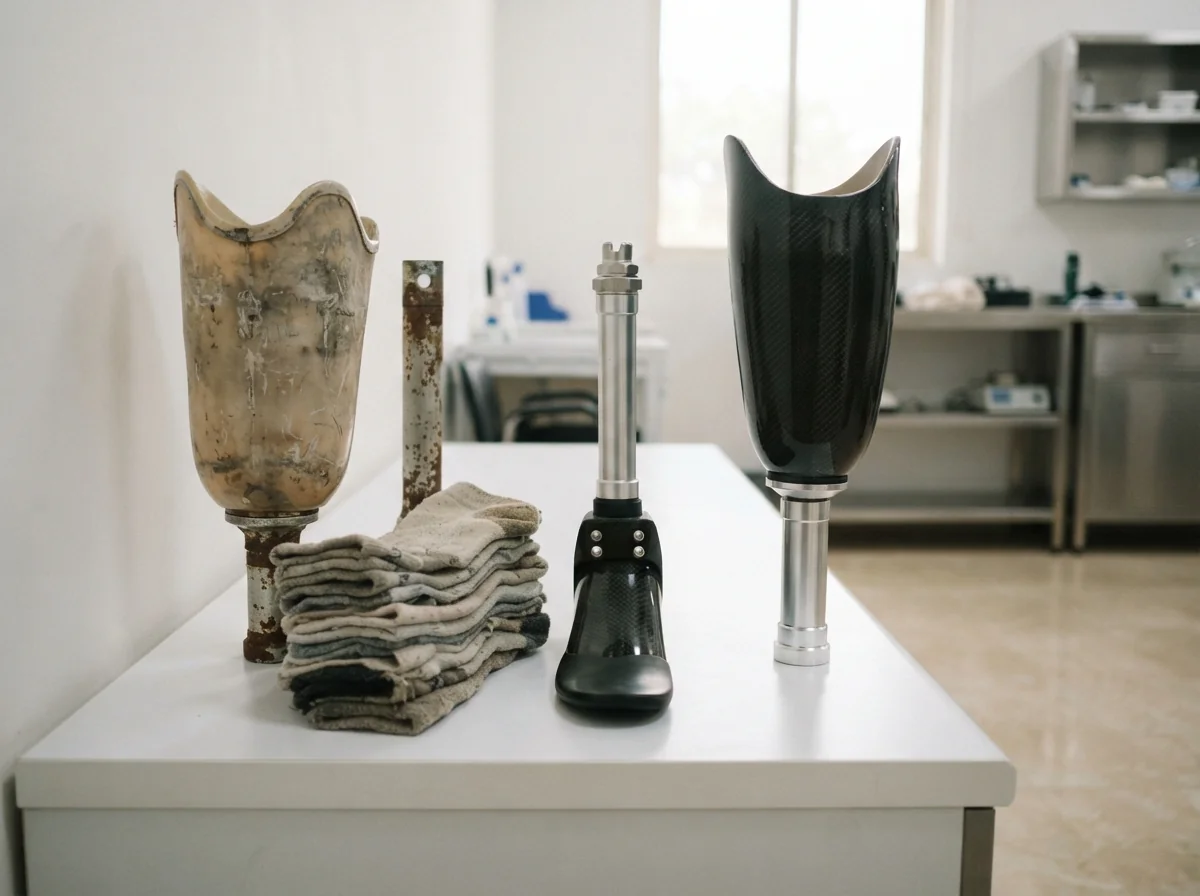
Replacement socket for an artificial leg
Your stump changes. The socket, being rigid, does not. When the two no longer match, you do not need a new leg. You need a new socket, fitted onto the parts you already own.
When does a prosthetic socket need replacing?
A socket needs replacing when the stump has changed so much that socks and padding can no longer restore a safe fit. Typical signs are wearing ten or more ply of socks, the stump end hitting the bottom, the leg rotating or dropping, new skin sores, or a weight change of about five kilos. In the first year after amputation this is expected.
Is it time? A simple check
Padding or an adjustment may be enough if
- you have gone up only a few ply of socks
- there is one pressure spot and the rest feels good
- the change is recent and may be temporary, such as swelling after illness
- the socket is thermoplastic and can be reheated
A new socket is the proper answer if
- you are at about ten ply or more to feel secure
- the stump sinks to the bottom and the end is sore
- the leg turns on the stump or drops when lifted
- sores keep returning in spite of adjustments
- your weight has changed by about five kilos or more
- the socket is cracked or has been padded many times
Four reasons a stump outgrows or undergrows its socket
The first year
Swelling leaves and unused muscle thins. Nearly every new user needs a second socket between six and eighteen months.
Weight change
The stump gains and loses with the rest of you. Five kilos either way is usually enough to spoil a fit.
Growth
Children need new sockets roughly every twelve to eighteen months, more often when very young.
Health and activity
Dialysis, heart medicines, long illness, or a big increase in walking all change stump volume and muscle.
What you keep, and what is renewed
A modular leg is built so that the socket can be changed without discarding the rest. That is the whole point of the design.
- Kept: the foot, the knee joint, the pylon, adapters and rotation unit, provided they are in safe condition and rated for your weight.
- Renewed: the socket itself, and usually the liner, since it is sized to the stump.
- Checked: every reused part is inspected and serviced while the leg is apart.
- Redone: alignment. A new socket shape changes the geometry, so the leg is realigned as you walk.
This is also a sensible moment to upgrade one part, such as the foot, if your activity has outgrown it.
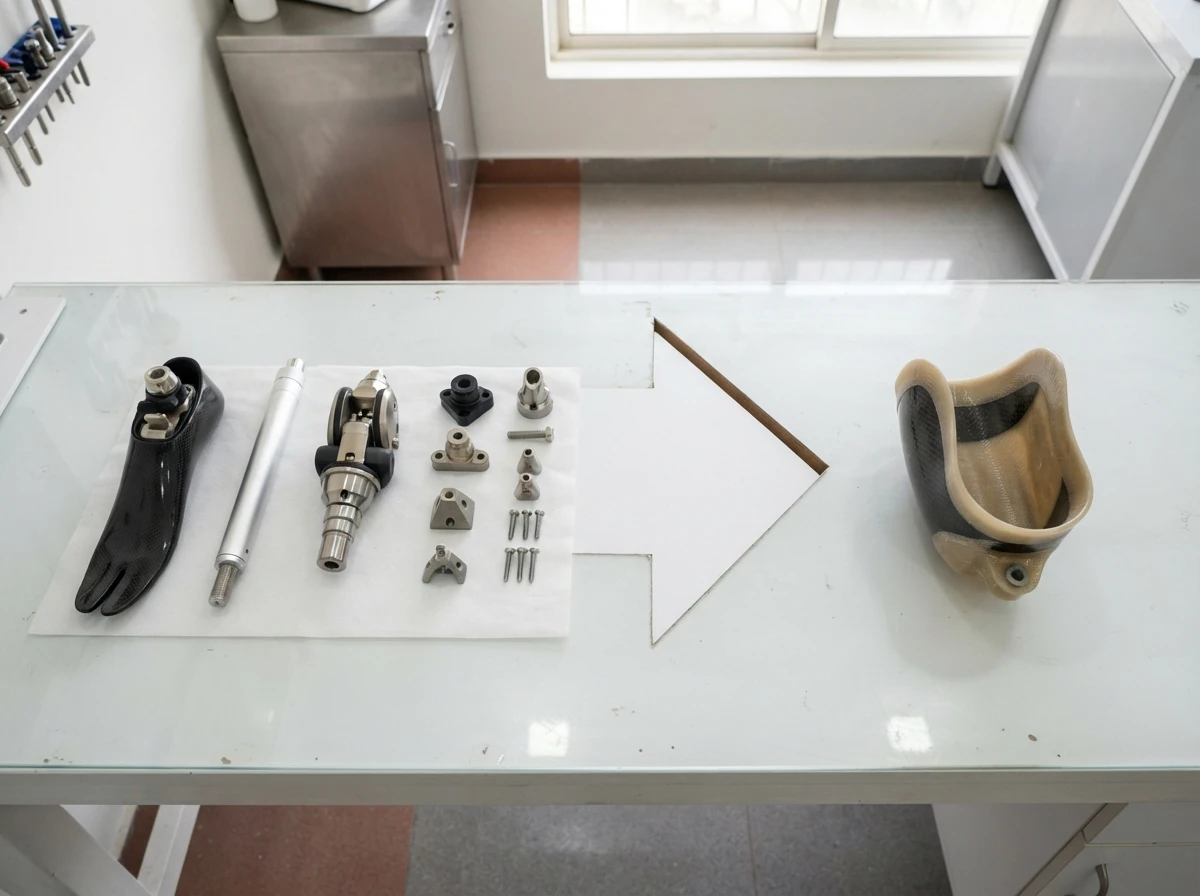
The replacement socket process
- Visit 1
Review and cast
We examine the stump and the old socket together, because the wear marks inside it tell a story. A new cast or scan is taken. You keep wearing your leg.
- Visit 2
Test socket
The clear test socket is mounted on a spare pylon and foot, or briefly on your own parts, and corrected.
- Visit 3
Transfer and align
Your parts are moved onto the new socket, serviced, and the leg is aligned while you walk.
- Follow up
First month check
A short visit to make small adjustments once you have worn it in daily life.
Staying safe in a socket that has become loose
If you cannot replace the socket yet, these steps reduce harm. They are a bridge, not a solution.
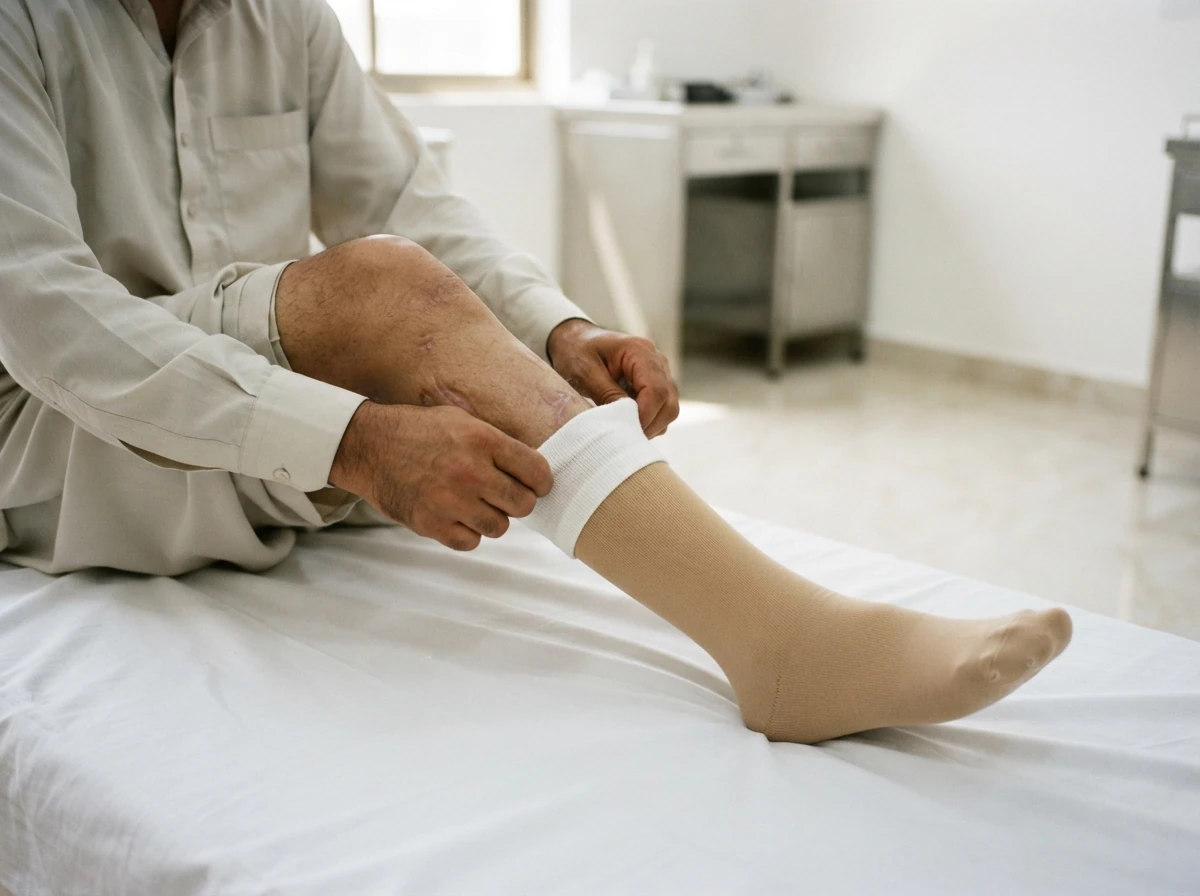
- Add socks to restore a snug fit, and carry a spare for the afternoon.
- If the stump is slim at the end but the top is tight, use a half sock that covers only the lower part.
- Ask us about temporary pads inside the socket. They can buy a few weeks.
- Check your skin every night. A loose socket rubs.
- Shorten your walks. A leg that is dropping with each step is a fall waiting to happen.
Replacement socket prices in Karachi
| Work | Indicative range (PKR) |
|---|---|
| Below knee replacement socket, with test socket and realignment | 40,000 to 150,000 |
| Above knee or through knee replacement socket, with test socket and realignment | 90,000 to 220,000 |
| Carbon or flexible inner socket construction | Add 30,000 to 80,000 |
| New liner, if required | 15,000 to 120,000 |
| Child replacement socket, reusing parts | 30,000 to 110,000 |
| Service of reused knee and foot | Included |
Compare this with the cost of a complete new leg. For most people a replacement socket is a third to a half of it.
Can I keep using my leg while the new socket is made?
Yes. You wear your current leg until the day the parts are transferred, which is done during a single visit.
My leg was made elsewhere. Can you make a new socket for it?
In most cases, yes. We inspect the parts first. If they are sound and use standard adapters, a new socket can be fitted to them.
How long does a replacement socket take?
One to two weeks for below knee, two to three weeks above the knee, across three visits.
How long will the new socket last?
Once the stump has settled after the first year, a socket commonly lasts two to four years, provided your weight stays steady.
Can the old socket simply be made smaller?
A thermoplastic socket can be reheated and tightened a little, and any socket can be padded. Beyond a point the shape is simply wrong, and padding everywhere creates new pressure points. We will tell you honestly which side of that line you are on.
Start with a free assessment
Tell us the amputation level and the city. We reply with honest guidance and a price range, on the phone or on WhatsApp, at any hour.
- Answered on WhatsApp, 24/7
- First assessment free, no obligation
- Nothing is stored on this website