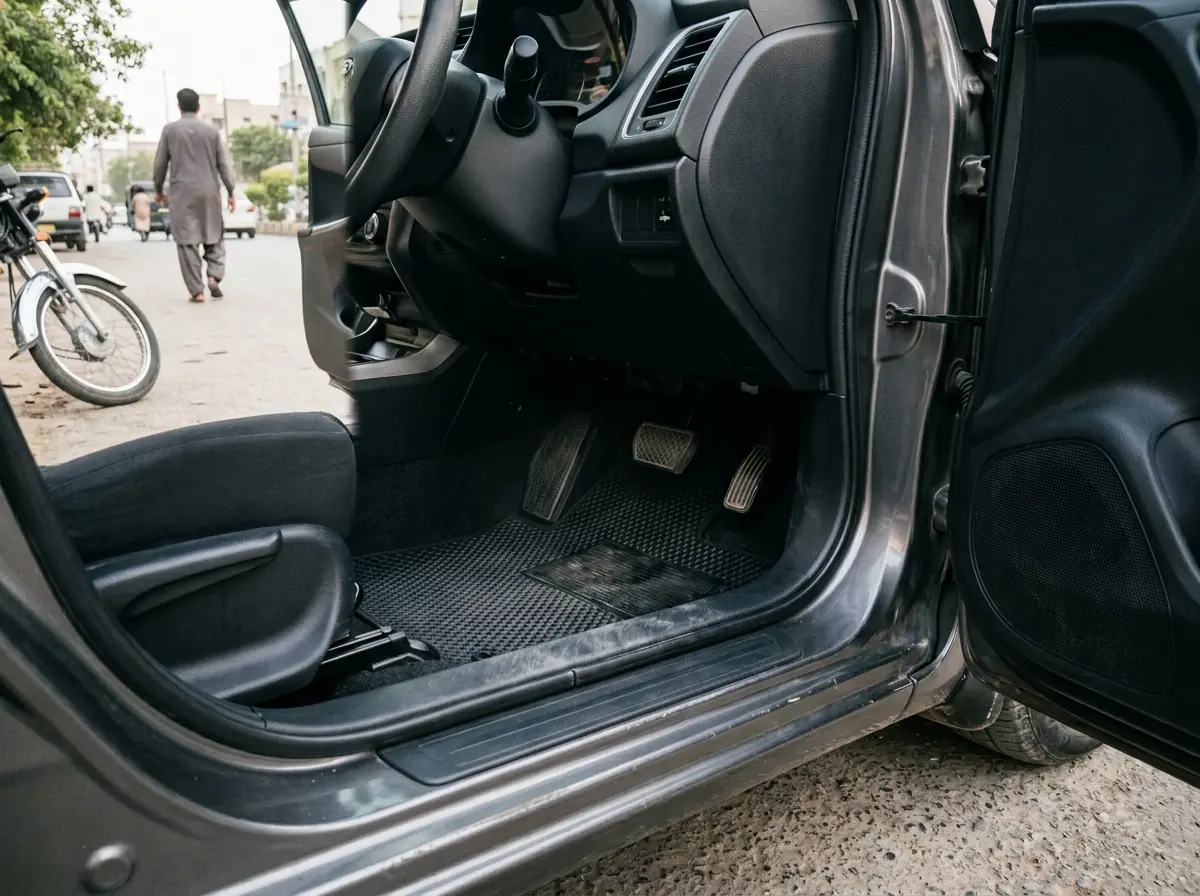
Driving a car with an artificial leg
In a Pakistani car the right foot works the accelerator and the brake, and the left foot works the clutch. So the first two questions are which leg you lost, and whether the car is automatic. For many people the answer is simply: buy an automatic, and drive as before.
Can you drive with a prosthetic leg?
Yes, in most cases. With a left leg amputation and an automatic car, you drive normally with your right foot. With a right leg amputation, the safe options are a left foot accelerator or hand controls, in an automatic. Working a pedal with a prosthetic foot is unreliable because you cannot feel the pedal. Tell the licensing authority about the amputation, and your insurer.
What works for each side and level
| Amputation | Manual car | Automatic car | Adaptation |
|---|---|---|---|
| Left, below knee | Possible for some, working the clutch with the prosthesis. Tiring in Karachi traffic, and the foot can slip. | Drive normally with the right foot | None needed. An automatic is strongly advised. |
| Left, above knee | Not advised | Drive normally with the right foot | None needed |
| Right, below knee | Not advised | Left foot accelerator, or hand controls | A flip up left accelerator pedal with a guard over the original |
| Right, above knee | Not advised | Left foot accelerator, or hand controls | As above |
| Both legs | No | Hand controls | Push and pull hand control for brake and accelerator, and a steering knob |
General guidance only. Fitness to drive is decided by the licensing authority and your doctor.
Pressing a pedal you cannot feel
Some right below knee amputees do drive with the prosthetic foot on the pedals, and you will meet people who say it is fine. We advise against it, and these are the reasons.
- You cannot feel how hard you are pressing. Braking is judged by the car's response alone, which is too slow in an emergency.
- You cannot feel where the foot is. It can sit across both pedals, or slip off the brake.
- The prosthetic ankle does not flex like yours. Moving between pedals means lifting the whole leg from the hip.
- A wide shoe sole can catch under the brake pedal.
- If the socket rotates on the stump, the foot turns with it.
A left foot accelerator costs little compared with a car, and takes a week or two of practice in an empty car park to master.
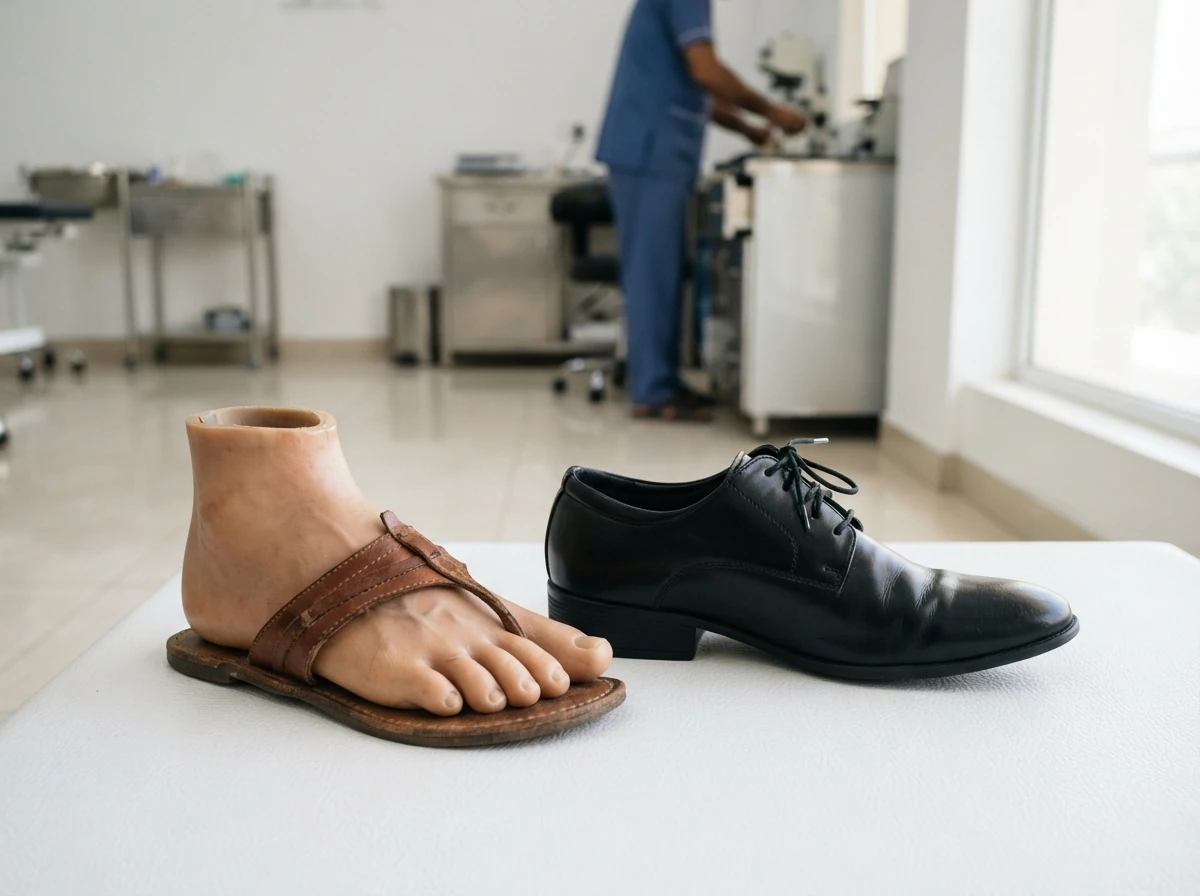
The three adaptations used in Pakistan
Left foot accelerator
A second accelerator pedal to the left of the brake. It flips up out of the way so that other family members drive the car normally. A guard covers the original pedal.
Hand controls
A lever beside the steering wheel: push to brake, pull or twist to accelerate. A spinner knob lets you steer one handed. Needs an automatic gearbox.
Swivel seat or transfer aids
For above knee and both leg amputees, a grab handle on the pillar, a seat that slides fully back, and sometimes a swivel cushion make getting in far easier.
Workshops in Karachi fit these. Have the work done by someone who has done it before, insist that the original controls still work for other drivers, and have the brakes checked afterwards. Practise in an empty space before you enter traffic.
The technique that prevents falls
Getting in
Open the door fully and slide the seat back. Turn your back to the seat, hold the door frame and the seat, and sit down first. Then bring the legs in, lifting the prosthesis with your hands if needed. Above knee users: bend the knee before swinging it in.
Getting out
Turn in the seat and put both feet flat on the ground. Make sure an artificial knee is straight and your weight is over it before you stand. Push up from the seat and the door frame, not from the door itself, which moves.
Long drives
A below knee socket presses behind the knee when the knee is bent for a long time. Stop every hour, stand and straighten the leg. On a long motorway journey as a passenger, loosening or removing the leg is reasonable.
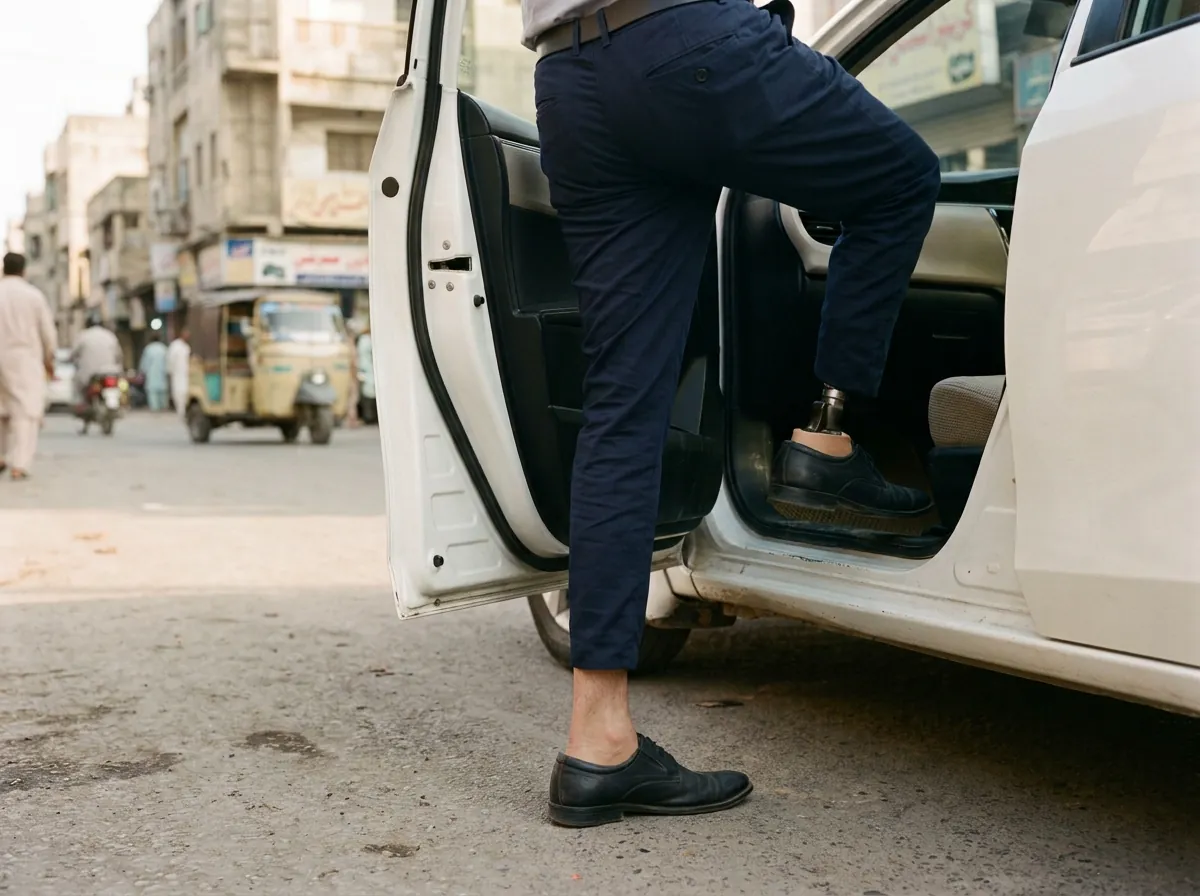
Licence, insurance and concessions
Inform the traffic licensing authority of the amputation and any adaptation. A licence may be endorsed for an automatic or an adapted vehicle, and a medical fitness report may be asked for. We can provide a letter describing your amputation, your prosthesis and how you manage it.
Tell your motor insurer in writing about the adaptation. An undeclared modification can be used to refuse a claim.
Government concessions for persons with disabilities have at times included relief on importing or buying an adapted vehicle. The rules change, so ask the Department of Empowerment of Persons with Disabilities what currently applies. The disability certificate is the starting point for all of them.
How soon after amputation can I drive?
Once the wound has healed, you are off medicines that cause drowsiness, you can get in and out safely, and your doctor agrees. For a left sided amputation in an automatic this can be within two to three months. Adapted driving needs practice time on top.
Do I need the prosthesis on to drive?
With a left amputation in an automatic, no, though wearing it helps you brace in the seat and walk at the other end. With a left foot accelerator, the right prosthesis is simply rested out of the way.
Can I drive a rickshaw, van or truck for a living?
Commercial driving has stricter medical standards, and most such vehicles are manual. A left below knee amputee may manage a light manual vehicle, but long hours on a clutch with a prosthesis are hard on the stump. Discuss it frankly with the licensing authority and with us.
Is an automatic car really necessary?
For a left amputation it removes the problem completely, so it is the single best decision. For a right amputation it is required for every adaptation.
Will the clinic fit the car adaptation?
No. We fit legs. Vehicle adaptations are done by automotive workshops. We can tell you what to ask for, and provide the medical letter.
Start with a free assessment
Tell us the amputation level and the city. We reply with honest guidance and a price range, on the phone or on WhatsApp, at any hour.
- Answered on WhatsApp, 24/7
- First assessment free, no obligation
- Nothing is stored on this website