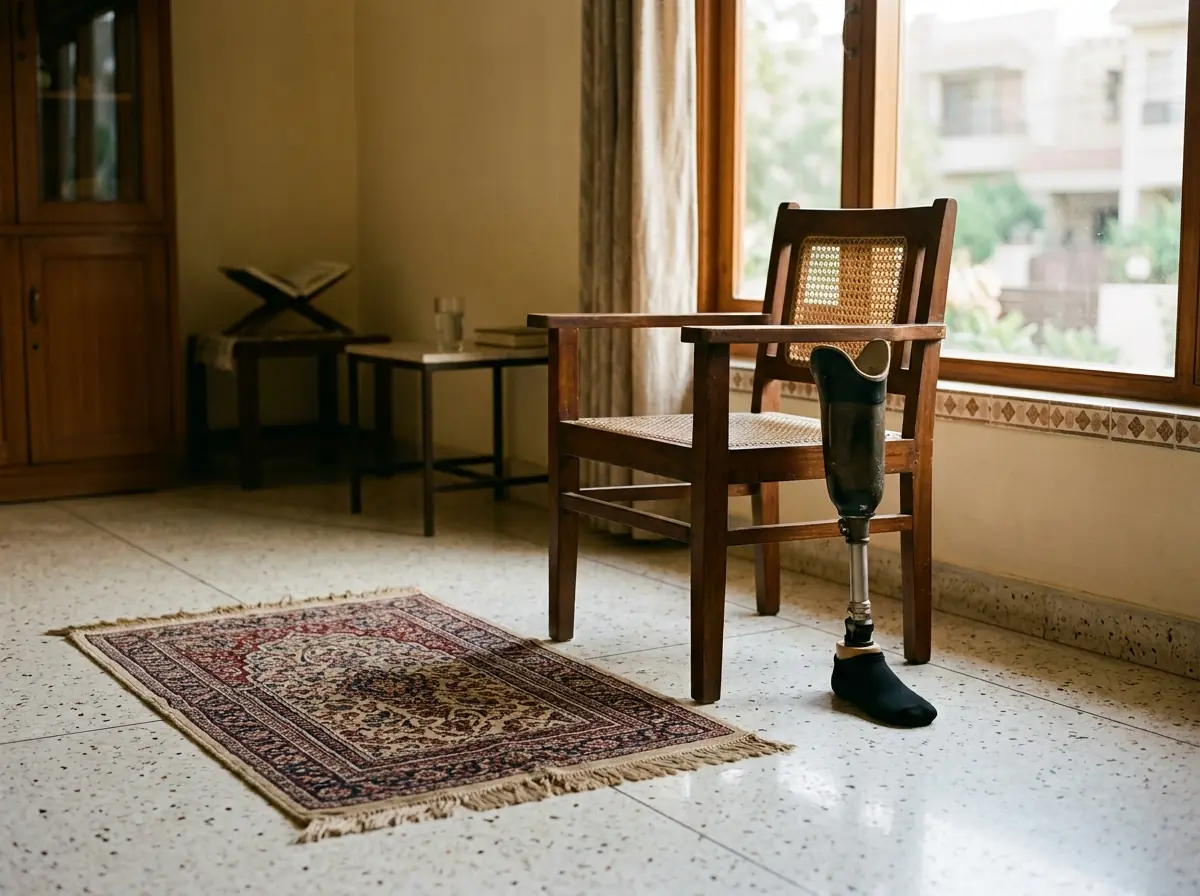
Namaz with an artificial leg
For many of our patients the first goal is not the office or the bazaar. It is to stand in the row at the masjid again. This guide covers what the body and the prosthesis can do in each posture. For questions of what is required or excused, please ask a scholar you trust.
Can you pray namaz with an artificial leg?
Yes. Standing and ruku are manageable for nearly all prosthesis users. Sajdah and sitting on the floor are possible for many below knee users with some adjustment, and are difficult for most above knee users. Many people pray seated on a chair for the postures they cannot perform, which is widely accepted for those with a genuine difficulty. Please confirm the details with a scholar.
What the prosthesis allows in each position
| Posture | Below knee | Above knee |
|---|---|---|
| Standing (qiyam) | Straightforward. Stand with weight even on both legs. | Straightforward. Keep the knee straight and a little weight back on the heel. |
| Bowing (ruku) | Straightforward. Hands on knees as usual. | Manageable. Keep weight on the good leg, and the prosthetic knee locked straight. |
| Going down to the floor | Lower onto the good knee first, then the prosthetic side. Use a hand on the floor. | Difficult. Most users need a chair, a low stool, or a hand support. |
| Prostration (sajdah) | Possible for many. The front edge of the socket presses below the kneecap, and the prosthetic toes do not bend. | Usually performed from a chair, or seated on the floor with the leg out to the side, by inclining the head and body. |
| Sitting (jalsa, tashahhud) | The back of the socket limits how far the knee bends. Many sit with the prosthetic leg out to the side. | Sitting with the leg to the side. A rotation adapter lets the shin turn so the leg can fold under. |
| Rising | Bring the good foot forward and push up through the good leg. | From a chair, or with a hand on a support. |
What is possible differs from person to person. Try each posture first in the clinic, on a mat, with us beside you.
Making sajdah and sitting more comfortable
If praying on the floor is important to you, tell us before the socket is made, not after. Three details can be built in.
- A lower, flared back edge on the socket, so the knee can bend further before the edge presses behind it.
- A softer front edge with padding where the socket meets the floor in kneeling.
- A foot with a flexible toe section. Most prosthetic feet keep the toes straight, so in sajdah the foot stands upright on its tip. Some feet allow more give.
A thick, soft prayer mat, or a folded second mat under the knees, takes pressure off the socket edge. Going down good knee first and coming up good foot first protects both the stump and your balance.
Praying on a chair
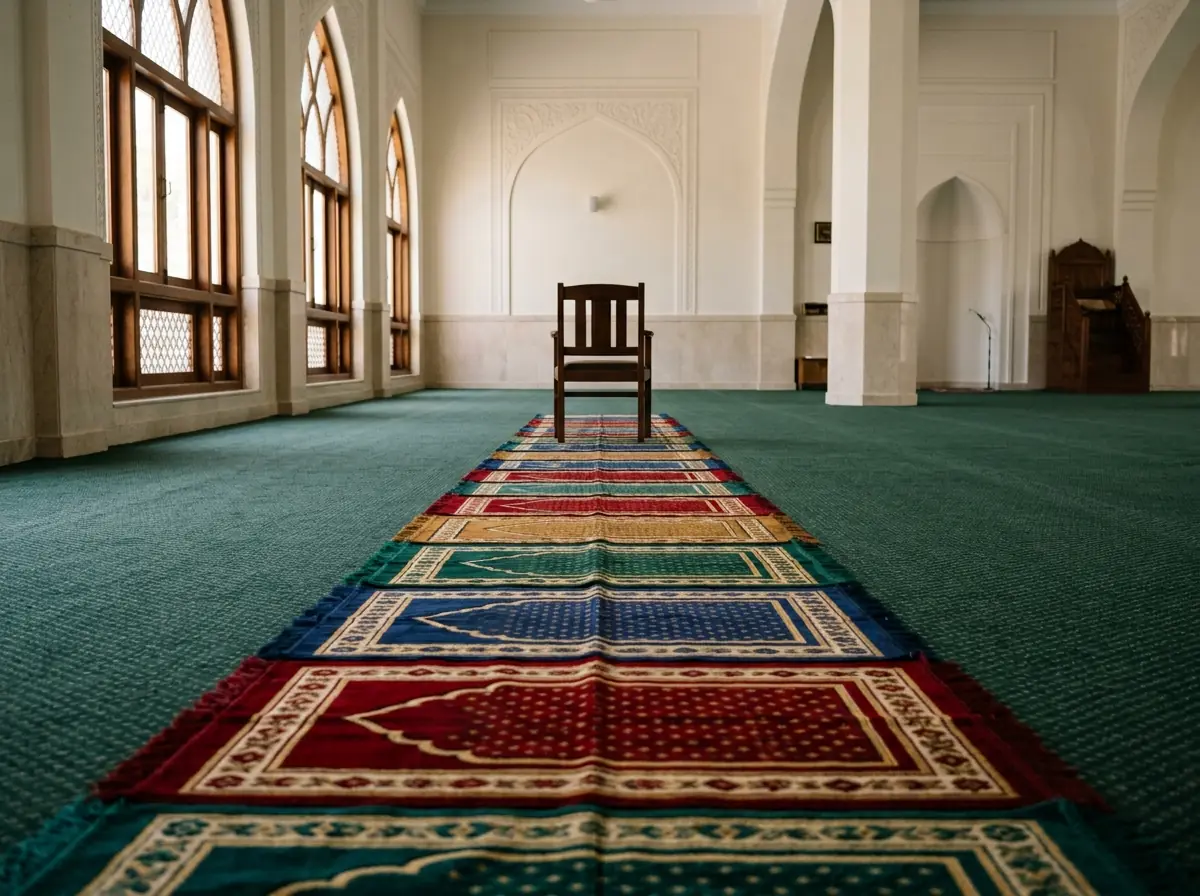
A chair is not a lesser prayer. It is the means by which many people with an amputation, a knee replacement or arthritis keep their place in the congregation. Most masjids in Karachi now keep chairs at the end of the rows.
- Choose a firm, stable chair without wheels, with a seat at about knee height.
- Sit at the end of the row so the chair does not break the line, as is the usual practice.
- Stand for qiyam and ruku if you are able, and sit for the postures you cannot perform.
- From the chair, sajdah is indicated by inclining further than for ruku.
- Above knee users: make sure the knee is fully straight and your weight is over it before you stand.
Exactly which postures you should stand for, and how to perform the others from a chair, is a question for a scholar. We only want you to know that your body need not keep you from the masjid.
Wudu, and keeping the leg dry
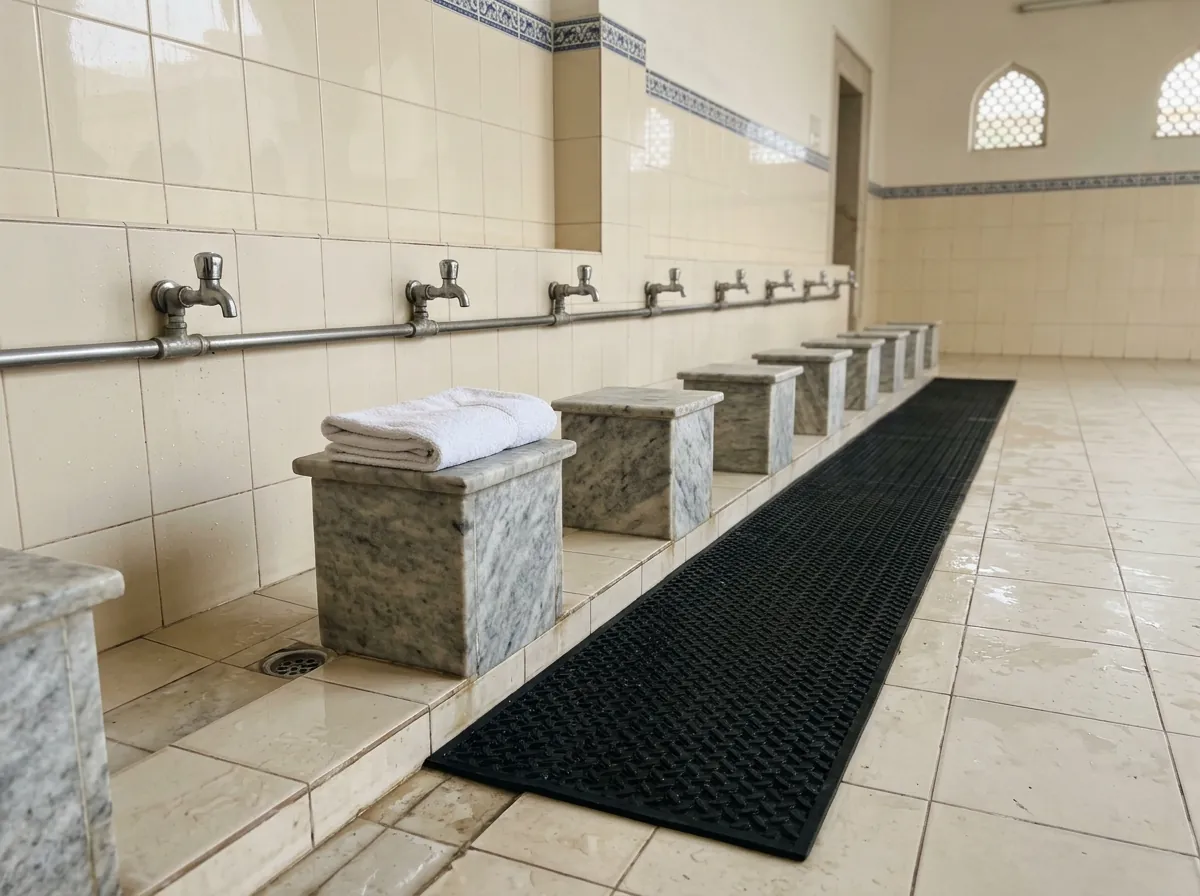
A standard prosthesis must be kept dry. Water enters at the ankle and the adapters, rusts the bolts, and rots the foot from inside. So wudu needs a small change of habit.
Sit for wudu, on the stool provided or on your own. Standing on one leg on wet marble is how people fall. Dry your good foot completely before standing.
Do not pour water over the prosthesis. If you wish to clean it, wipe it with a damp cloth. Whether anything is required in respect of the missing limb or the prosthesis is a matter of religious ruling. Please ask your scholar. It is not for a prosthetist to say.
If your stump sweats under the liner and you remove the leg for wudu, dry the stump and the liner fully before putting it back on.
Something nobody tells you: taking your shoe off changes the leg
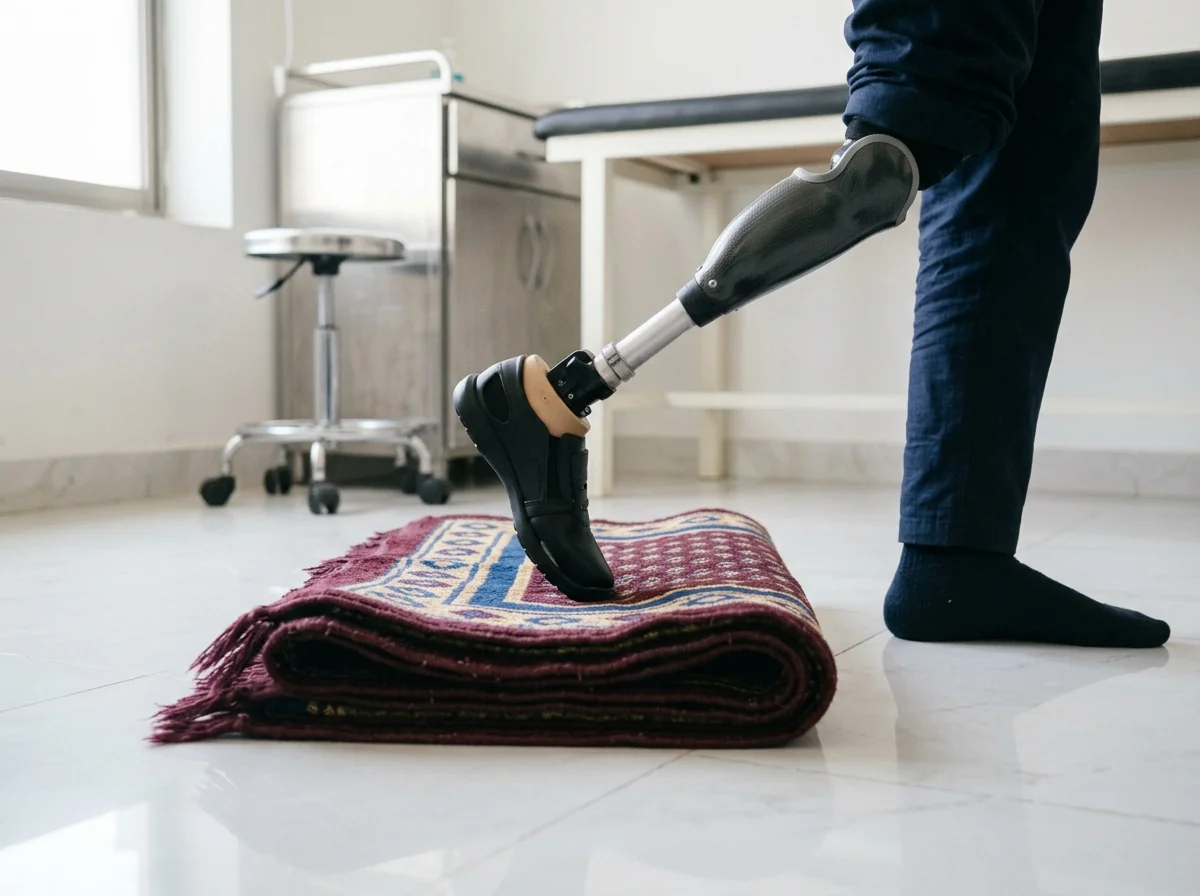
Your prosthesis was aligned with your shoe on. The heel of that shoe, even a centimetre or two, is part of the alignment. When you leave your shoes at the masjid door, the prosthetic foot sits flatter and the whole leg tilts slightly backward.
Below the knee this feels as though you are walking uphill, and the leg feels a little short. Above the knee the knee feels stiffer and harder to bend. Neither is dangerous if you expect it. Take shorter steps across the carpet.
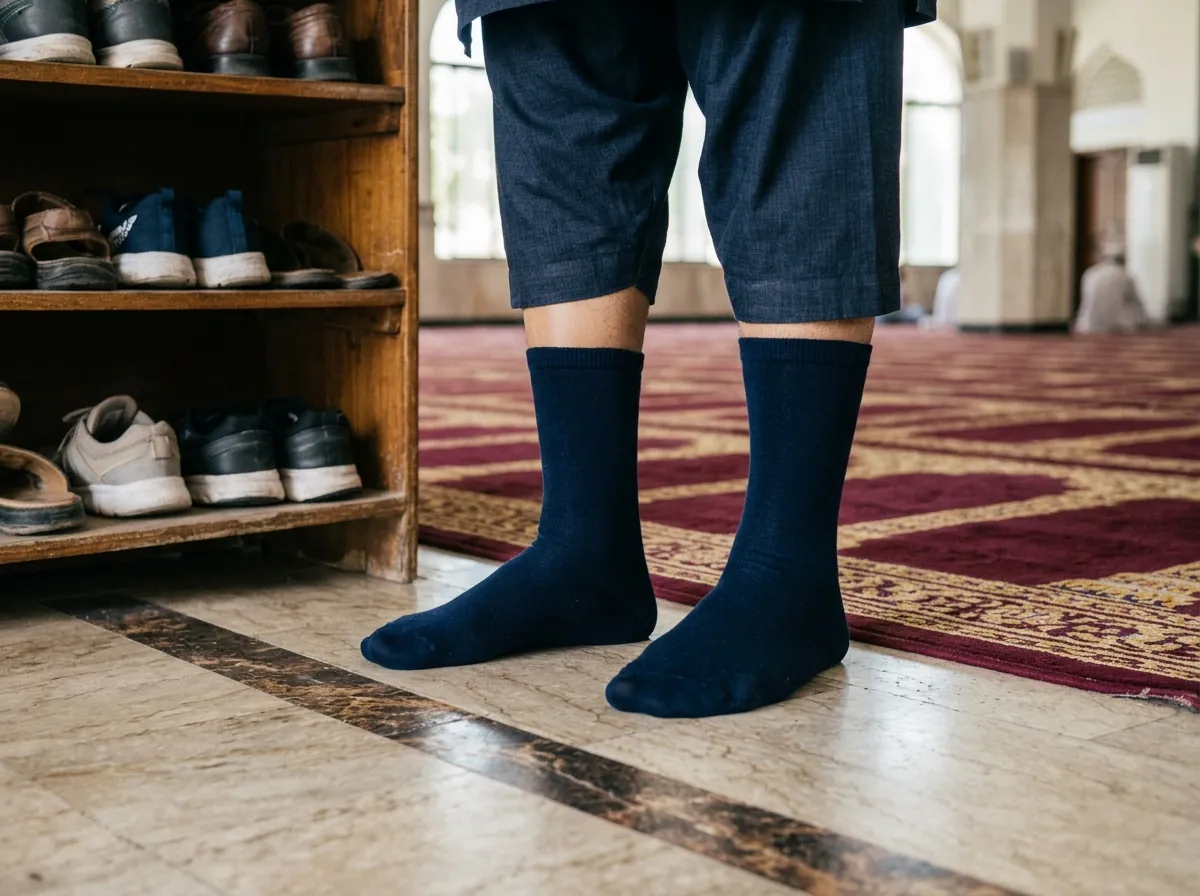
If you pray five times a day at the masjid, tell us. The foot can be set for a lower heel, or you can keep a clean pair of thin indoor slippers with the same heel height for use inside. A clean sock over the foot shell keeps it presentable and stops it marking the carpet.
Should I take the leg off to pray?
Some people do, and pray seated on the floor or a chair, particularly at home. Others keep it on for standing and ruku. Physically, either is fine. If you remove it, have a support nearby for getting down and up.
Will kneeling damage the prosthesis?
No. A laminated socket easily carries your weight in kneeling. What may suffer is the skin below the kneecap, so use a thick mat and tell us if that area becomes sore.
Can an above knee leg be made to allow sitting on the floor?
A rotation adapter above the knee lets the shin turn sideways, which makes sitting cross legged or with the leg folded to the side much easier. It is worth asking about if you sit on the floor daily.
I cannot get up from sajdah. What can I do?
Place a sturdy low stool or the chair beside your mat and use it to push up, leading with the good foot. We teach getting up from the floor in gait training, and it improves quickly with practice.
Can I perform Umrah or Hajj with an artificial leg?
Many people do. The distances are long and the floors are polished marble, so build up your walking beforehand, take a spare liner and socks, carry a stick, and use a wheelchair for the longest stretches without hesitation. Have the leg serviced before you travel.
Start with a free assessment
Tell us the amputation level and the city. We reply with honest guidance and a price range, on the phone or on WhatsApp, at any hour.
- Answered on WhatsApp, 24/7
- First assessment free, no obligation
- Nothing is stored on this website