Exercises before your first artificial leg
The weeks between surgery and the first fitting are not waiting time. They are training time. A person who arrives with straight joints, strong hips and a toughened stump walks weeks sooner, on a cheaper leg, than one who has rested in bed.
What exercises should be done before getting a prosthetic leg?
Four kinds: stretches that keep the hip and knee from stiffening in a bent position, strengthening for the hip and thigh muscles that will control the leg, balance and standing practice on the sound leg, and arm and trunk strengthening for transfers and crutches. Ten to fifteen minutes, two or three times a day, begun as soon as the surgeon allows.
Before you start
Check with your surgeon or physiotherapist first, and stop if
- the wound opens, bleeds or becomes more painful or swollen
- you feel chest pain, unusual breathlessness, dizziness or faintness
- an exercise causes sharp pain in a joint, as opposed to the ache of a working muscle
Do nothing that pulls on the wound until stitches are out and your surgeon agrees. Move slowly and smoothly. Breathe out on the effort, and do not hold your breath.
Keep the joints straight
A joint that stiffens bent is the commonest reason a leg fits badly. These take five minutes and prevent months of trouble.
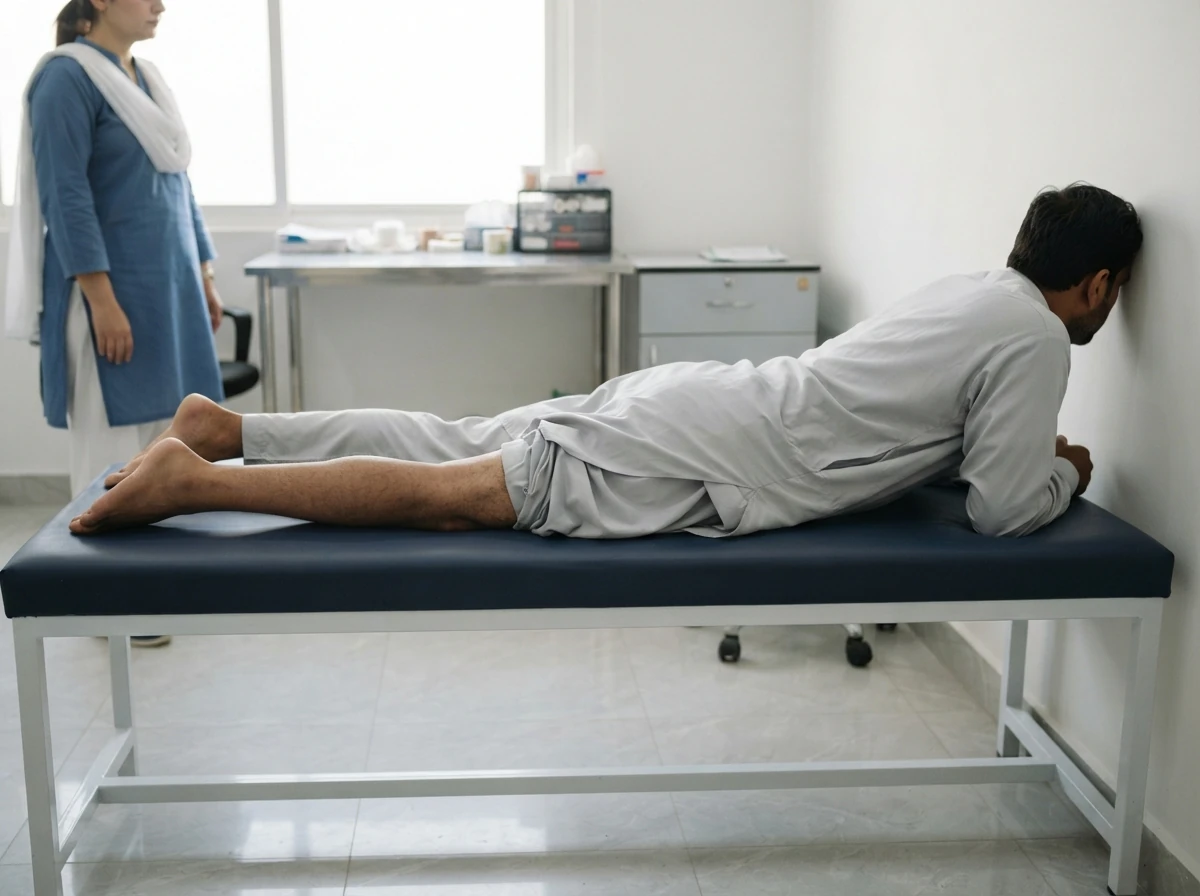
Lying on your stomach (above and below knee)
Lie flat, face down, with both hips pressed to the bed and your head turned to the sound side. Stay for fifteen to twenty minutes, two or three times a day. Read or listen to something. This stretches the front of the hip.
Hip stretch on the edge of the bed (above knee)
Lie on your back with the stump side at the edge. Hug the sound knee to your chest and let the stump hang down toward the floor. Hold thirty seconds. Five times.
Knee press (below knee)
Sit with the stump supported straight on the bed and a small rolled towel under the end. Tighten the thigh and press the back of the knee down into the bed. Hold ten seconds. Ten times.
Hamstring stretch (below knee)
Sitting with the stump straight in front of you, lean forward from the hips with a straight back until you feel a stretch behind the thigh. Hold thirty seconds. Five times.
Strengthen what will drive the leg
| Exercise | How | What it does |
|---|---|---|
| Hip extension | Lying on your stomach, lift the stump straight up off the bed without twisting the pelvis | Powers every step and keeps an artificial knee safe |
| Hip abduction | Lying on your sound side, lift the stump toward the ceiling, toes forward | Stops the body swaying over the leg with each step |
| Hip adduction | Lying on your back, squeeze a rolled towel or pillow between the thighs | Controls the socket from side to side |
| Bridging | Lying on your back with the stump over a firm roll or stool, press down and lift your bottom | Hip and back strength together |
| Thigh tightening, below knee | Sitting, straighten the knee fully and hold against a family member's light resistance | Controls the knee inside the socket |
| Trunk curls | Lying on your back, knee bent, reach toward the knee lifting head and shoulders | A strong trunk steadies everything |
Add a light band or a family member's hand for resistance once ten repetitions are easy.
Balance and the sound leg
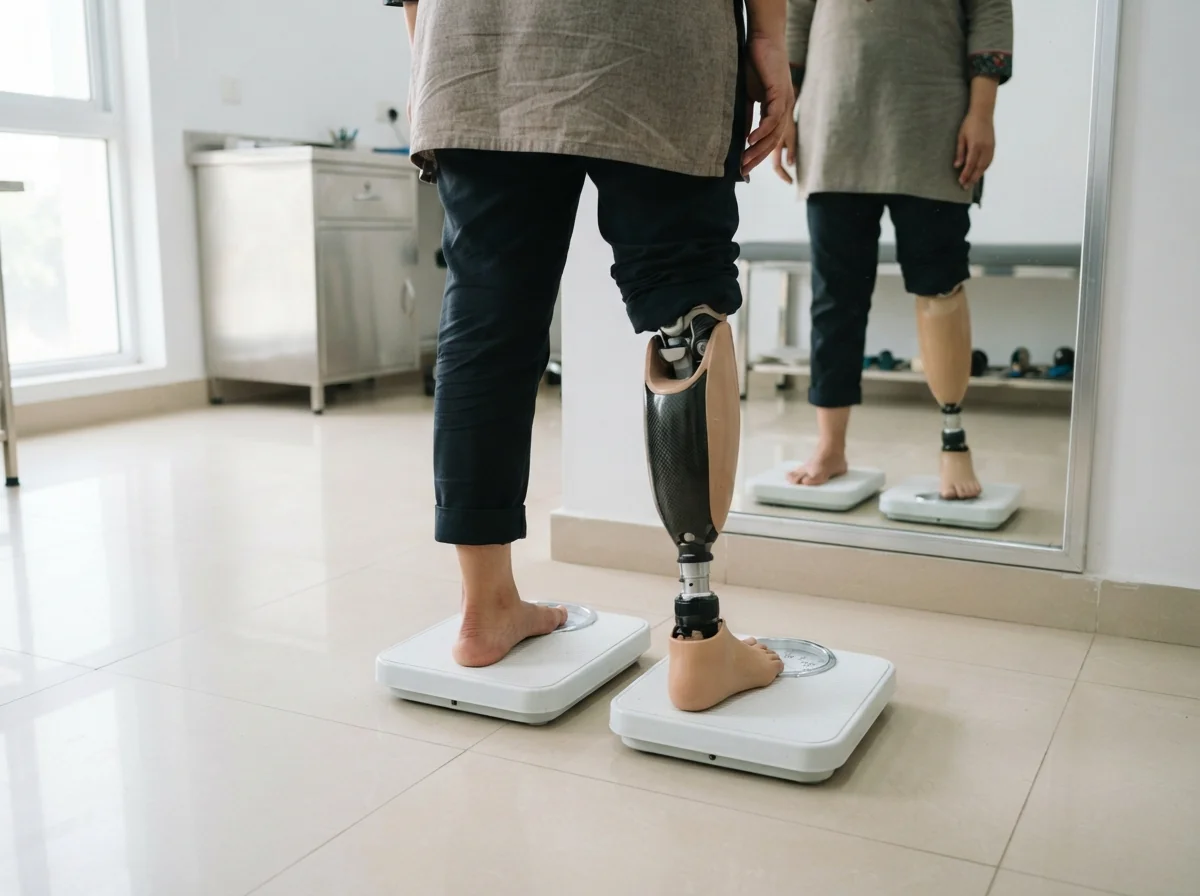
Your remaining leg will carry you through fitting and training, and for the rest of your life. Hold a kitchen counter or a heavy table for every one of these.
- Sit to stand. From a firm chair, stand up on the sound leg using the arms as little as you can. Ten times.
- Single leg standing. Stand tall at the counter and gradually lighten your hands. Build to one minute.
- Mini squats. Holding on, bend the sound knee a little and straighten. Ten times.
- Heel raises. Rise onto the toes and lower slowly. Ten times.
- Stump movements in standing. Swing the stump forward, back and out to the side, keeping the body upright.
- Chair push ups. Sitting, push down through the armrests to lift your bottom off the seat. Ten times. This is the strength crutches and transfers use.
Toughen the stump
Once the wound has fully closed, spend five minutes a day teaching the stump to accept touch and pressure. Massage it firmly, move the scar gently over the bone so it does not stick, tap the end with your fingers, then press it into a cushion, then a firmer surface. Rub it with soft cotton, then a towel. Keep the shrinker sock or bandage on at all other times.
A simple daily plan
| When | What | About |
|---|---|---|
| Morning | Lying on the stomach, then the stretches for your level | 25 minutes |
| Mid morning | Strengthening set on the bed | 15 minutes |
| Afternoon | Lying on the stomach again, then standing and balance set at the counter | 30 minutes |
| Evening | Strengthening set, stump massage and tapping, re-bandage | 20 minutes |
| Through the day | Out of bed and sitting in a chair for meals. Move about the home on crutches or a frame. | As much as you can |
Send us a short video of the exercises on WhatsApp and we will correct the technique before habits form.
How soon after surgery can exercises begin?
Breathing exercises, arm exercises and sound leg exercises usually start within days. Gentle stump movement and positioning start as soon as your surgeon allows. Anything that stretches the wound waits until it has healed.
My father refuses to lie on his stomach. Is there an alternative?
Lying flat on the back with no pillow under the thigh, and lying on the sound side with the stump drawn backward, both help. The edge of bed hip stretch is the next best thing. Sitting all day is what must be avoided.
Do I need a physiotherapist?
It helps a great deal, especially for a stiff joint or an older patient. If one is not available near you, send us videos and we will guide the family. The exercises are simple. Doing them daily is the hard part.
The knee will not straighten fully. Can a leg still be made?
A few degrees can be accommodated in the alignment. More than about thirty degrees below the knee makes fitting very difficult. Physiotherapy, and sometimes a night splint prescribed by your doctor, comes first.
Should exercises continue after I get the leg?
Yes. Hip strength and straight joints remain the foundation of good walking for life. Ten minutes a day is enough to keep them.
Start with a free assessment
Tell us the amputation level and the city. We reply with honest guidance and a price range, on the phone or on WhatsApp, at any hour.
- Answered on WhatsApp, 24/7
- First assessment free, no obligation
- Nothing is stored on this website