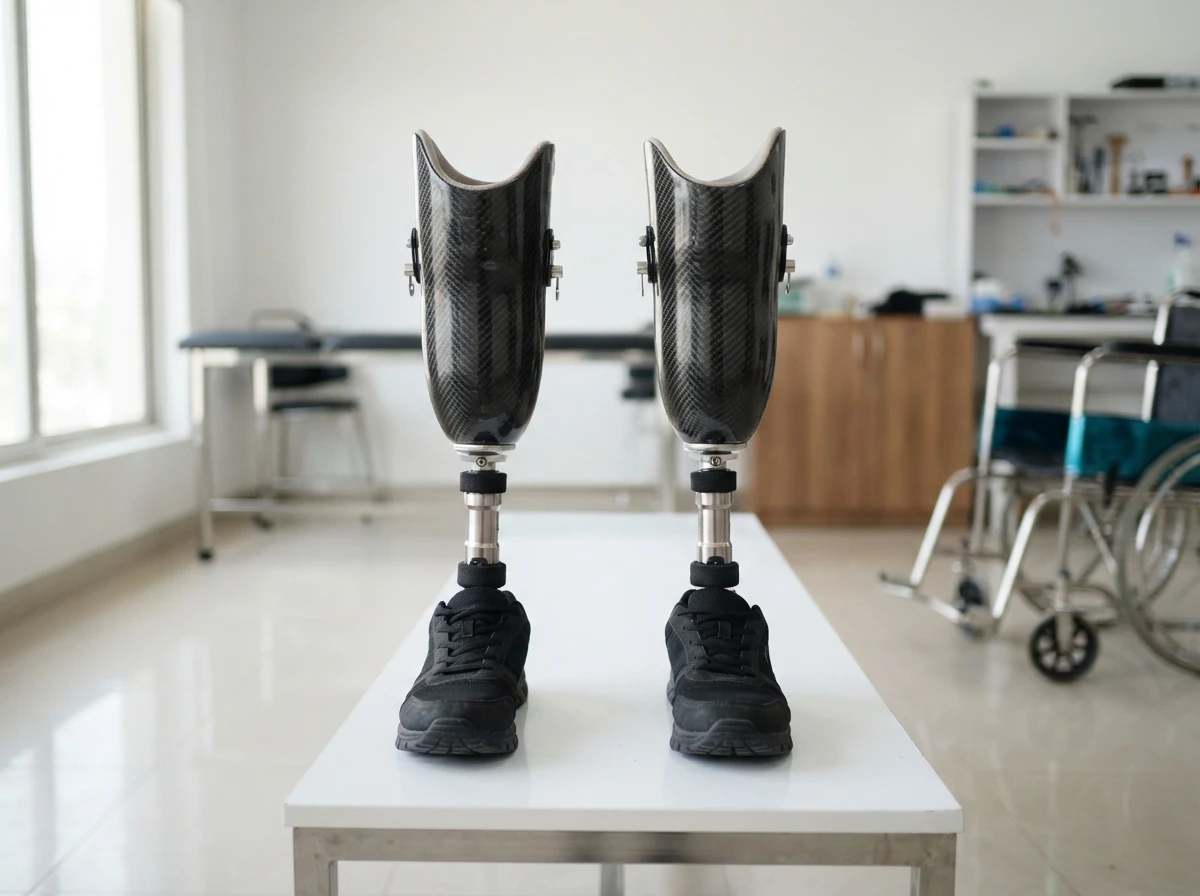
Artificial legs for both sides, in Karachi
With one artificial leg, the good leg teaches the new one. With two, there is no good leg to lean on. People do walk again after losing both legs, but it happens in stages, and the plan matters more than the parts.
Can a person walk with two artificial legs?
Yes, and how well depends mainly on whether the knees were saved. People with two below knee amputations usually walk independently, often without a stick. With one or both legs lost above the knee, walking is possible but takes very high effort, so training starts on short legs and a wheelchair stays part of daily life.
What is realistic for each combination
| Combination | Typical outcome with training | Walking aid | Wheelchair |
|---|---|---|---|
| Below knee, both sides | Independent walking indoors and outdoors. Many return to work. | None or one stick | For long distances only |
| Below knee and above knee | Household and community walking. The below knee side does most of the work. | One or two sticks | Often used outdoors |
| Above knee, both sides | Short legs first. Full height walking for the fit and determined. | Two sticks or crutches | Remains the main way to travel |
| Through knee, both sides | Better than above knee. End bearing gives stable standing. | One or two sticks | For distance |
These are typical patterns. Age, heart health, arm strength and body weight move a person up or down.
Why we start short
For above knee amputations on both sides, the first legs are often short training legs without knee joints. They look unusual: a socket, a short pylon and a small rocker foot. They are also the safest and fastest way to learn.
- A low centre of gravity. You are close to the ground, so a fall is a short one, and you learn to balance without fear.
- No knees to buckle. You build hip strength and trunk control first.
- Height is added in steps. As balance improves the pylons are lengthened, a few centimetres at a time.
- Knees come last. Often one knee is fitted first, with the other side still locked, before both are freed.
Many people keep their short legs for life, for use at home, because they are stable and cool to wear.
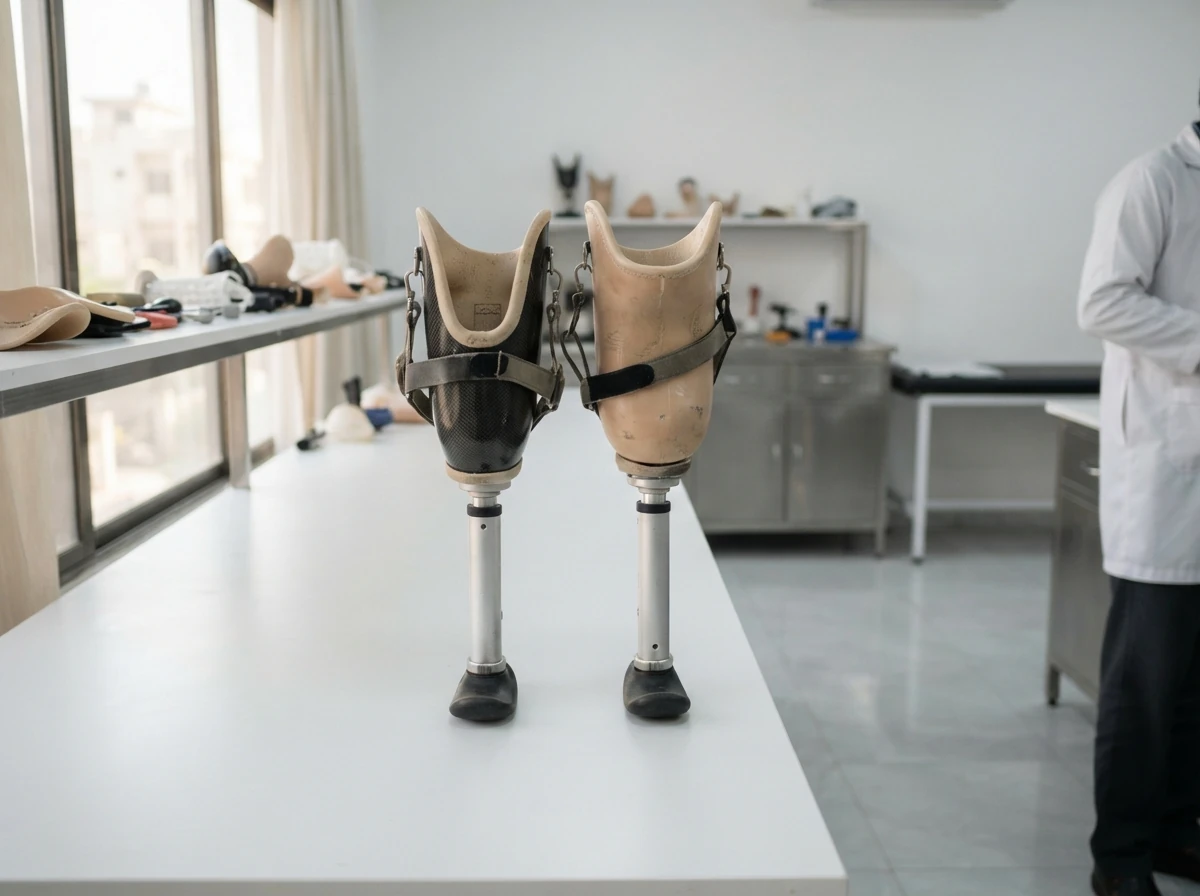
What we build differently for two legs
Stable feet
Feet with a wide, flat base and some ankle give. Springy sports feet wait until balance is solid.
A chosen height
You do not have to be your old height. Two or three centimetres shorter makes balance much easier.
Knees that resist
For above knee sides, knees with strong stance control, or microprocessor knees where they can be funded, because there is no sound leg to catch a stumble.
Easy to put on
You put the legs on while seated, without a leg to stand on. Pin locks or lanyards that work sitting down are chosen for that.
The wheelchair is part of the plan, not a defeat
Walking on two above knee legs can take more than double the energy of normal walking. No one can spend that all day. The people who do best use legs for what legs are good for, and wheels for distance.
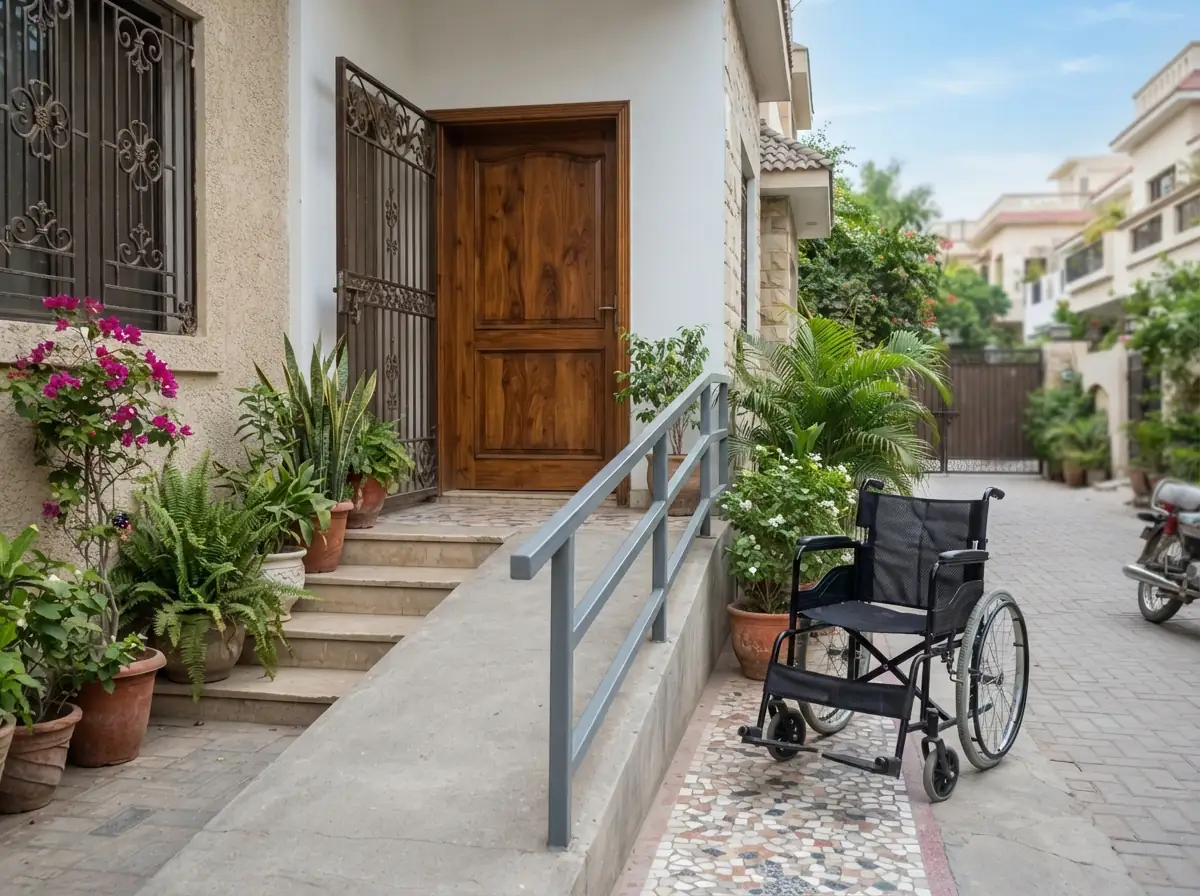
So we plan the home as well as the legs. A commode chair or raised seat, a grab bar, a ramp over the front step, a bed at transfer height. A low stool in the bathroom, because the legs come off to bathe.
Arm and shoulder strength matters more than anything you can buy. Pushing up from a chair, moving from bed to wheelchair, and getting up from the floor after a fall all depend on the arms. We give you an exercise plan at the first visit, before any cast is taken.
Readiness, honestly
Good signs
- both stumps are healed and the hips and knees straighten fully
- you can move from bed to chair using your arms alone
- you can sit upright without support for several minutes
- a family member can attend training and learn with you
Reasons to go slowly
- heart disease, or breathlessness on light effort. Your physician must clear you first.
- stiff hips from months of sitting. Lying on your stomach every day comes before any cast.
- weak or painful shoulders. They will carry you, so they are treated first.
- one stump healed and the other not. We can fit one side first and use it for standing practice.
See your doctor before a fitting if
- the wound has not closed fully, or there is discharge, spreading redness or a bad smell
- the stump hurts at rest, is very swollen, or has changed colour
- you are diabetic and your sugar has been out of control in recent weeks
- there is a new sore on your other foot
A leg fitted over an unhealthy stump causes harm. We will wait, and we will tell you so.
Price of artificial legs for both sides in Karachi
| What is made | Indicative range (PKR) |
|---|---|
| Two below knee legs, basic to mid range | 160,000 to 650,000 |
| One below knee and one above knee leg | 240,000 to 900,000 |
| Pair of short training legs for above knee, both sides | 120,000 to 260,000 |
| Two full height above knee legs, mechanical knees | 320,000 to 1,100,000 |
| Two above knee legs with imported hydraulic or microprocessor knees | 1,200,000 to 5,000,000 and above |
Short training legs reuse their sockets when full height legs are built, so that money is not lost.
Should both legs be made at the same time?
If both stumps are healed, yes. They are cast together and aligned together so the height and the foot angles match. If one side is still healing, we fit the healed side first so you can begin standing practice.
Will I still need a wheelchair?
With two below knee legs, perhaps only for long outings. With one or both above the knee, yes, for distance and for tired days. Using a wheelchair sensibly protects your shoulders and your heart.
How long is training?
For below knee on both sides, six to ten weeks. For above knee on both sides, plan for six months to a year in stages, from short legs to full height.
Can I drive?
With two below knee legs many people drive an automatic car. Above the knee, hand controls are the safe route. Check the licence and vehicle modification requirements that apply to you before driving.
What if I fall?
You will, at some point, and you will be taught how: let go of the sticks, fall forward onto your hands, roll. Getting up from the floor is practised in training until it is routine.
Send a photo of the stump for a free opinion
Three clear photos on WhatsApp, front, side and end, with the date of surgery. The prosthetist replies with whether it is the right time, the kind of leg that suits, and a price range.
- Answered on WhatsApp, 24/7
- First assessment free, no obligation
- Nothing is stored on this website