Prosthetic feet: from SACH to carbon
A prosthetic foot has to soften the landing, keep you steady on a tilted paving slab, and give something back when you push off. No single foot does all three best. The right one depends on your weight, your ground and your shoes.
Which prosthetic foot is best?
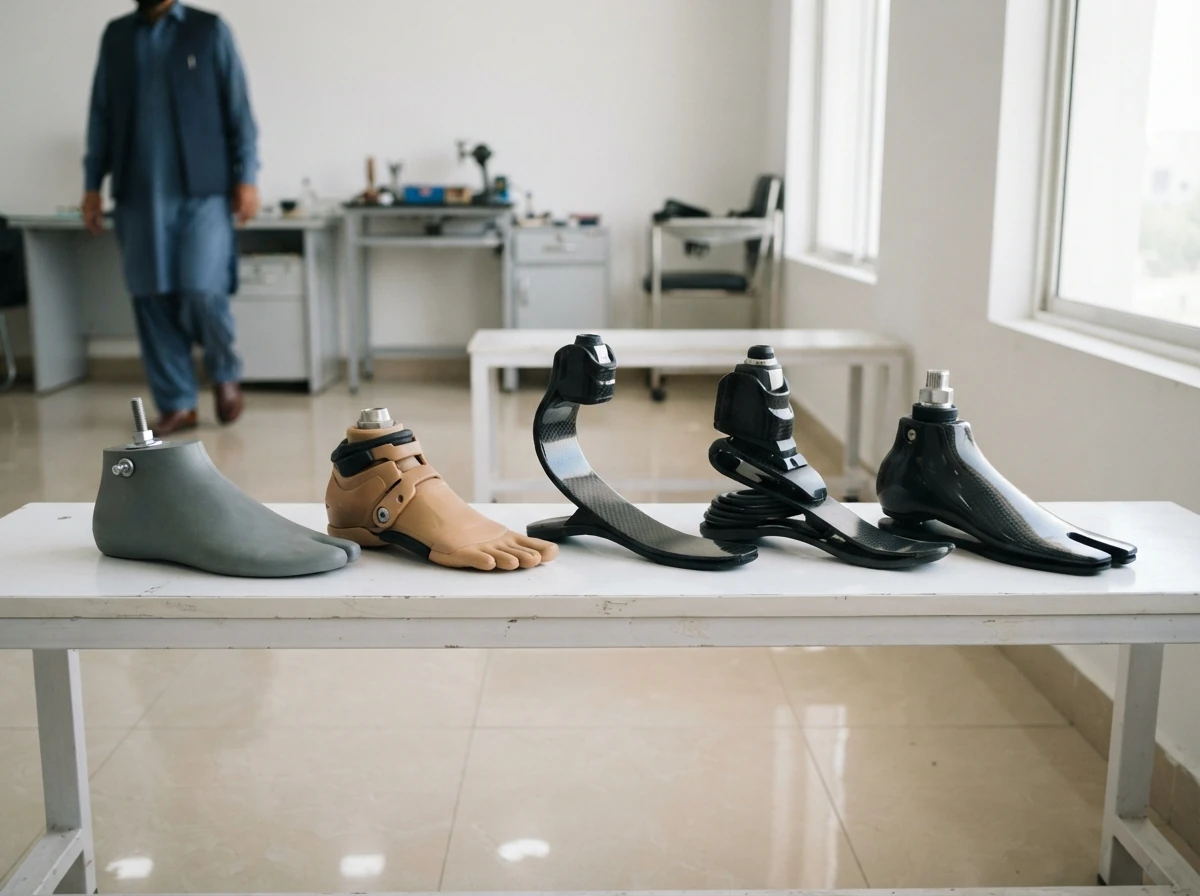
There is no single best foot. A SACH foot is simple, tough and low cost. A single axis foot helps above knee users feel stable. A multi axis foot copes best with uneven ground. A carbon fibre foot stores energy and returns it, which suits active walkers. The foot must also be rated for your body weight and set for the heel height of your shoes.
Foot types side by side
| Foot type | How it works | Best for | Limits |
|---|---|---|---|
| SACH | Solid keel with a soft heel wedge. No moving parts. | Short distance walkers, tight budgets, dusty or wet work | Stiff on slopes, no energy return |
| Single axis | A hinge lets the foot drop flat quickly after heel strike | Above knee users who need the knee to feel stable early | Heavier, the bumpers need periodic replacement |
| Multi axis | Moves up and down and tilts side to side | Broken footpaths, unpaved lanes, slopes | More parts to service |
| Carbon energy return | A carbon spring bends under load and releases at push off | Active adults, long distances, quick walking | Cost. Feels too springy for weak or unsteady users. |
| Hydraulic ankle | A small cylinder lets the ankle adapt on ramps and when standing | Users on slopes and stairs every day, those who can fund it | High cost, needs servicing, heavier |
Three things that decide the foot, before brand or price
Your weight, plus what you carry
Every foot is built in stiffness categories by body weight. Too soft and it collapses and breaks. Too stiff and it feels like a block of wood. Tell us honestly what you weigh and what you lift.
How much you walk
A person who walks inside the home needs stability. A person who walks to work needs energy return. Buying above your activity level gives a foot you cannot bend.
Your ground
Smooth office floors reward a carbon foot. Katchi lanes, broken slabs and ramps without rails reward a foot that tilts.
Heel height, chappals and bare feet
This is the detail most often missed, and the one that causes the most daily irritation.
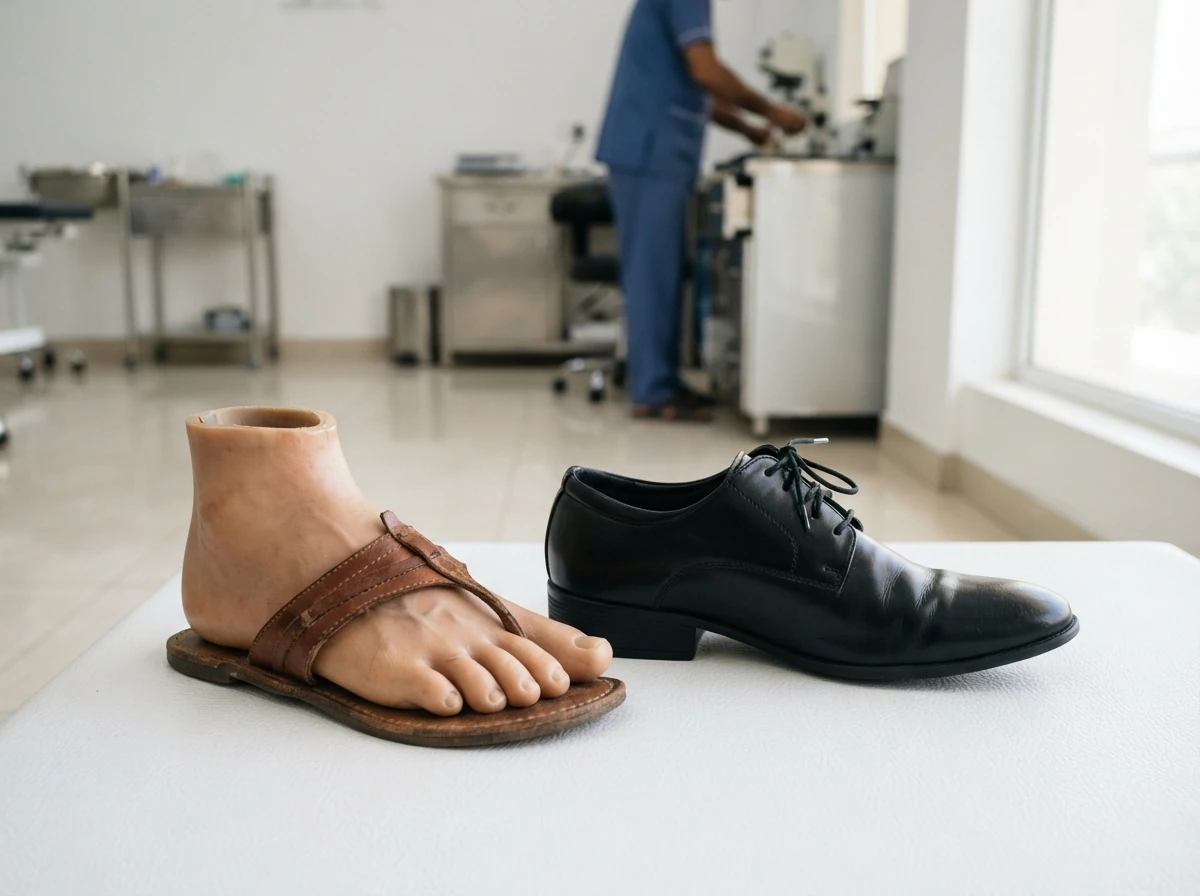
- Heel height is fixed. A foot is aligned for one heel height. Moving from a flat chappal to a shoe with a two centimetre heel tips the whole leg forward and pushes the knee to buckle.
- Choose your main footwear first. Bring it to the fitting. Keep other pairs at the same heel height, or use a small heel wedge in the flatter pair.
- Sandals and thong chappals. Ask for a foot shell with a separated big toe and a natural look, because it will be seen.
- Bare feet at home. Most feet are made for shoes. Walking bare on the foot shell wears it out quickly and changes the alignment. Keep a pair of indoor slippers.
- Adjustable heel feet exist for users who change between flats and heels. They cost more and are worth asking about.
Wudu, rain and workshop floors
A standard foot has a foam or rubber shell over a keel with metal bolts. Water gets inside through the ankle and stays there. Over months the bolts rust and the keel weakens from within, and it fails without much warning.
For wudu, wipe the foot shell with a wet hand or cloth, and do not pour water over it. In the monsoon, avoid standing water and dry the leg when you get home. If your work is wet, tell us. Waterproof feet and simple shower legs exist.
Fine dust and sand work into moving ankle parts and grind them. If you work in construction, a mill or near the sea, a foot with no moving parts will outlast a complex one.

Prosthetic foot prices in Karachi
| Foot | Indicative range (PKR) |
|---|---|
| SACH foot | 8,000 to 25,000 |
| Single axis foot | 20,000 to 60,000 |
| Multi axis foot | 30,000 to 90,000 |
| Carbon foot, mid range | 80,000 to 180,000 |
| Carbon energy return foot, imported | 180,000 to 450,000 |
| Hydraulic ankle foot, imported | 400,000 to 900,000 |
| Replacement foot shell | 6,000 to 25,000 |
The foot can be changed later without remaking the socket.
What does SACH stand for?
Solid ankle cushion heel. The ankle does not move. A soft wedge in the heel compresses when you land, which imitates the ankle dropping the foot to the floor.
Is a carbon foot worth the money?
For an active person who walks a lot, yes. It reduces effort and is kinder to the other leg and the back. For someone who walks only indoors, or who is unsteady, it is money better spent on the socket and liner.
How long does a prosthetic foot last?
Two to four years with daily use, less with heavy loads, water or dust. The shell usually wears out before the keel. A foot that has started to click, feel soft or turn in should be checked at once.
Can I squat or sit on my heels with a prosthetic foot?
Most feet do not bend far enough at the ankle for a full squat. Some regional designs allow more ankle movement and barefoot use. Tell us if squatting is important in your home or work and we will discuss what is realistic.
Why does my foot feel too hard or too soft?
Usually the stiffness category no longer matches your weight, or you have changed footwear. Both are fixable. Bring the shoes you now wear.
Start with a free assessment
Tell us the amputation level and the city. We reply with honest guidance and a price range, on the phone or on WhatsApp, at any hour.
- Answered on WhatsApp, 24/7
- First assessment free, no obligation
- Nothing is stored on this website