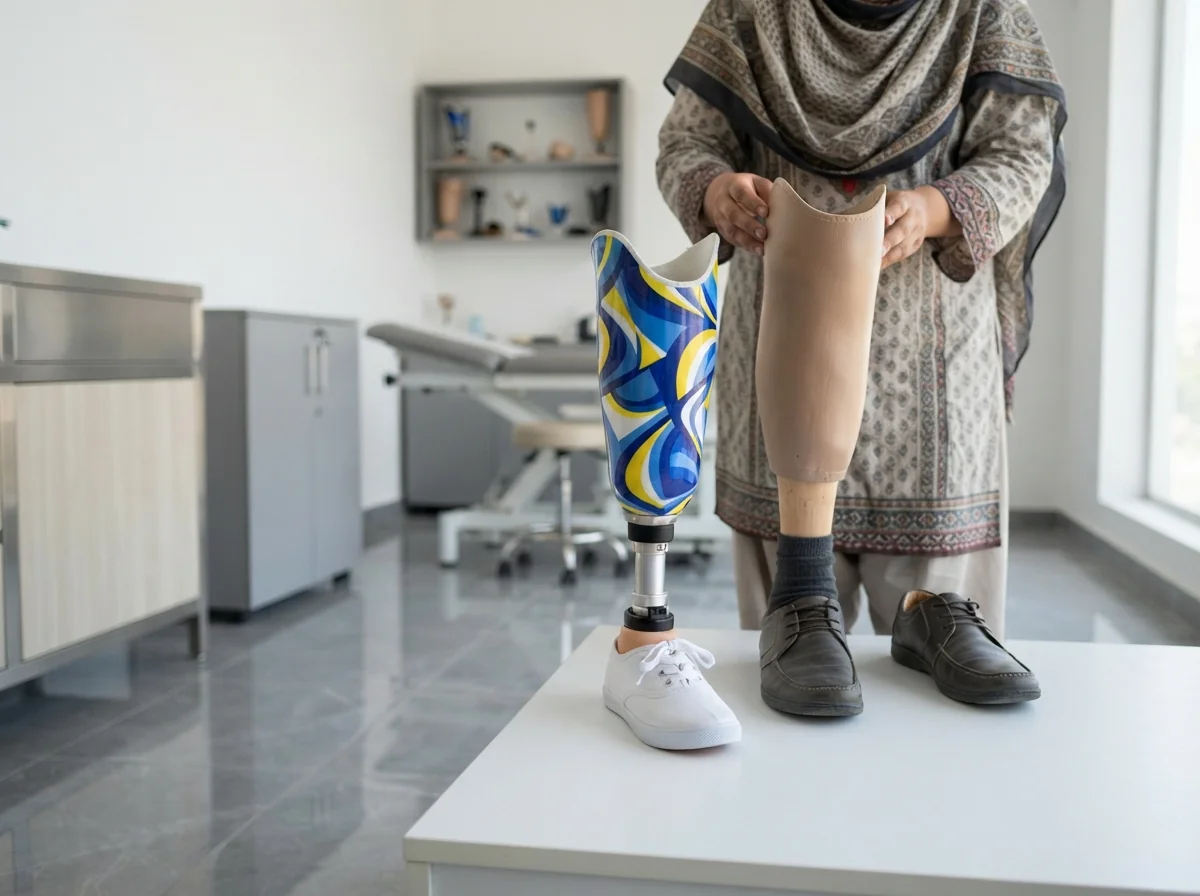
Artificial legs for children in Karachi
Children are the best learners we ever fit. Give a child a leg that fits and they will run on it within weeks. The challenge is not the child. It is growth, and planning so that parents are not paying for a whole new leg every year.
When should a child get their first artificial leg?
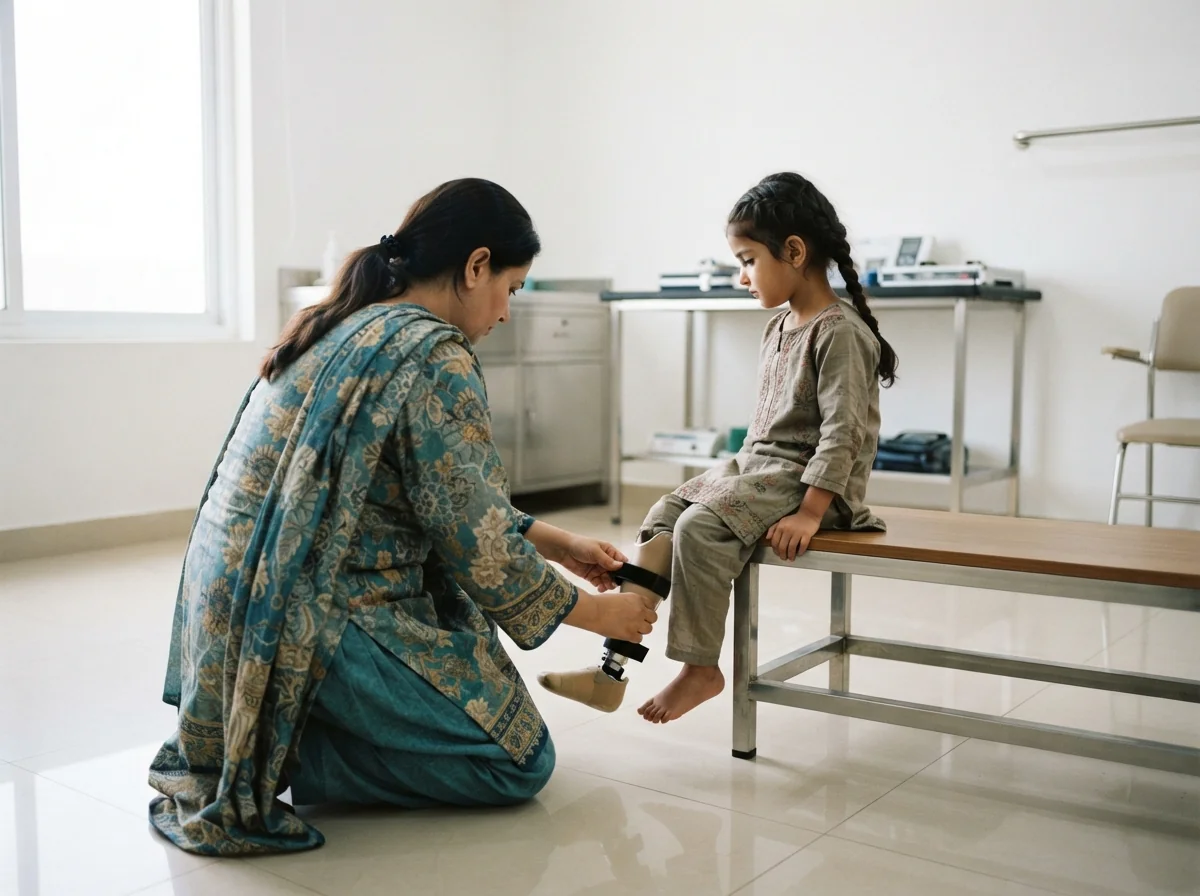
A child born without part of a leg is usually fitted when they begin pulling up to stand, at around nine to twelve months, so that walking develops at the normal age. A child who loses a leg to injury or illness is fitted as soon as the wound heals, often within six to eight weeks. Early fitting gives the best lifelong result.
What the leg looks like at each age
- 9 to 18 months
The standing leg
A light, simple leg with no knee joint, even for above knee levels. Its job is to let the child pull up, cruise along furniture and take first steps.
- 18 months to 4 years
The toddler leg
Tough, easy to clean and easy for a parent to put on. A knee joint is usually added between three and four years, when the child can control it.
- 5 to 11 years
The school leg
Built for running, football, stairs and rough play. The foot has real spring. The socket is planned for regular change.
- 12 years and up
The teenage leg
Looks begin to matter. Adult type parts are introduced, and growth spurts mean length checks every few months.
How we plan for growth so you do not buy a new leg every year
A child grows in two ways that affect a leg. The other leg gets longer, so the artificial leg becomes short. And the stump gets thicker and longer, so the socket becomes tight.
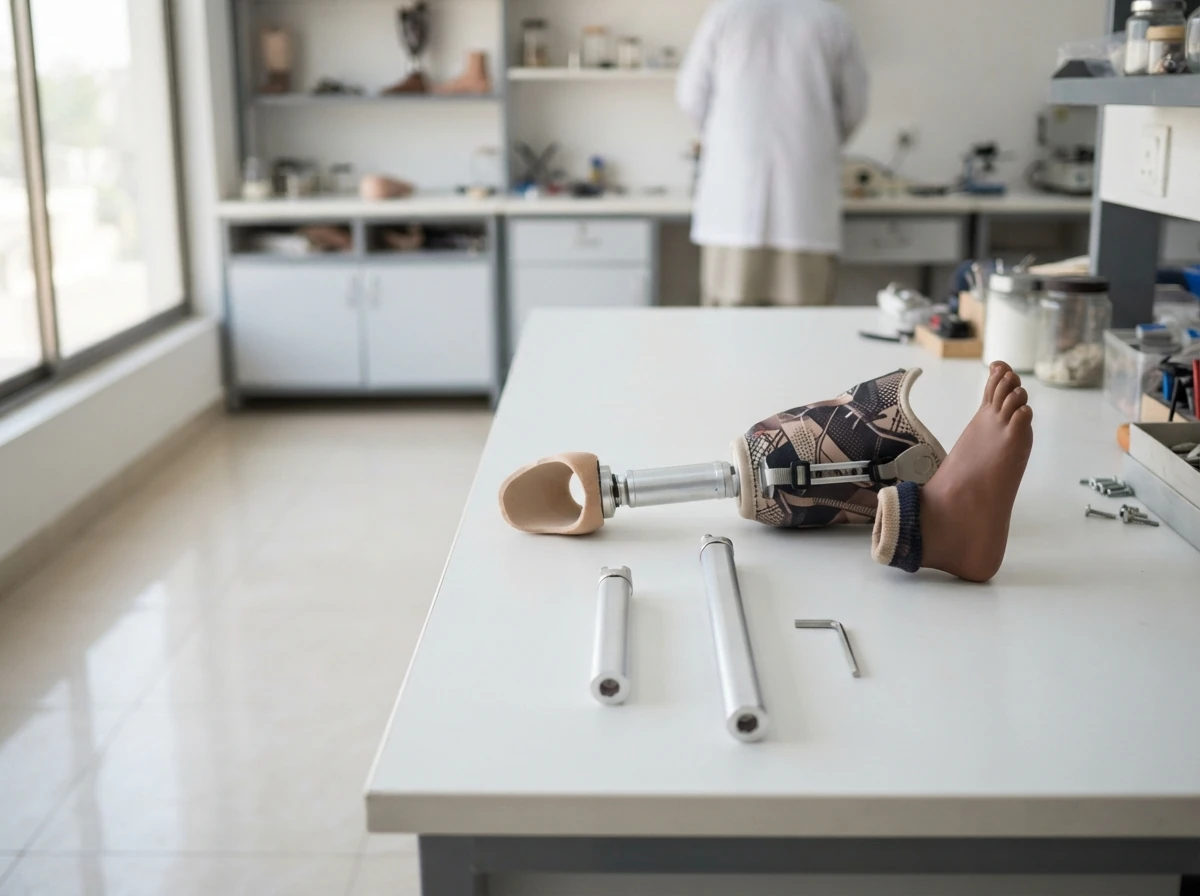
- Adjustable length. A modular pylon can be swapped for a longer one in one short visit, for a small cost.
- Room to grow in the socket. The socket is made to be worn with extra socks at first. Socks come off as the stump grows.
- A flexible inner socket. A soft inner layer in a rigid frame can be reheated and reshaped to gain a few more months.
- Parts that carry over. The foot and adapters move to the next socket until the foot size is outgrown.
As a guide, expect a length check every four to six months, and a new socket roughly every twelve to eighteen months. Under five years, a little more often.
What to watch for at home
A young child will not tell you the leg hurts. They will simply stop using it. You are the early warning system.
- Refusing the leg, or crawling instead of walking. Almost always a fit problem. Bring the child in.
- Red marks that last more than twenty minutes after the leg comes off.
- The child standing on the toes of the other foot, or a tilted pelvis. The artificial leg has become short.
- A sharp, tender point at the end of the stump. In children, bone can grow faster than the skin over it. This needs the surgeon, not a socket change.
- Blisters or a rash in summer. Wash the stump and liner every evening and dry both fully.
School, sport and other children
We build children's legs to be used hard. A child should run, climb, fall and play cricket in the street on their leg. If it breaks, it can be repaired. A childhood spent sitting out cannot.
Let the child choose the socket pattern. A favourite colour or a cricket team turns the leg from something to hide into something to show. It makes a real difference in the first week at school.
Tell the class teacher plainly what the leg is, that the child can do everything, and that the leg may need to come off for a few minutes if it hurts. Children accept quickly what adults explain calmly. Keep a spare stump sock in the school bag for hot days.
When to fit, and when to wait
Go ahead if
- the child is pulling to stand, or is older and the wound has healed
- the surgeon is satisfied with the stump
- a parent can attend every fitting and learn to put the leg on
- you can return for length checks two or three times a year
See the surgeon first if
- the end of the stump is pointed, tender, or the skin looks stretched over bone
- there is a limb difference from birth that has not yet been assessed by an orthopaedic surgeon
- the hip or knee does not straighten
- the wound or a pin site is still draining
Price of a child's artificial leg in Karachi
| Item | Indicative range (PKR) |
|---|---|
| First standing leg, infant | 45,000 to 110,000 |
| Below knee leg, child | 60,000 to 220,000 |
| Above knee or through knee leg, child, with knee joint | 120,000 to 450,000 |
| Lengthening visit with new pylon | 5,000 to 20,000 |
| Replacement socket, reusing the foot and parts | 30,000 to 110,000 |
Ask us to plan the likely costs over the next three years, not just the first leg. It makes budgeting far easier.
Will my child walk normally?
With a below knee or through knee level, most children walk and run so well that strangers do not notice. Above knee takes longer, but children adapt far better than adults at every level.
How often will the leg need changing?
Plan for a length adjustment every four to six months and a new socket every twelve to eighteen months, more often under the age of five. The foot and other parts are reused until outgrown.
Why does the first leg for a baby have no knee?
A baby cannot control an artificial knee, and it would fold every time they tried to stand. A straight leg lets them learn balance. The knee is added at around three to four years.
Can my child play sports?
Yes, and they should. Cricket, football, cycling and swimming are all possible. Swimming needs the leg removed or a water leg, because standard parts are not waterproof.
We live outside Karachi. How do we manage the growth checks?
Send a short video of the child standing and walking, from the front and the side, every few months on WhatsApp. We can usually tell from that whether a visit is needed, and we group the work into one trip.
Send a photo of the stump for a free opinion
Three clear photos on WhatsApp, front, side and end, with the date of surgery. The prosthetist replies with whether it is the right time, the kind of leg that suits, and a price range.
- Answered on WhatsApp, 24/7
- First assessment free, no obligation
- Nothing is stored on this website