Stump care: the skin comes first
The skin of your stump was never designed to carry body weight inside a sealed, warm socket. It can learn to, and it does, but only if you look after it daily. Nearly every week lost from a leg is lost to a skin problem that started small.
How do you care for an amputation stump?
Wash the stump every evening with mild soap and lukewarm water, rinse well and dry it completely. Inspect all of it with a mirror for redness, blisters or broken skin. Wash the liner or socks daily. Apply moisturiser only at night, never before wearing the leg. Keep your weight steady, and in the first year wear a shrinker sock whenever the leg is off.
The evening routine, step by step
- 1 minute
Take the leg off and look
Note any red marks. Check again in twenty minutes. Marks that have faded are normal pressure. Marks that remain are a warning.
- 2 minutes
Wash
Mild, unscented soap and lukewarm water. Use your hand, not a rough cloth. Rinse until no soap remains, because soap residue under a liner causes rashes.
- 2 minutes
Dry completely
Pat dry with a clean towel. Pay attention to skin folds and the scar line. In humid months, let it air for ten minutes as well.
- 2 minutes
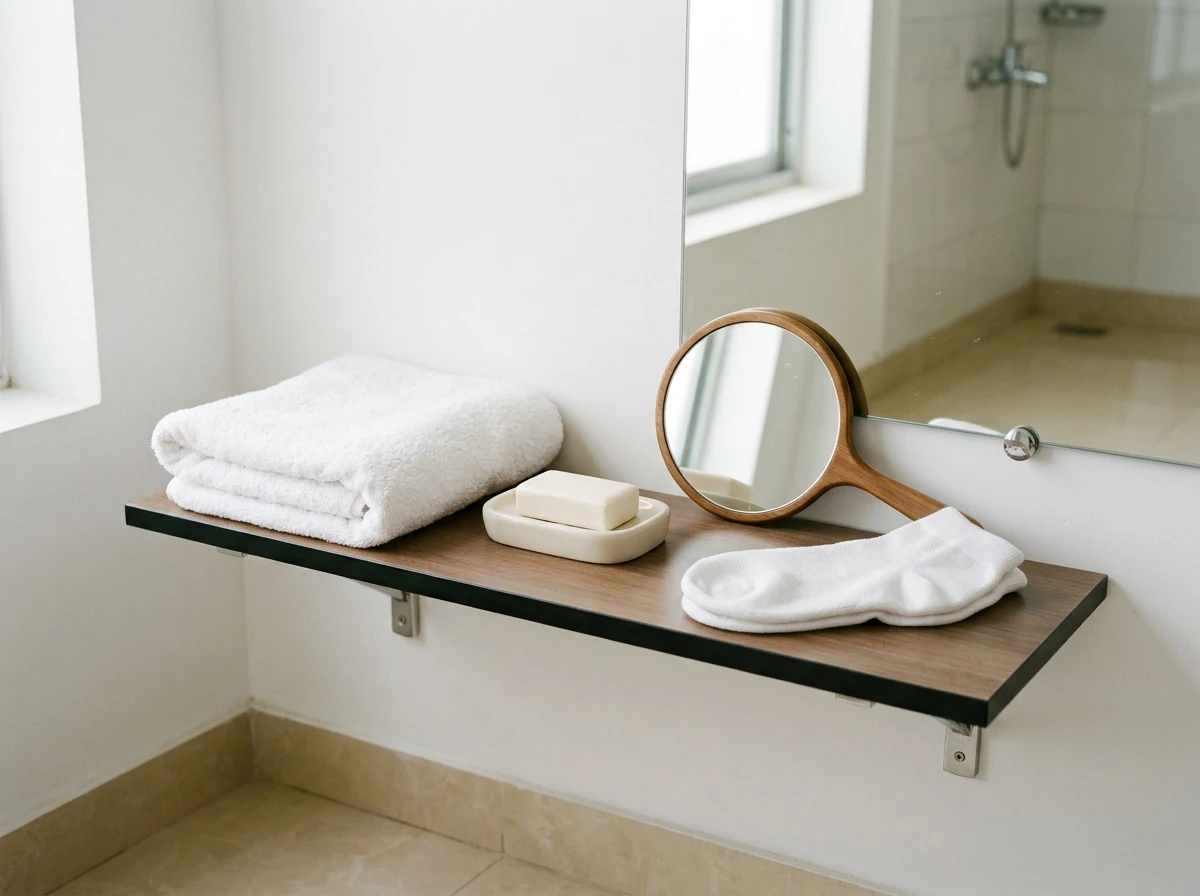
Inspect with a mirror
Front, back, sides and the end. Look for redness, blisters, pimples, dark or shiny patches, cracks and swelling.
- 1 minute
Moisturise, at night only
A light unscented lotion if the skin is dry. Never in the morning, because greasy skin slips in the socket and softens.
- 2 minutes
Wash the liner and socks
By hand, mild soap, rinse very well. Dry the liner on its stand away from the sun. Have a clean dry sock ready for morning.
What you might see, and what it means
| What you see | Usual cause | What to do |
|---|---|---|
| Red patch that fades in twenty minutes | Normal pressure | Nothing. This is healthy. |
| Red patch that stays, or is sore | Too much pressure at that point | Reduce wearing time and have the socket adjusted |
| Blister | Rubbing from a loose socket or wrinkled sock | Do not burst it. Rest from the leg, cover it, and have the fit checked. |
| Small red pimples around hairs | Blocked or infected hair roots, worse with sweat | Wash more carefully. Do not shave. See a doctor if they spread or fill with pus. |
| Itchy red scaly rash, often with a clear edge | Fungal infection, common in humid months | Keep dry. See a doctor for an antifungal treatment. |
| Itchy rash in the exact shape of the liner | Reaction to soap residue or to the liner material | Rinse the liner more thoroughly. If it continues, ask us about a different liner. |
| Dark, thick, warty skin at the very end | The stump end is not touching the bottom of the socket, and fluid collects | This needs a socket correction. Book a review. |
| Open sore, pus, spreading redness, warmth or fever | Infection | Stop wearing the leg and see a doctor the same day |
Small habits that make a large difference
- Do not shave the stump. Regrowing hairs are pushed back into the skin by the socket and become infected.
- Do not use spirit, antiseptic liquid or harsh soap on the stump. They dry and crack the skin.
- Do not use talcum powder inside a gel liner. It clumps and rubs. It is fine in a sock fit socket.
- Do put a fresh sock on every morning, and smooth every wrinkle. A wrinkle is a blister by evening.
- Do tell us early. A sore spot on Monday is a five minute adjustment. By Friday it is a wound and a week without the leg.
- Do keep a pair of crutches. The only cure for broken skin is time out of the socket.
Keeping the stump a steady size
The socket is rigid. If the stump swells, the socket is tight and the skin is pinched. If it shrinks, the socket is loose and the skin is rubbed. A steady stump is a comfortable stump.
In the first year
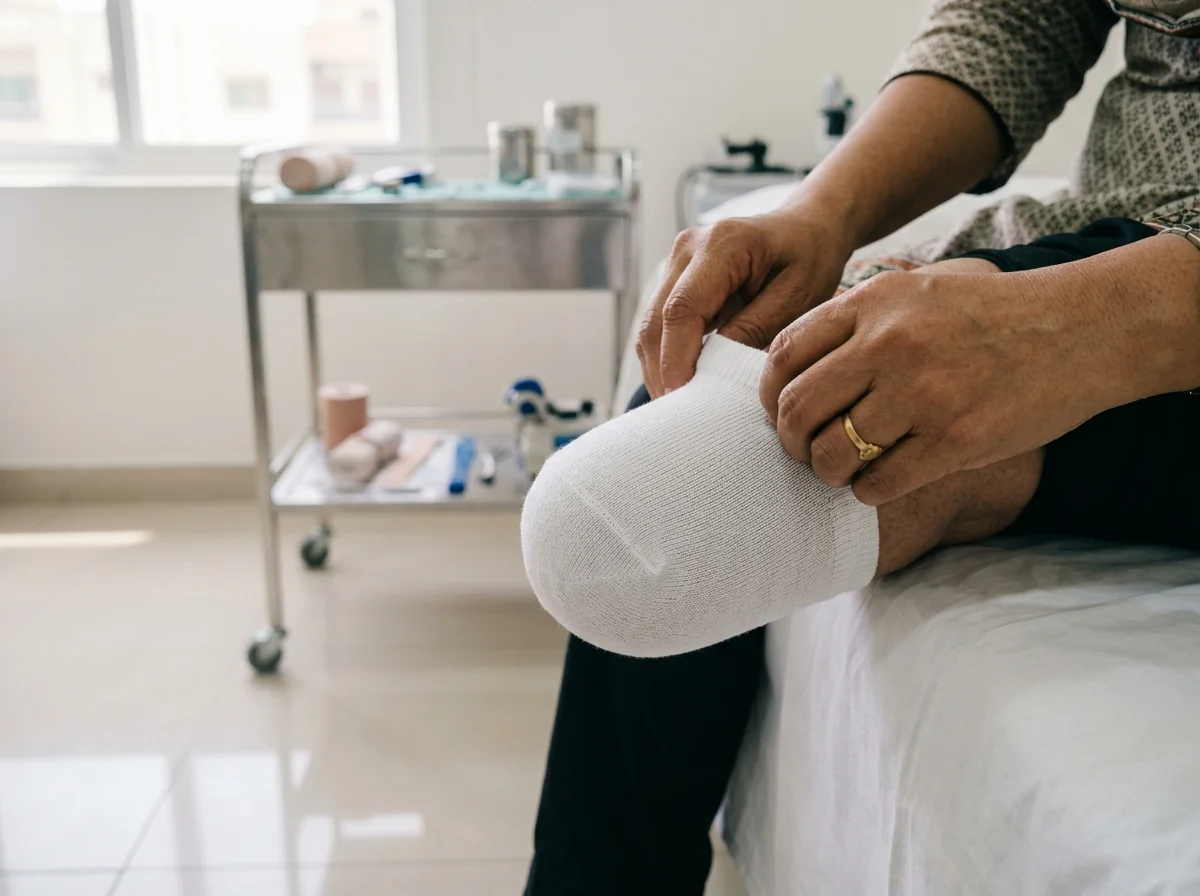
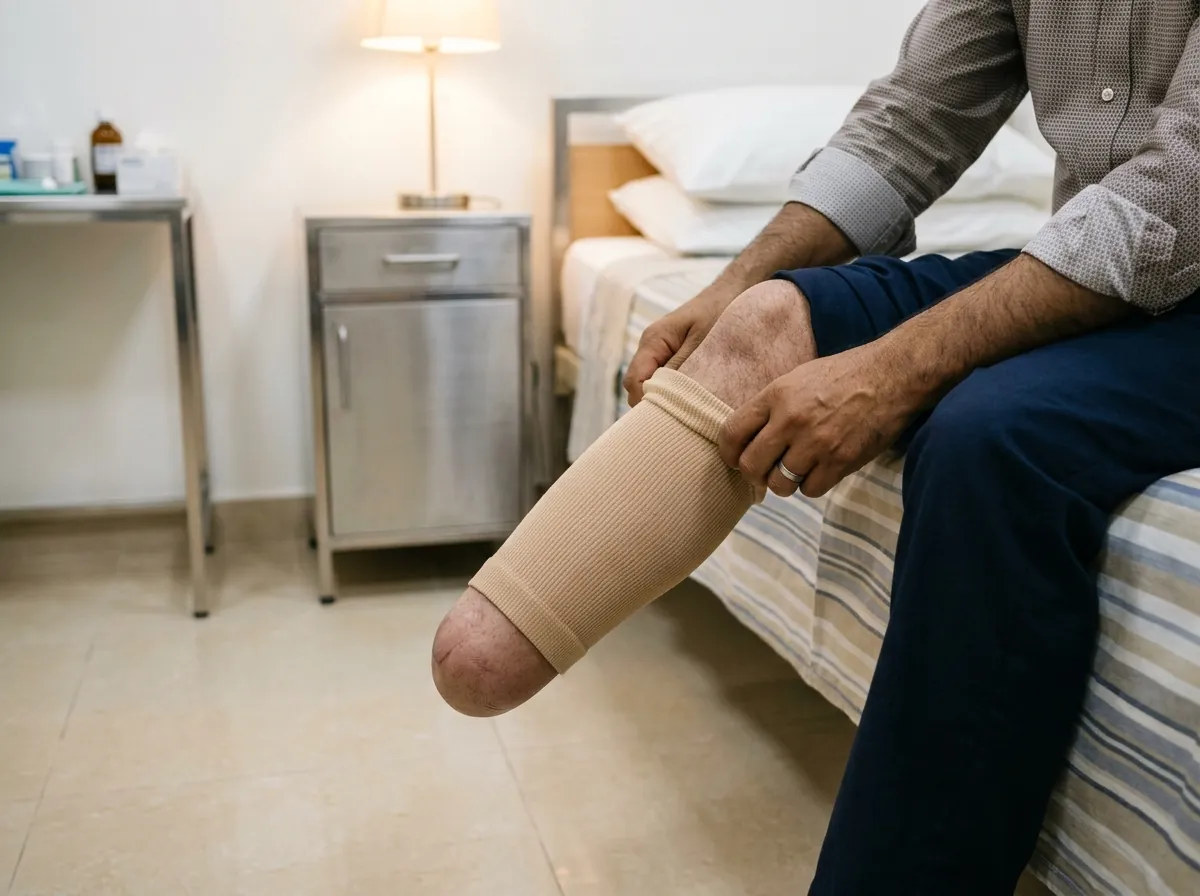
Wear the shrinker sock or bandage whenever the leg is off, including at night. If you leave the stump uncovered overnight, it swells, and the leg will not go on in the morning.
Every year after
Keep your weight within two or three kilos. Put the leg on soon after getting up, before the stump swells. Watch salt if you tend to retain fluid. On dialysis days, expect the stump to be smaller afterwards and add a sock.
If the leg will not go on
Lie down, raise the stump, and wear the shrinker for thirty minutes. Try again with a thinner sock. Do not force it.
Tenderness, and feelings from the missing foot
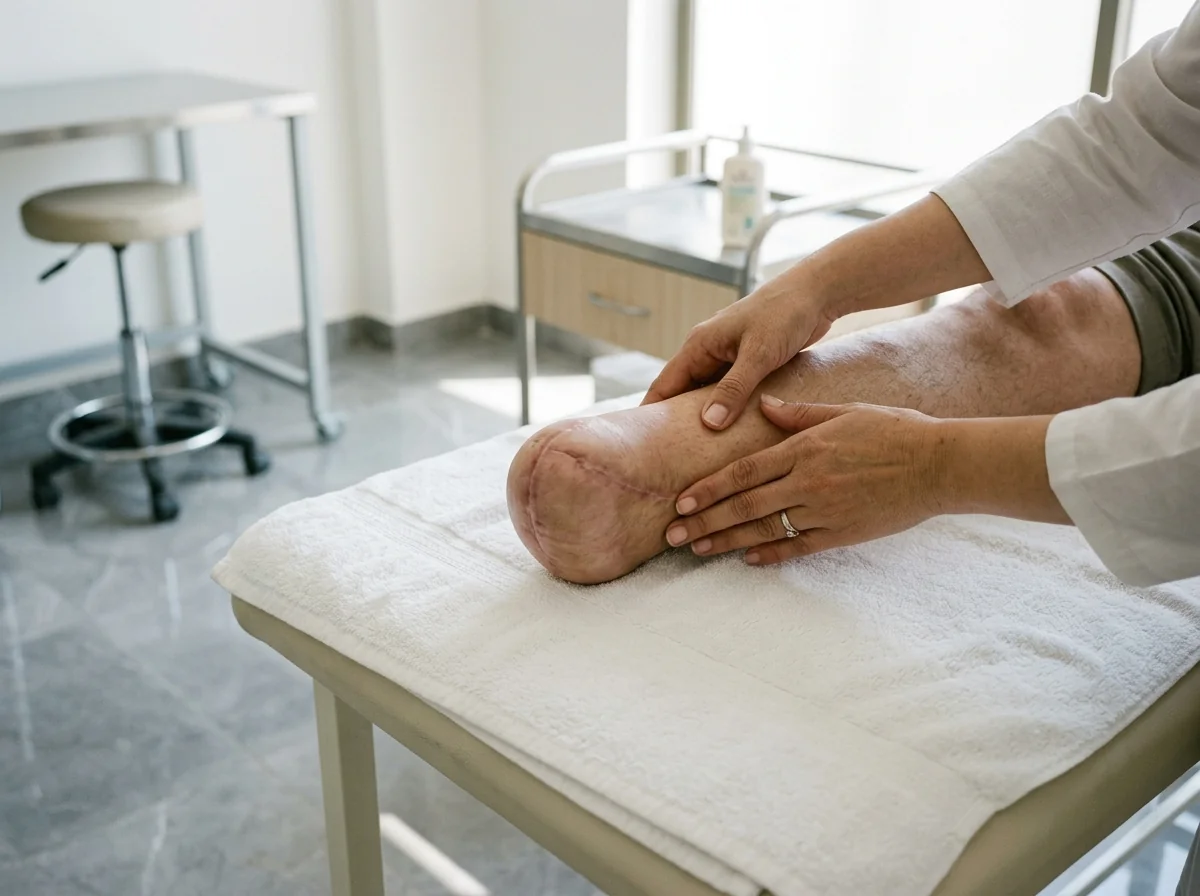
A new stump is often oversensitive. It needs to be taught that touch and pressure are safe. Once the wound is fully healed, spend five minutes a day on it.
- Massage the whole stump firmly with your hands, including gently across the scar to keep it from sticking to the bone.
- Tap the end of the stump with your fingertips, then pat it against a cushion, then a firmer surface.
- Rub it with soft cotton, then a towel, then something rougher, over several weeks.
Feeling the missing foot is almost universal and usually fades. If it is painful and keeps you awake, tell your doctor. There are effective treatments. It is not a sign of anything wrong with your mind.
When the prosthetist is not enough
See a doctor, the same day if you are diabetic, when
- there is any open sore, or a blister that has burst
- redness is spreading, or the area is hot, swollen or throbbing
- there is pus, a bad smell, or you have a fever
- the stump has changed colour, become cold, or pain has started at rest
- a rash does not improve within a week of careful washing and drying
We adjust sockets. We do not treat infections. Bring the leg to us after the doctor has seen the skin, so the cause can be corrected.
Should I wash my stump in the morning or at night?
At night. Skin that has just been washed is soft and slightly swollen, which is the wrong condition for going into a socket. Washing at night lets it dry and recover.
Can I put cream on my stump?
A light, unscented moisturiser at night is fine if the skin is dry. Never apply cream, oil or ointment before wearing the leg unless your doctor has prescribed it for a specific problem.
My stump sweats heavily. What can I do?
Dry the stump and liner at midday, alternate two liners, and ask your doctor about an antiperspirant for the stump. Sweating usually reduces after the first few months as the skin adapts.
Why is my stump smaller in the evening?
Walking squeezes fluid out of it through the day. This is normal. Add a thin sock in the afternoon when the leg begins to feel loose.
Is it normal for the stump to hurt?
Mild aching after a long day, like a tired muscle, can be normal. Sharp pain at one spot, pain at rest, or pain with a colour change is not, and should be assessed.
Start with a free assessment
Tell us the amputation level and the city. We reply with honest guidance and a price range, on the phone or on WhatsApp, at any hour.
- Answered on WhatsApp, 24/7
- First assessment free, no obligation
- Nothing is stored on this website