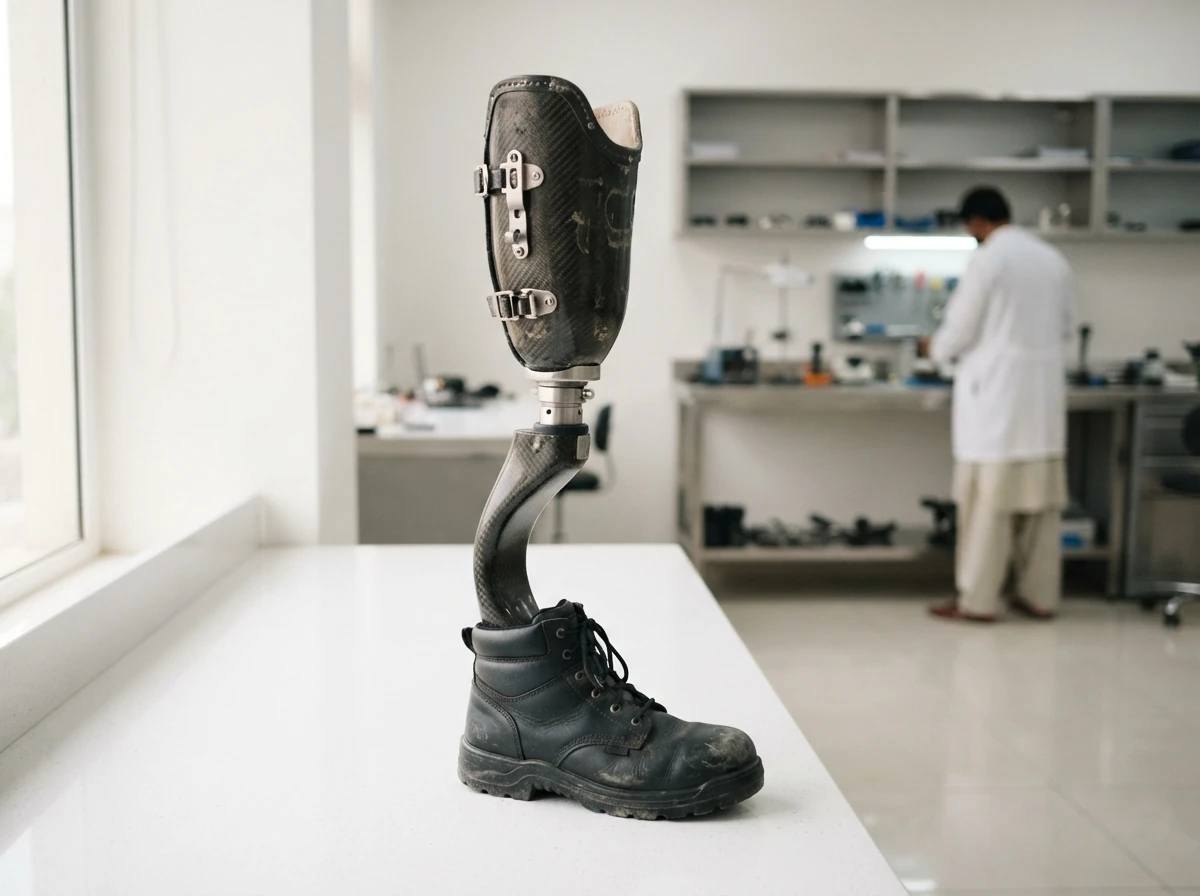
Artificial leg after an accident or injury
Most people who lose a leg in an accident are young and were healthy the day before. That is hard, and it is also the reason results are usually very good. The aim is simple: back on your feet, and back to earning, as early as it is safe.
How soon after an accident can an artificial leg be fitted?
If the wound heals without infection, the first cast is usually possible six to eight weeks after the amputation. Stumps with skin grafts, fractures higher up the same leg, or infection take longer. A first, temporary leg is often fitted early so that training can start while the stump is still shrinking, and the final socket follows some months later.
An injured stump is rarely a textbook stump
Scars and skin grafts
Grafted skin is thin, has no padding and does not slide. The liner and socket are shaped to take pressure and rubbing away from it.
Nerve pain
A cut nerve can form a tender lump. We find it by touch and leave a relief in the socket over it. Persistent cases need your doctor.
Irregular bone
Bone ends after emergency surgery are not always smooth. A clear test socket shows exactly where the socket must stand away.
Other injuries
A broken thigh, a stiff knee or an injured arm on the same side changes how the leg is put on and how training is paced.
Why we fit a first leg early, and the final socket later
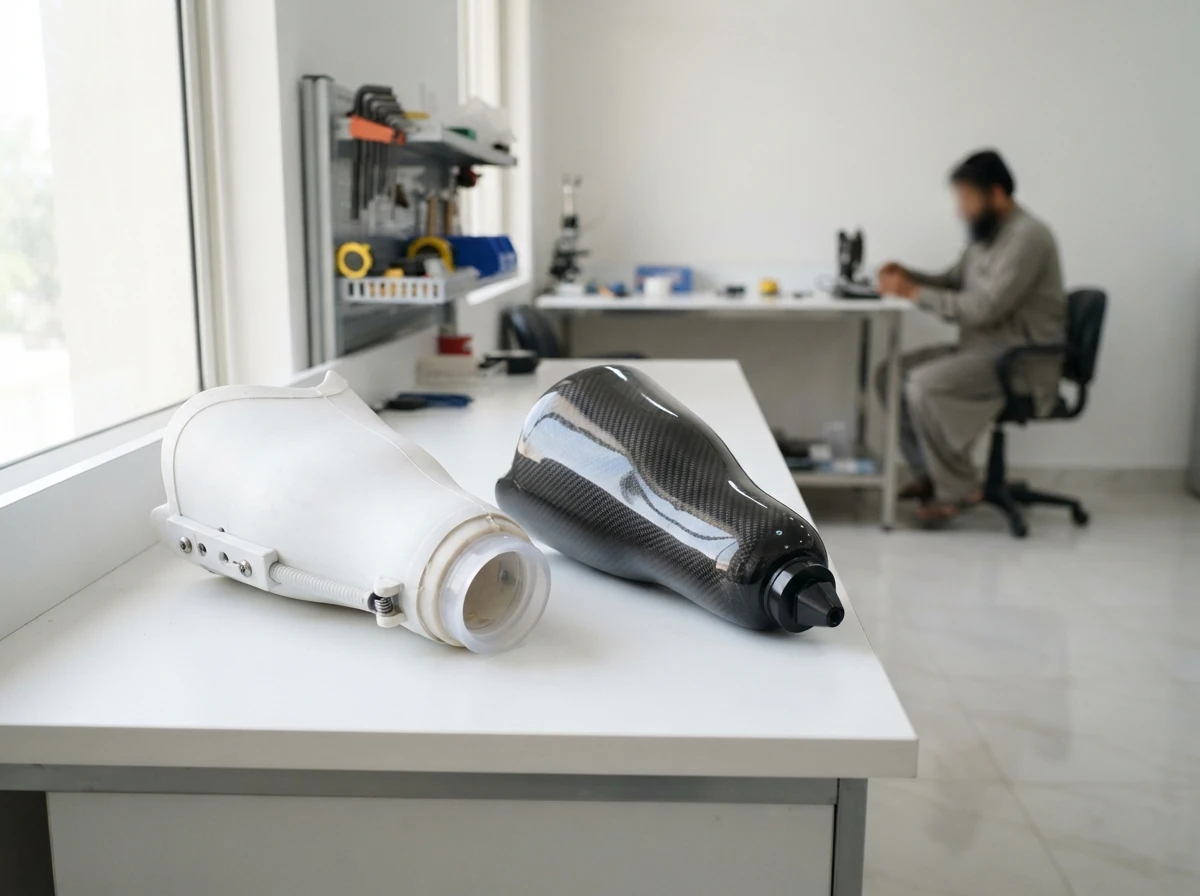
A traumatic stump can lose a third of its volume in the first six months as swelling settles and unused muscle shrinks. If you wait for it to finish, you lose six months of strength, confidence and wages.
So we usually build a first leg as soon as the wound allows. It has a simpler socket that is cheap to pad and remake. You learn to walk on it, return to light work, and wear extra socks as the stump shrinks.
When the stump has held the same size for two or three months, the definitive socket is made. The foot, pylon and knee from the first leg are reused, so you are not paying twice for parts.
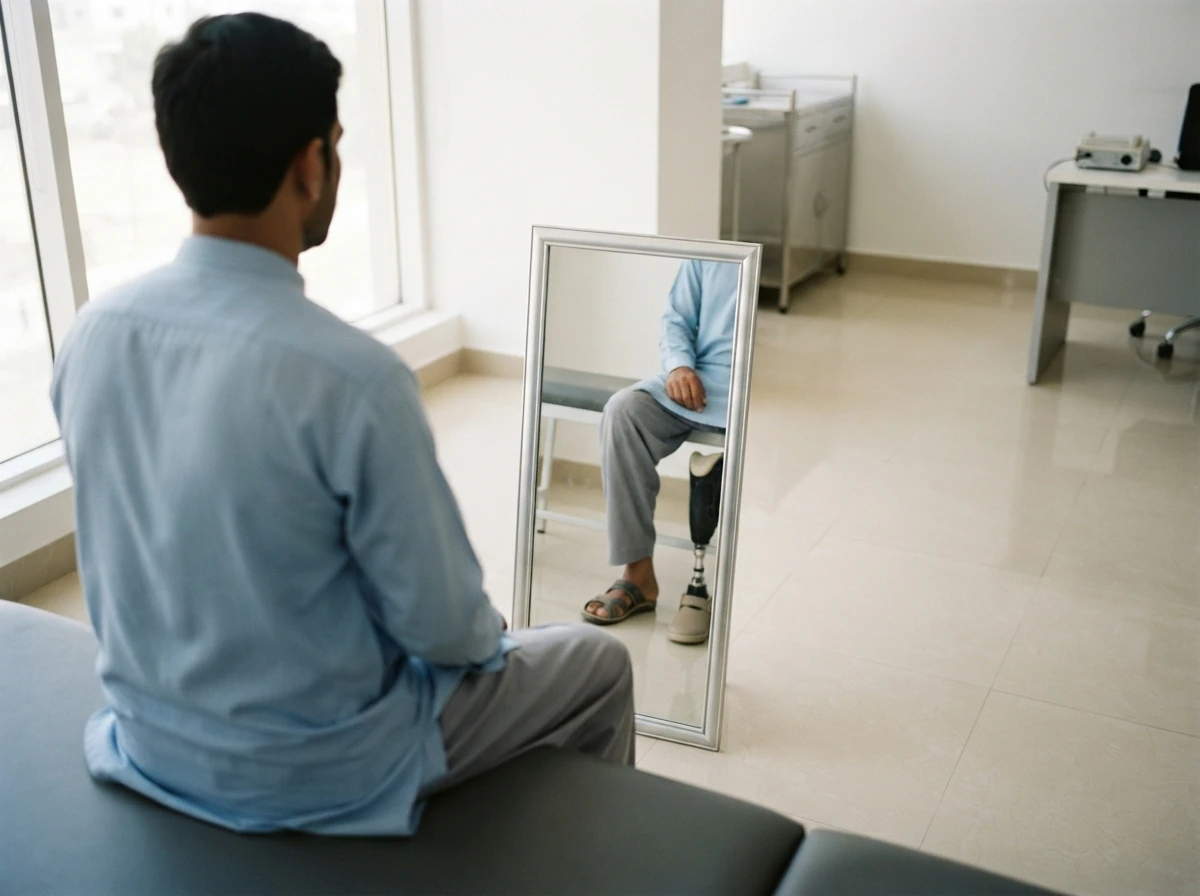
Feeling the foot that is gone
Nearly everyone feels the missing foot at first. Toes that itch, a foot that feels twisted, sudden shocks at night. This is the nervous system adjusting. It is real, it is not imagined, and it usually fades over months.
- Wearing the leg helps. Many people notice the phantom feeling eases when the brain has a foot to look at and stand on.
- Touch the stump daily. Massage, tapping and rubbing with different cloths teaches the skin to accept contact.
- Mirror exercises. Moving the sound foot in front of a mirror, so it appears where the missing foot would be, relieves cramping sensations for many people.
- Tell your doctor if the pain stops you sleeping. There are effective medicines, and they are prescribed by a physician, not a prosthetist.
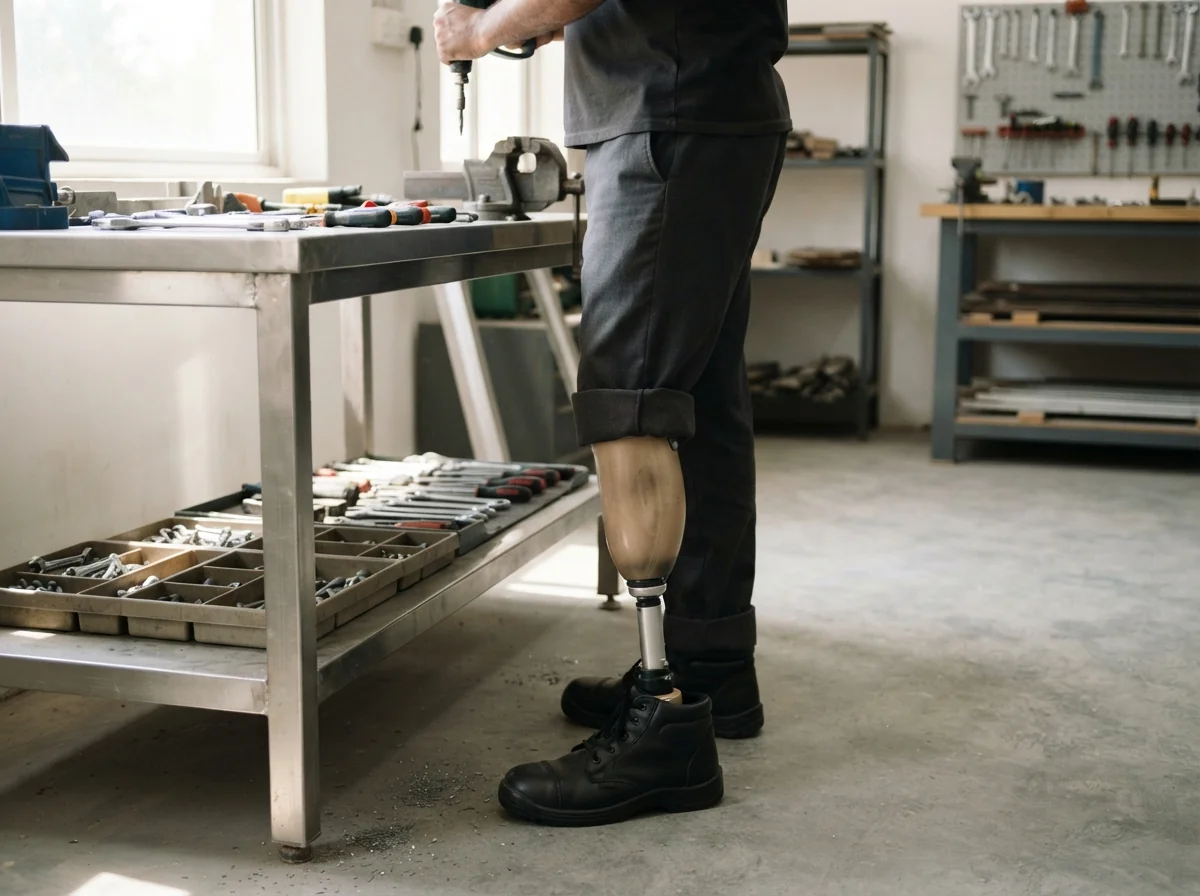
Built for the work you are going back to
Tell us your job in detail. A leg for a bank officer and a leg for a welder are different machines, even at the same amputation level.
- Standing all day: a foot with good shock absorption and a liner that manages sweat.
- Lifting and carrying: stronger pylon and adapters, rated for your weight plus the load.
- Dust, oil and water: sealed parts where possible, a washable cover, and a realistic service plan.
- Safety boots: the foot is set to the heel height of the boot, not a sandal.
- Riding to work: which side and which level decide if and how you can ride.
Ready, or not yet
Usually ready when
- stitches or clips are out and the wound is dry
- any fracture higher in the leg is cleared for weight bearing by the orthopaedic surgeon
- swelling is being controlled with a bandage or shrinker sock
- joints above the amputation move fully
Not yet, if
- there is an external fixator, or a fracture that has not united
- a skin graft is still fragile or weeping
- there is a deep bone infection under treatment
- a stiff, bent knee or hip has not yet had physiotherapy
See your doctor before a fitting if
- the wound has not closed fully, or there is discharge, spreading redness or a bad smell
- the stump hurts at rest, is very swollen, or has changed colour
- you are diabetic and your sugar has been out of control in recent weeks
- there is a new sore on your other foot
A leg fitted over an unhealthy stump causes harm. We will wait, and we will tell you so.
Will I be able to work again?
Most people who lose a leg in an accident return to work, many to the same job. Below knee users often return within three to four months of the amputation. Above knee takes longer, and very heavy or ladder work may need to change.
Why does my stump keep getting smaller?
Swelling is leaving and unused muscle is thinning. It is expected, and it is why the first socket is temporary. Add a sock when the leg feels loose. When you reach many layers of socks, it is time for a new socket.
Can a leg be fitted over a skin graft?
Yes, once the graft is mature. A soft gel liner protects it, and the socket is shaped to avoid rubbing. Grafted areas are checked closely in the first weeks of wear.
Will compensation or insurance paperwork be supported?
We provide a written quotation listing each component, and a prescription letter describing the level and the device, which employers, insurers and welfare funds usually ask for.
I feel very low since the accident. Is that normal?
Yes. Grief, anger and poor sleep are common after sudden limb loss, and they usually ease as walking returns. If the low mood is heavy or lasting, please speak to your doctor. It is treatable, and asking is not weakness.
Send a photo of the stump for a free opinion
Three clear photos on WhatsApp, front, side and end, with the date of surgery. The prosthetist replies with whether it is the right time, the kind of leg that suits, and a price range.
- Answered on WhatsApp, 24/7
- First assessment free, no obligation
- Nothing is stored on this website