Gait training with an artificial leg
Nobody is handed a motorcycle and told to ride home. Yet many people are handed an artificial leg with ten minutes of advice. Walking well on a prosthesis is a skill with stages, and each stage can be taught.
What is gait training?
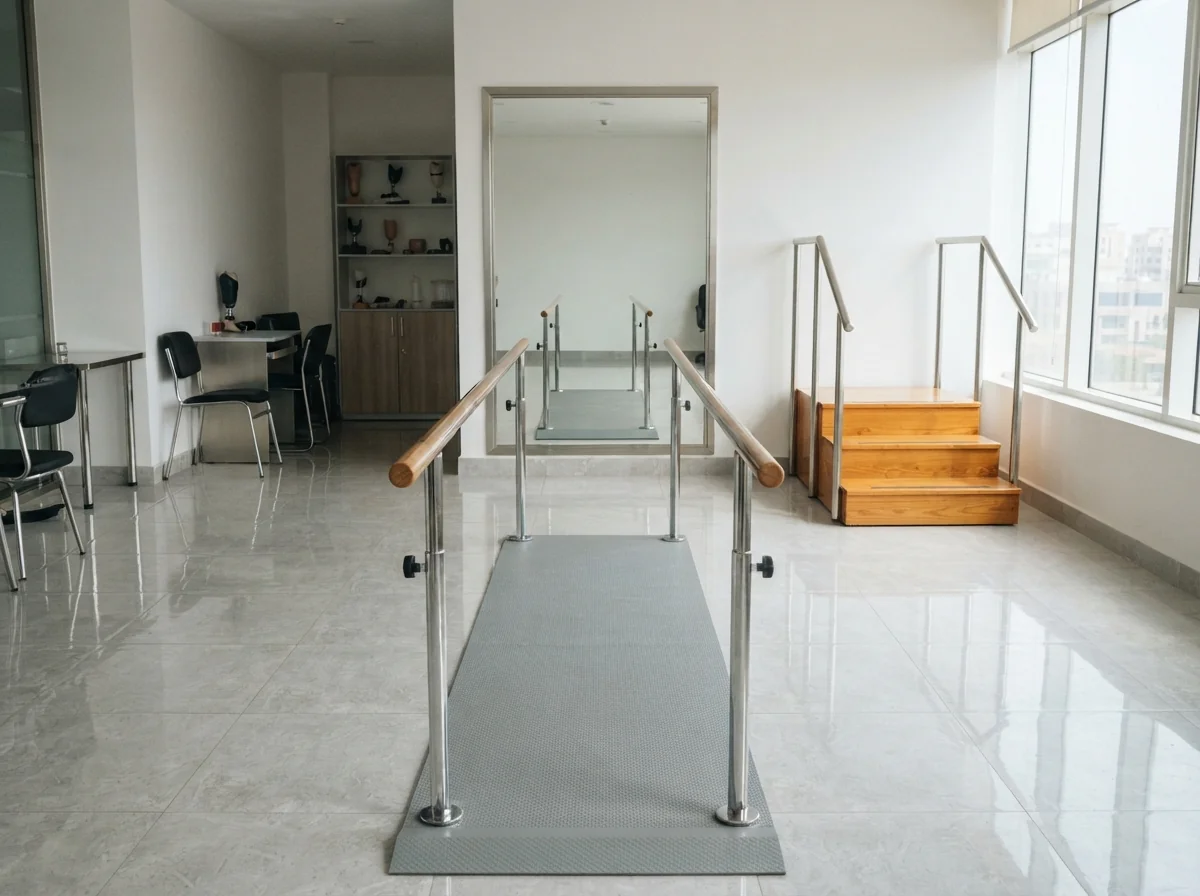
Gait training is the step by step teaching of how to stand, balance and walk on an artificial leg. It begins between parallel bars with weight shifting, moves to stepping, turning, sitting and standing, then to a walker or stick, and finally to stairs, slopes, rough ground and getting up after a fall. It also corrects walking habits that waste energy or strain the back.
What you learn, in order
- Session 1
Putting it on, and standing
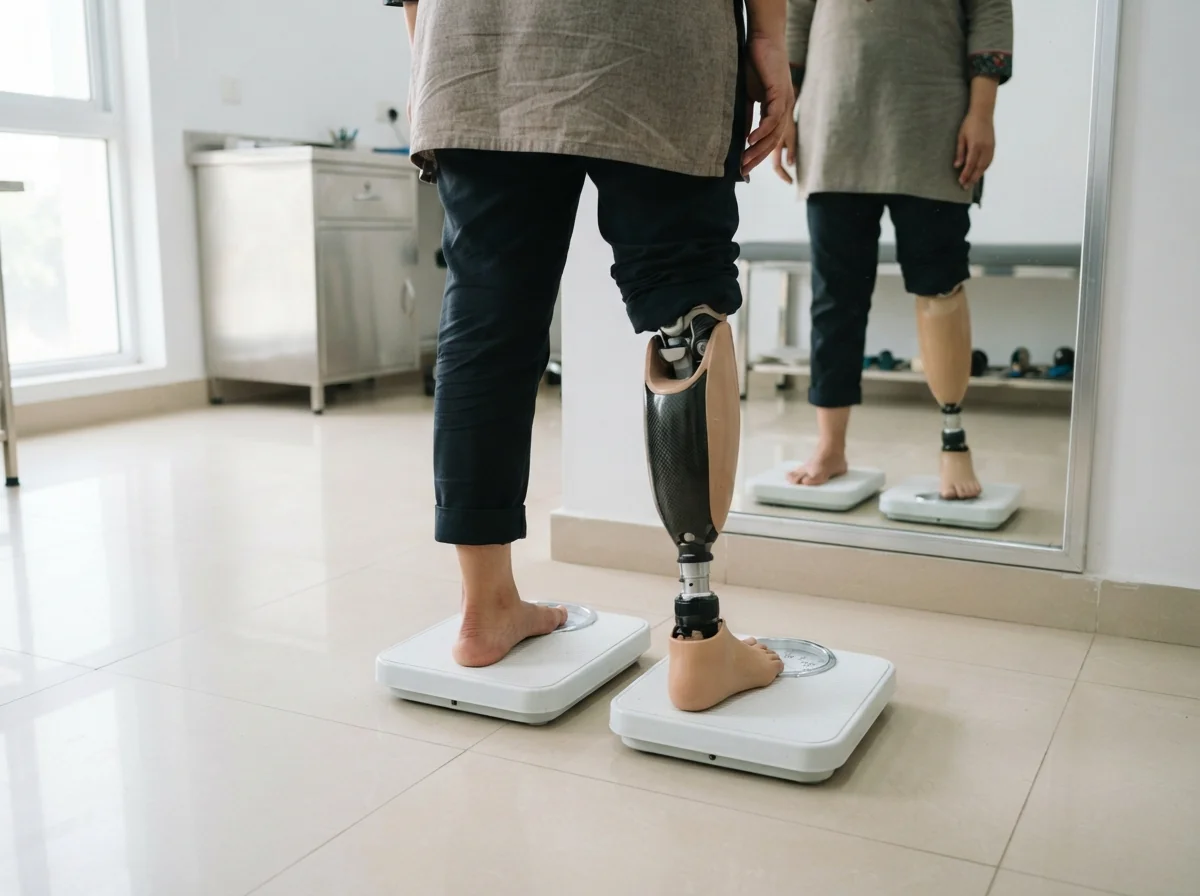
Donning the liner and leg correctly every time. Standing evenly on both legs between the bars, using a mirror and two scales to see how much weight each leg takes.
- Sessions 1 to 3
Weight shifting
Moving your weight forward, back and side to side over the artificial foot. Trusting it to hold you. This is where confidence is built.
- Sessions 2 to 5
Stepping
Stepping forward and back with the sound leg, which forces you to stand on the prosthesis. Then stepping with the prosthesis. Equal step lengths.
- Sessions 4 to 8
Walking and turning
Walking the bars with lighter hand support, then one hand, then fingertips. Turning toward the sound side first.
- Sessions 6 to 10
Chairs, walker and stick
Sitting down and standing up under control. Leaving the bars for a walker, elbow crutches or a stick, held in the hand opposite the prosthesis.
- Later sessions
Real life
Stairs, ramps, kerbs, uneven ground, carrying things, crowded places, the car, the floor, and falling and getting up.
Common walking faults, and what causes them
A fault can come from the leg, from the body, or from habit. We find out which before changing anything.
| What it looks like | Possible cause in the leg | Possible cause in the body or habit |
|---|---|---|
| Leaning the trunk over the prosthesis with each step | Leg too short, or socket wall uncomfortable on the inner side | Weak hip muscles on that side, or fear of loading the leg |
| Rising on the toes of the good foot to clear the prosthesis | Leg too long, or knee too stiff to bend | Habit from early days, or fear of catching the toe |
| Swinging the prosthesis out in a half circle | Leg too long, or knee friction too high | Stiff hip, or not trusting the knee to bend |
| Short quick step with the good leg | Socket pain when standing on the prosthesis | Poor balance, or not enough time spent weight shifting |
| The knee snaps straight with a bang | Too little knee friction | Kicking the leg forward too hard |
| The foot slaps the ground | Heel too soft for your weight | Landing with the knee bent |
Ten minutes, twice a day
Progress is made between sessions, not during them. These need no equipment. Hold a kitchen counter or a sturdy table for safety.
- Even standing. Stand in front of a mirror, level the shoulders and hips, and hold for one minute. Most people stand on the good leg without realising.
- Weight shifts. Slowly shift weight onto the prosthesis until the good foot is nearly light. Hold five seconds. Twenty times.
- Step ups. Step the good foot onto a low step and back down, standing on the prosthesis. Ten times.
- Side steps. Along the counter and back, leading with each side.
- Hip strength. Lying on your side, lift the stump toward the ceiling. Lying on your stomach, lift it backward. Fifteen each.
Learning to fall, and to get up
Everyone who walks on a prosthesis falls at some point. People who have practised falling are hurt less and frightened less, and fear of falling is what keeps many users in a chair.
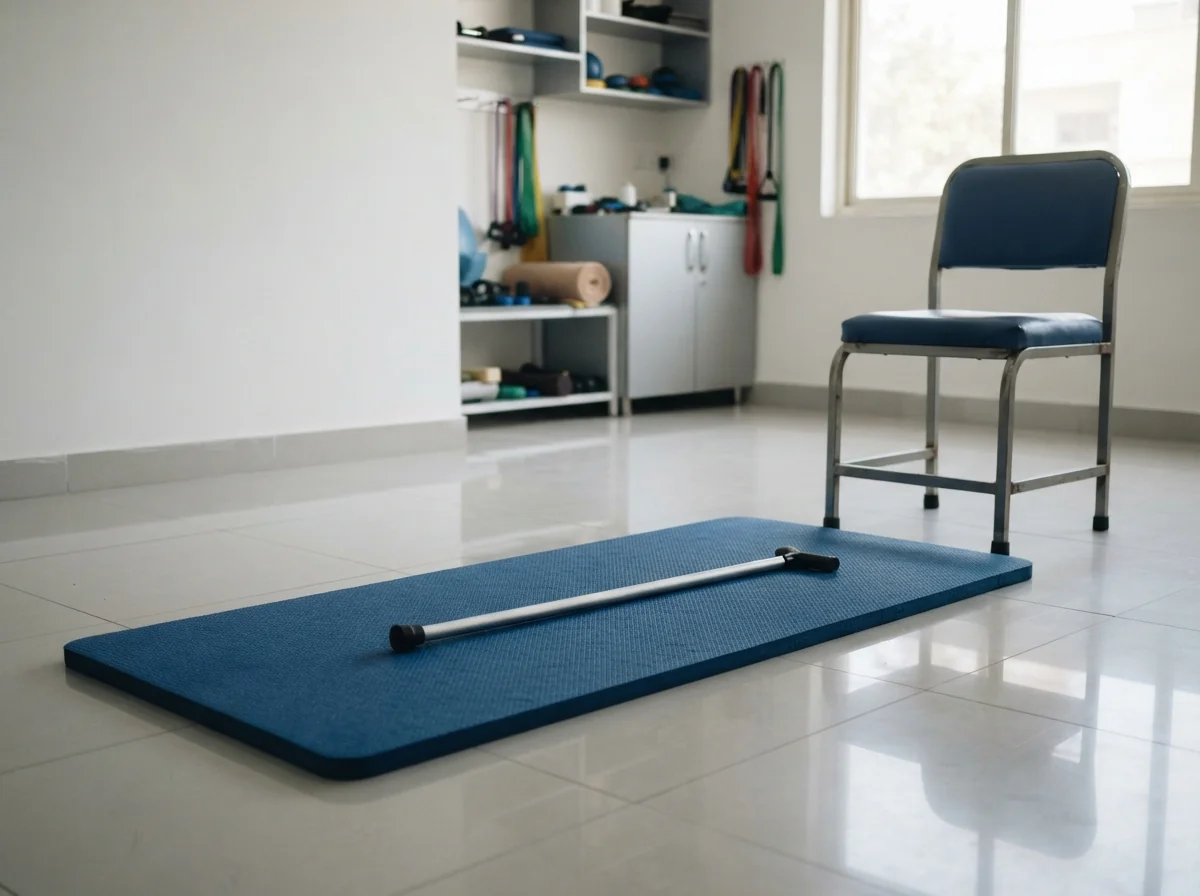
We teach you on a mat. Let go of the stick. Bend and roll, landing on the fleshy parts, protecting the head and the stump. Do not reach out with a stiff arm.
Getting up is a sequence: roll onto your side, push up to sitting, move to hands and knees or to kneeling on the good knee, bring the good foot forward, and push up using a chair if one is near. We practise until you can do it alone, because one day you will be alone.
How many sessions to expect
| Level | Typical sessions | Typical time to community walking |
|---|---|---|
| Partial foot or Symes | 2 to 4 | 1 to 3 weeks |
| Below knee, healthy adult | 6 to 10 | 4 to 8 weeks |
| Below knee, older or diabetic | 10 to 16 | 2 to 4 months |
| Through knee or above knee | 12 to 20 | 2 to 4 months |
| Hip level, or both legs above knee | 20 and more, in stages | 6 to 12 months |
If you already have a physiotherapist near home, we are glad to share the programme with them.
Is training included with the leg?
Yes. An agreed number of sessions is part of every new leg and is written on the quotation. Additional sessions can be arranged if you want them.
Which hand should hold the stick?
The hand opposite the artificial leg. The stick and the prosthesis move forward together, which widens your base of support and takes load off the stump.
I have had my leg for years and walk badly. Is it too late?
No. Long standing habits can be improved. We first check the leg itself for length, alignment and socket fit, because many so called bad habits are the body protecting itself from a poor fit.
My father is afraid to put weight on the leg. What can we do?
This is very common and is solved with time spent on weight shifting between the bars, not with persuasion. The scales and the mirror show him what his fear hides: that the leg does hold.
Can training be done at home?
The early sessions need parallel bars for safety. Once he is on a walker or stick, the home programme carries most of the work, with clinic sessions to check and progress it.
Start with a free assessment
Tell us the amputation level and the city. We reply with honest guidance and a price range, on the phone or on WhatsApp, at any hour.
- Answered on WhatsApp, 24/7
- First assessment free, no obligation
- Nothing is stored on this website