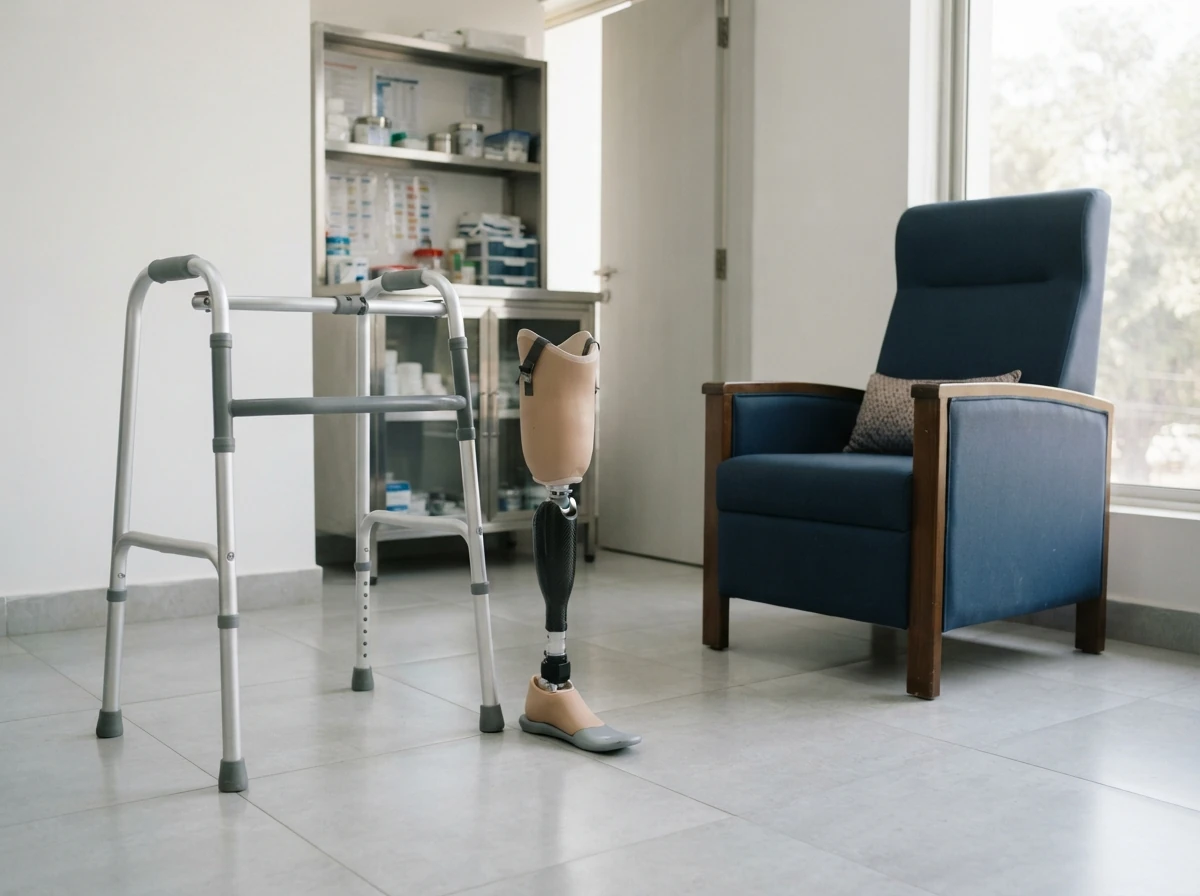
Artificial leg for an elderly patient
When a father or mother in their seventies loses a leg, the family asks one thing first: is it worth it at this age? Very often it is. But the leg, the goals and the pace are different from those of a young person, and the most useful leg is sometimes the simplest one.
Can an elderly person use an artificial leg?
Yes. There is no upper age limit. What decides success is heart and lung health, the strength of the other leg and the arms, balance, eyesight, memory and the wish to walk. For older users the leg is kept light, the knee is chosen for safety, and the first goal is usually standing and moving safely from bed to chair, with walking distance built from there.
Three levels of success, all of them worth having
Level one: transfers
Standing to move from bed to chair to commode without being lifted. It protects the carer's back, the patient's dignity and the skin. For some people this alone justifies the leg.
Level two: the household
Walking from room to room with a frame or stick, reaching the dining table, the bathroom and the front door. Most older below knee users reach this.
Level three: the neighbourhood
The masjid, the car, a family function, a short walk outside. Many reach this. It is a bonus, not the measure of success.
What changes for an older user
| Part | Usual choice | Why |
|---|---|---|
| Weight | As light as possible. Thin wall socket, aluminium parts, light foot. | Every hundred grams is felt by a tired hip and heart. |
| Socket | Total surface bearing with a cushioned liner, soft flexible brim above the knee | Older skin is thin and marks easily. |
| Putting it on | Pin lock or a simple sleeve, large easy grips | Arthritic fingers and weak eyesight must manage it every morning. |
| Knee, if above knee | Manual lock, or a weight activated safety knee | One fall can mean a broken hip. Safety outranks a natural looking walk. |
| Foot | Light, stable, with a soft heel. Multi axis if the home has uneven floors. | Stability at each step. Springy feet feel unsafe. |
| Height | Sometimes set a few millimetres short | The toe clears the floor more easily and tripping is reduced. |
An honest check the family can do at home
Encouraging signs
- can sit up unsupported and push up from a chair using the arms
- can stand on the other leg at a counter for about half a minute
- follows a two step instruction and remembers it the next day
- wants to walk, and says so without being prompted
- sugar, blood pressure and heart are under a doctor's care
Reasons to pause and talk
- breathless or has chest pain on light effort. The physician decides first.
- the other leg is weak, painful or has a sore
- marked memory loss or confusion. The leg may be put on wrongly, or forgotten.
- bedbound for many months with stiff, bent hips and knees
- does not want it. A leg made for the family and not the patient is rarely worn.
If several of the second list apply, a good wheelchair, a transfer board, a raised commode seat and a trained family member may give more independence than a leg. We will say so plainly, and help you set that up well.
Slower, shorter, and with the family in the room
An older learner tires quickly and frightens easily. Both are handled by pace, never by pushing.
- Sessions of thirty minutes, with sitting rests, more often across more weeks.
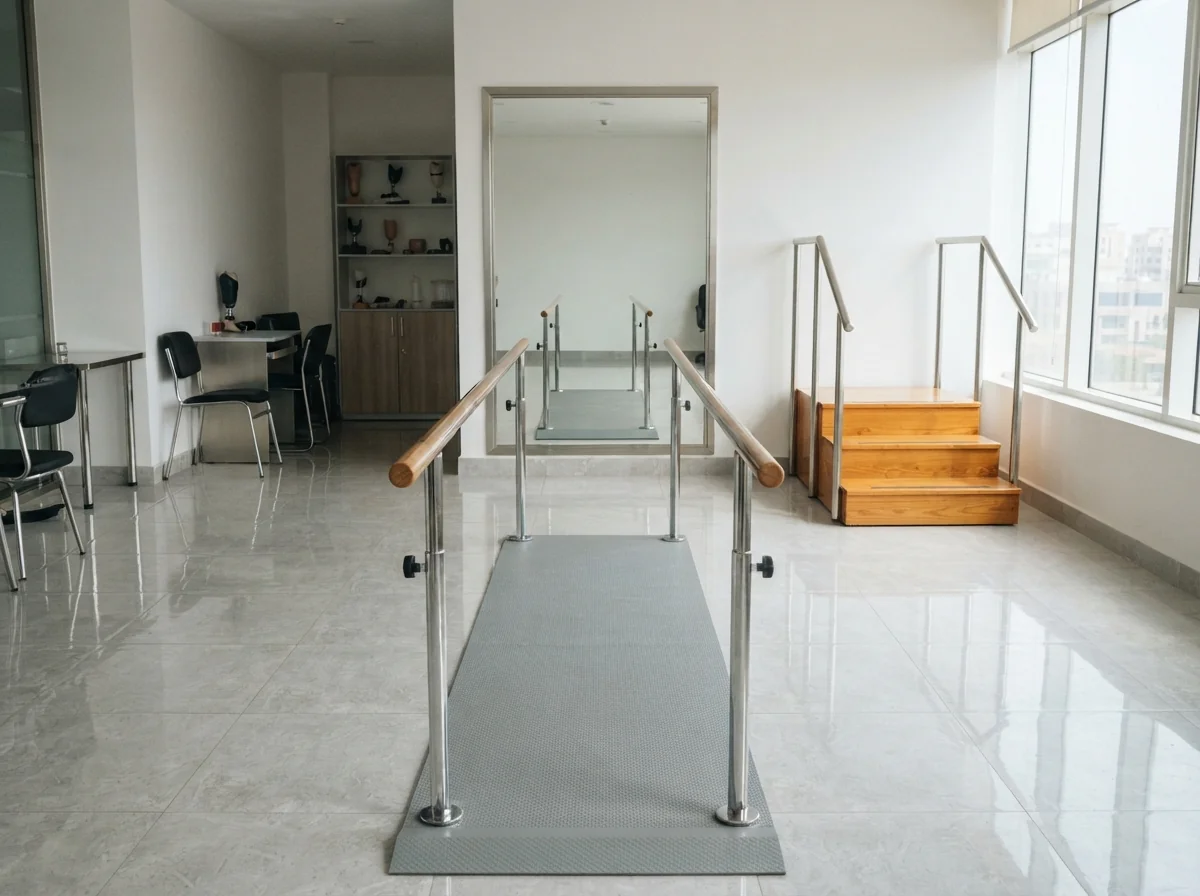
- Standing confidence comes first. We may spend three sessions just shifting weight between the bars.
- A walking frame at first, then two sticks, then one if balance allows. Many sensibly keep the frame.
- The son, daughter or helper who lives with the patient attends, and learns how to put the leg on, check skin and guard from the artificial side.
- Blood sugar and blood pressure medicines are taken as usual, and a snack is brought.
- We stop the session for chest pain, unusual breathlessness or dizziness, and ask for a medical review.
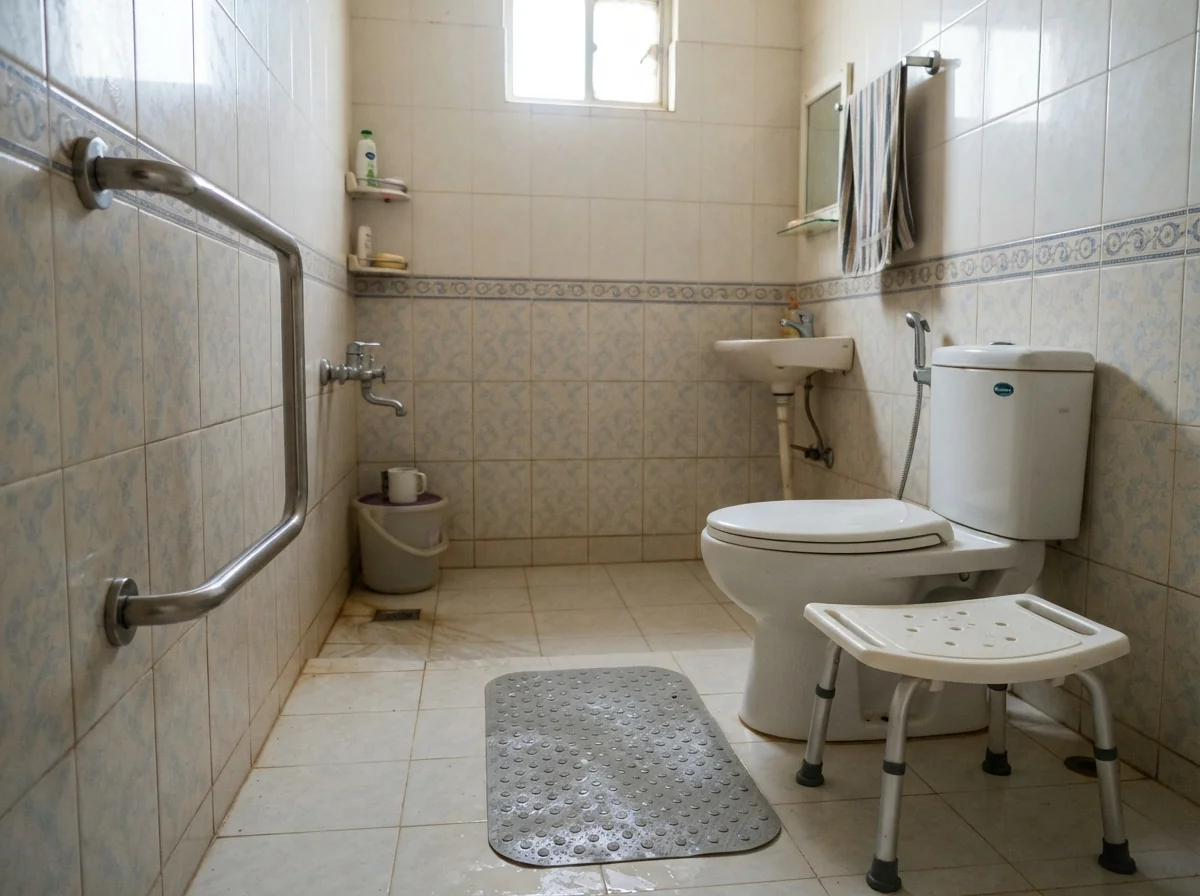
Five changes at home that matter more than the knee joint
- A firm chair with armrests and a seat at knee height or a little above. Low sofas are the enemy.
- A raised commode seat and a grab bar. Squatting toilets cannot be used.
- A plastic stool in the bathing area. The leg comes off to bathe.
- Night lighting from bed to bathroom, and crutches or the frame within reach of the bed.
- Loose rugs lifted, door sills marked, one handrail on any step.
Is 80 too old for an artificial leg?
Not by itself. We have seen people in their eighties walk indoors on a light below knee leg. Above the knee at that age is harder, and success depends on heart health and the other leg. An assessment answers it better than a birthday.
What is a transfer leg?
A light, simple leg whose purpose is standing and pivoting between bed, chair, commode and car, and a few steps with a frame. It is inexpensive, safe, and for a frail person it can be the most valuable leg of all.
My mother is afraid. Should we insist?
No. Bring her to watch a session, let her stand once between the bars holding on, and let her decide. Fear usually eases after one safe experience. A leg she did not choose will stay in the cupboard.
How much does a suitable leg cost?
Older users rarely need costly parts. As an indicative 2026 figure, a light below knee leg with a cushioned liner usually falls between PKR 120,000 and 300,000, and a light above knee leg with a locking or safety knee between PKR 180,000 and 400,000.
How long before he can walk?
Allow two to four months from delivery for confident indoor walking below the knee, and longer above it. Progress is slower than in the young, and it still comes.
Send a photo of the stump for a free opinion
Three clear photos on WhatsApp, front, side and end, with the date of surgery. The prosthetist replies with whether it is the right time, the kind of leg that suits, and a price range.
- Answered on WhatsApp, 24/7
- First assessment free, no obligation
- Nothing is stored on this website