
Phantom limb pain: what helps
Almost everyone who loses a leg goes on feeling it. For many, some of that feeling is painful: burning toes, a cramped foot, sudden shocks at night. It is not imagination and it is not weakness. It is the nervous system adjusting, and there is a good deal that eases it.
What is phantom limb pain?
Phantom limb pain is pain felt in the part of the limb that has been amputated. It arises because the nerves and the brain areas that served the limb remain active after it is gone. Most amputees feel it at some time, usually most strongly in the first months. It tends to become less frequent and less intense over the first year, and it can be treated.
Know which one you have
They feel different, they have different causes, and they are treated by different people.
| What it feels like | Cause | Who helps | |
|---|---|---|---|
| Phantom sensation | The foot is still there. Itching, tingling, warmth, a sense of position. Not painful. | Normal activity in nerves and brain | Nobody needed. It usually fades, and is sometimes useful for walking. |
| Phantom pain | Burning, cramping, crushing, stabbing or electric shocks in the missing foot or toes | The nervous system misfiring as it reorganises | Your doctor, a pain specialist, a physiotherapist, and a well fitted leg |
| Stump pain | Pain in the stump itself, often at one spot, often worse in the socket or when tapped | Socket pressure, a nerve lump, a bone spur, infection or poor circulation | Your prosthetist for fit, your surgeon or doctor for the rest |
Many people have more than one. Treat the stump pain first, because a painful stump makes phantom pain worse.
What you can do yourself
- Wear the leg. Many people find phantom pain eases once they are standing and walking on a prosthesis. The brain is given a foot to account for.
- Handle the stump every day. Massage, tapping and rubbing with different cloths. It calms oversensitive nerves.
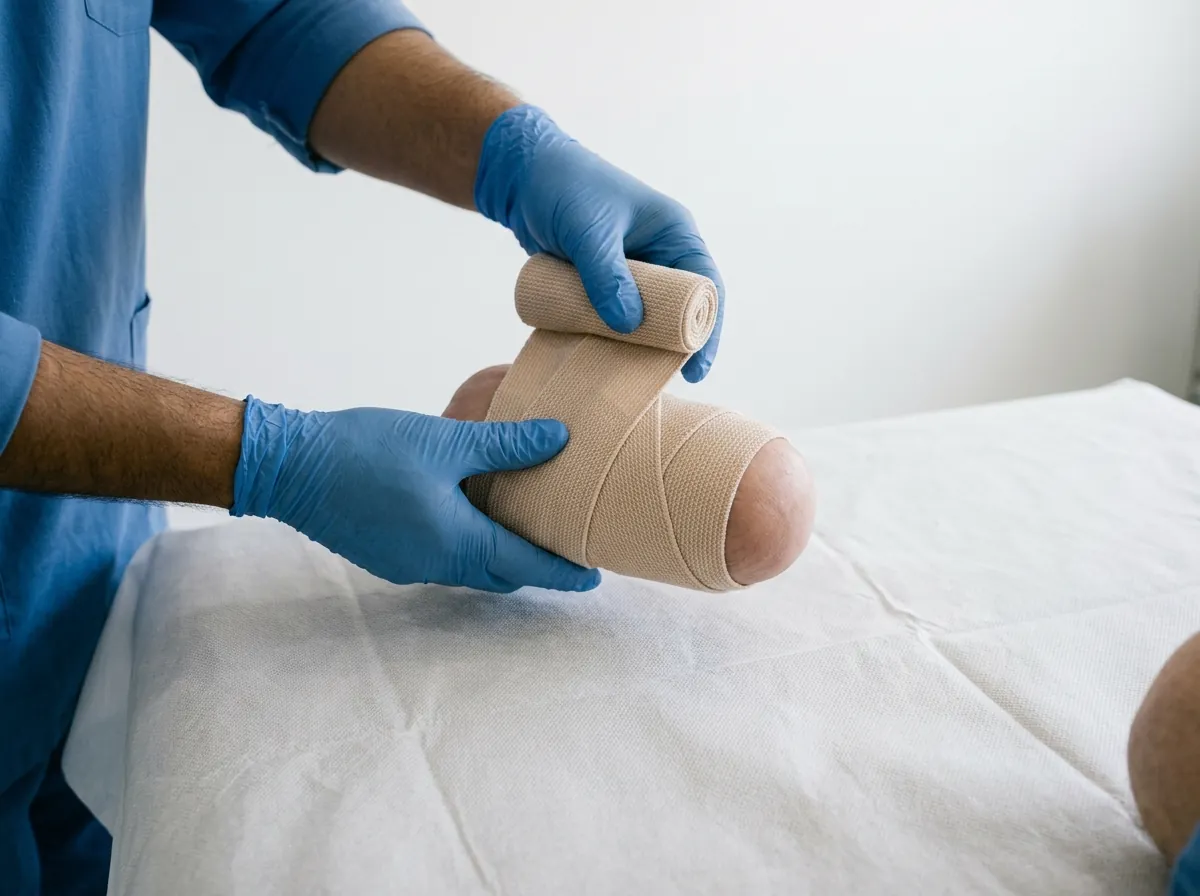
- Keep the shrinker or bandage on when the leg is off. Even, gentle pressure quietens the stump.
- Move the phantom. Deliberately curl and spread the missing toes and circle the missing ankle for a few minutes. Cramping often releases.
- Warmth or a change of position. A warm cloth around the stump, never hot, or a short walk on crutches.
- Protect your sleep. Pain is worst when you are tired, anxious or still. A regular bedtime helps more than people expect.
- Notice triggers. Cold weather, a full bladder, a tight socket, stress and, for some, strong tea late at night.
Showing the brain a foot
A simple long mirror is one of the better studied home treatments, and it costs almost nothing.
- Sit on a bed or couch with both legs out in front, and stand a long mirror between them, shiny side toward your sound leg.
- Lean so that you see the reflection of your sound leg where the missing one would be. The stump is hidden behind the mirror.
- Slowly move the sound foot: toes up and down, circles, curling. At the same time, try to make the same movements with the phantom.
- Watch the reflection throughout. The brain sees a moving, relaxed foot where it expects pain.
- Ten to fifteen minutes, once or twice a day, for at least four weeks before judging it.
- Stop if it makes you feel sick or increases the pain, and tell your doctor.

What a doctor can add
If phantom pain disturbs your sleep or your day, see a doctor. Ordinary painkillers often do little for nerve pain. There are medicines that act on the nerves themselves, and they work best when started early. They are prescription medicines with side effects, and the choice and dose belong to your doctor, not to a prosthetist, a pharmacist or a relative.
Other treatments a specialist may offer include nerve stimulation through the skin, injections around a tender nerve lump, and in stubborn cases procedures on the nerve. Low mood and anxiety make pain louder, and treating them is part of treating the pain.
Please do not suffer in silence because elders have said it is imaginary, or a sign of something unseen. It is a recognised medical condition, described in every textbook, and it responds to treatment.
When the socket is part of the problem
Tell your prosthetist if
- pain starts or worsens when the leg is on, and eases when it is off
- pressing one spot on the stump sends a shock down into the missing foot
- the socket has become loose or tight
- the end of the stump is sore, dark or swollen
What we can do
- relieve the socket over a tender nerve lump
- restore contact at the stump end, which calms fluid build up
- change the liner for one that cushions or grips differently
- correct the alignment, since an awkward walk tightens the whole limb
When it is not phantom pain
See a doctor promptly if
- the stump becomes red, hot, swollen or discharges
- pain at rest is new, constant, or comes with a pale, blue or cold stump
- pain began after a fall or a knock
- you have a fever, or you are diabetic with any break in the skin
These point to a cause in the stump that needs treatment, and they should not be put down to phantom pain.
How long does phantom pain last?
For most people it is strongest in the first weeks and months, then becomes shorter and less frequent through the first year. A minority have it for longer. Early treatment improves the odds.
Is phantom pain in the mind?
No. It is produced by real nerve and brain activity and can be seen on scans. Stress and tiredness turn it up, as they do with every kind of pain.
Does an artificial leg make phantom pain better or worse?
For most people, better, provided the socket fits. A poorly fitting socket can aggravate it, which is one more reason to report discomfort early.
My foot feels as if it has moved up inside the stump. Is that normal?
Yes. It is called telescoping. Over time the phantom foot often seems to shrink toward the end of the stump. It is harmless.
Can children get phantom pain?
Children who lose a limb can, though usually less than adults. Children born without part of a limb rarely do.
Start with a free assessment
Tell us the amputation level and the city. We reply with honest guidance and a price range, on the phone or on WhatsApp, at any hour.
- Answered on WhatsApp, 24/7
- First assessment free, no obligation
- Nothing is stored on this website