Casting and fitting an artificial leg
Parts can be bought by anyone. What cannot be bought is the hour spent capturing your stump correctly, and the patience to correct a test socket until it is right. This page shows what careful work looks like, so you can recognise it.
How is an artificial leg fitted?
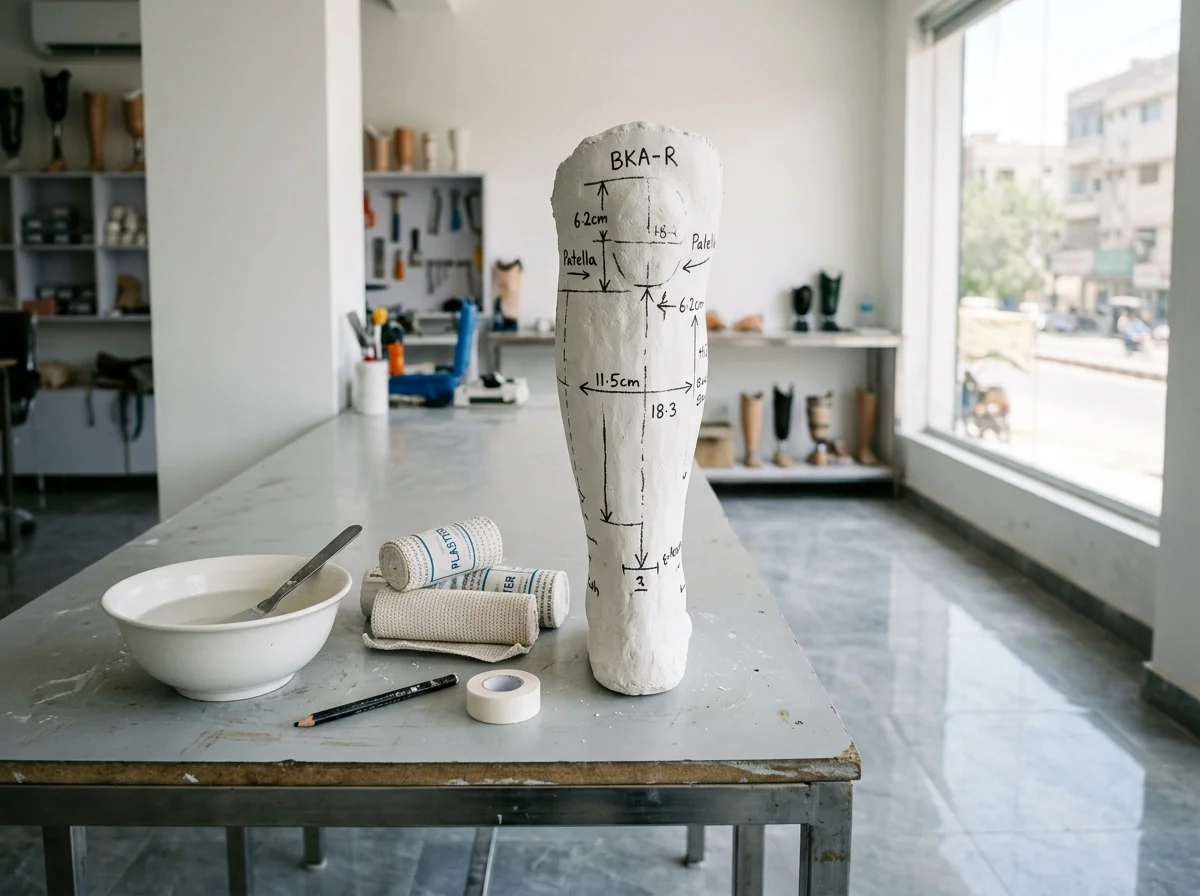
The stump is captured with a plaster cast or a digital scan. A model of the stump is made and carefully reshaped to load tolerant areas and relieve sensitive ones. A clear test socket is tried on so that pressure can be seen and corrected. The final socket is then built, joined to the other parts, and aligned in three stages: on the bench, standing, and walking.
From cast to finished leg
- 30 to 60 minutes
Marking and casting
Bony points, tendons and the scar are marked on a thin sock over the stump. Plaster bandage is wrapped and shaped by hand while it sets, or a scanner records the shape.
- In the workshop
The model
The cast is filled to make a copy of your stump. Plaster is removed where the stump can take pressure, and added where it cannot, such as over bone ends.
- Visit 2
The test socket
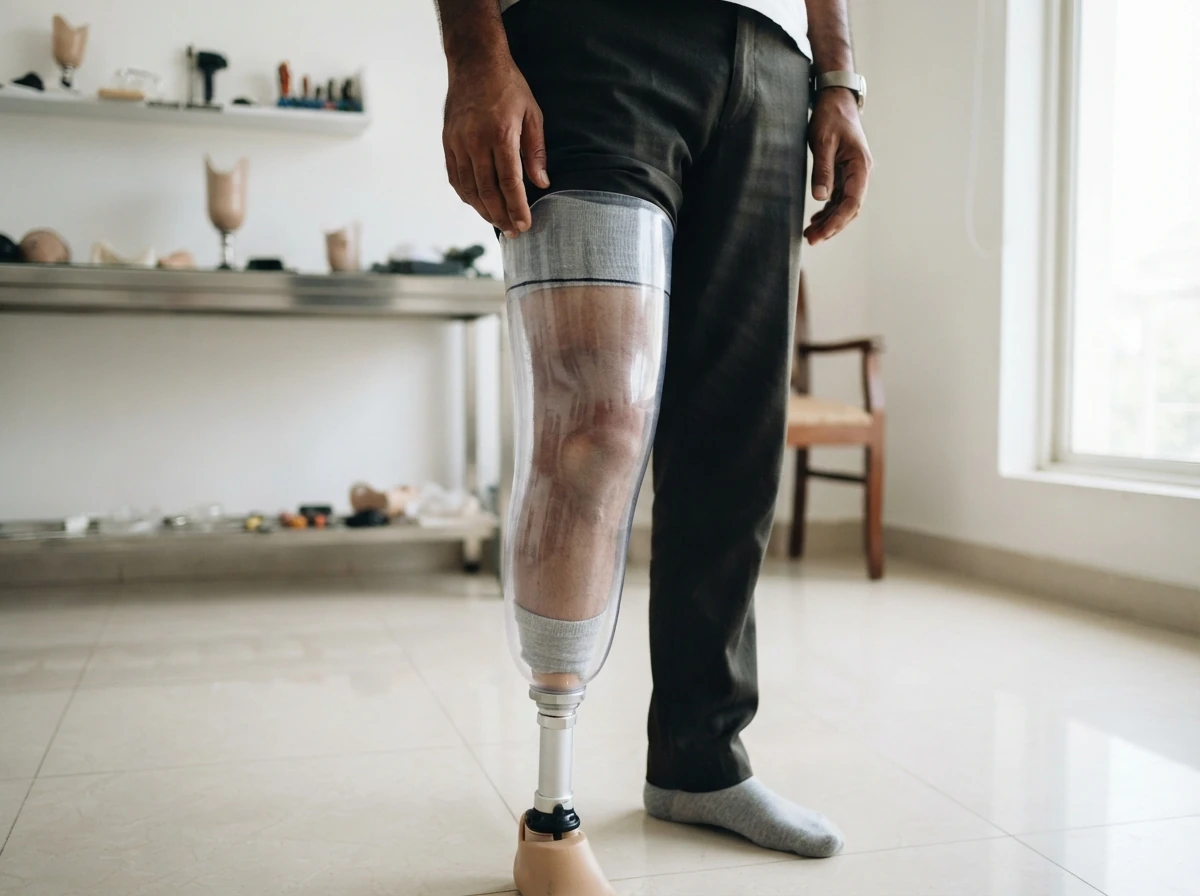
A clear plastic socket is moulded over the model. You stand in it. Pale skin shows pressure, a gap shows looseness. We mark, heat and correct it.
- Visit 2 or 3
Standing alignment
The test socket is mounted on a pylon and foot. You stand. We check leg length, that the pelvis is level, and that the foot is flat.
- Visit 3 or 4
Walking alignment
You walk between the bars while we watch from the front and side and adjust angles with four small screws until the knee and foot behave.
- In the workshop
Final socket
The corrected shape is laminated in resin with glass or carbon fibre, trimmed and polished. The alignment is transferred exactly.
- Delivery
Finishing
Edges are smoothed, the cover is shaped if wanted, and you are taught to put the leg on, take it off and check your skin.
Plaster cast or digital scan?
Both are used around the world and both can give an excellent socket. They are tools. What matters is the judgment of the person using them.
Plaster cast
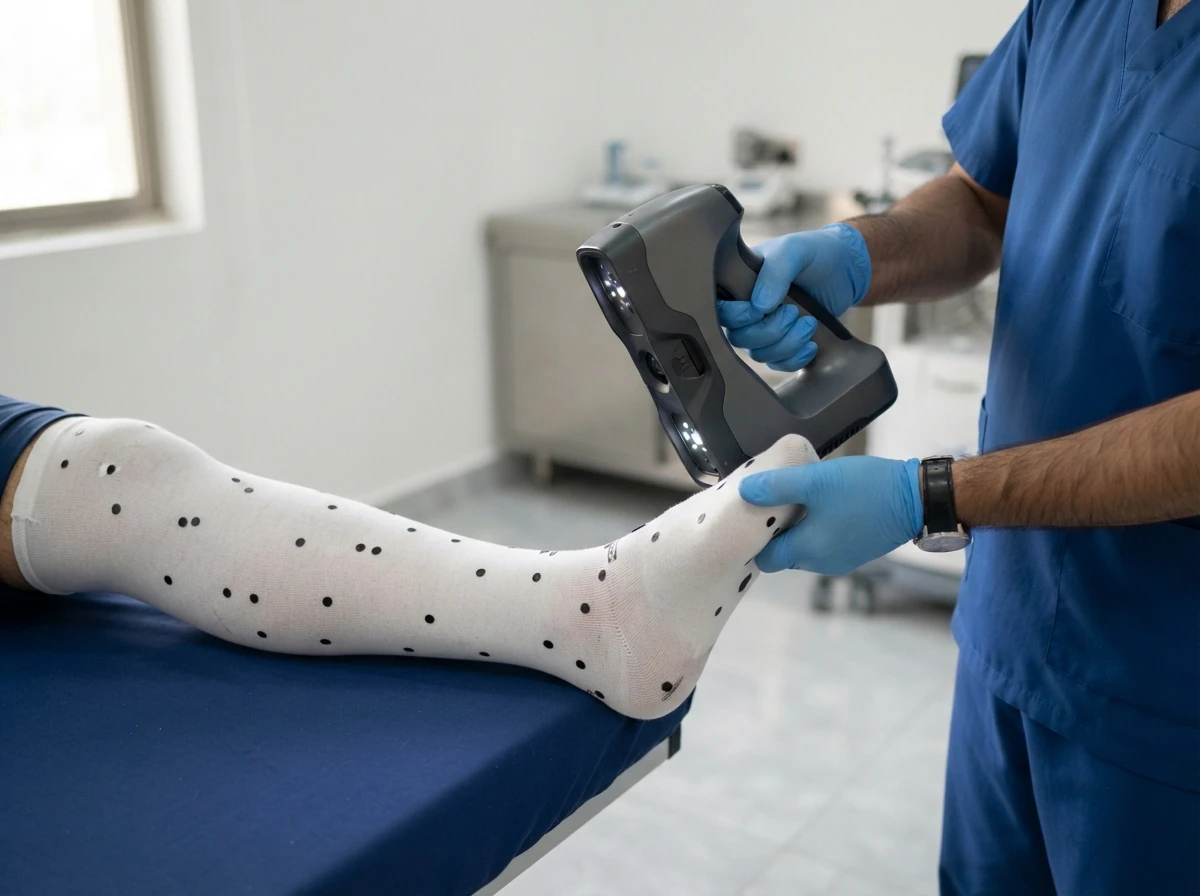
The prosthetist shapes the soft tissue with their hands as the plaster sets, pressing in where the stump can take load. On soft, scarred or irregular stumps this hand shaping is a real advantage. It is a little messy and takes longer.
Digital scan
A handheld scanner records the surface in a minute or two, without contact. It is clean, quick and the file can be kept for future sockets. The shaping is then done on screen.
We choose by stump, not by fashion. Whichever is used, a test socket follows, because no capture method is perfect.
Why the clear socket is the most important visit
If a clinic skips the test socket to save time or money, the first time anyone learns whether the socket fits is after it has been laminated, when it can hardly be changed. Insist on a test socket, here or anywhere.
- We look through the plastic at your skin while you stand. Even paleness is good. A white patch is a pressure point.
- We check that the stump reaches the bottom without jamming, using a small hole at the end.
- We ask you to lift the leg. Any dropping means the suspension or volume is wrong.
- You sit, to check the back edge behind a below knee, or the brim in the groin above the knee.
- You wear it for fifteen to twenty minutes, then we take it off and read the marks on your skin.
Alignment, in plain words
Alignment means the exact position and angle of the foot, the knee and the socket in relation to each other. A few millimetres change how the leg feels.
If the foot is set too far forward, the knee is pushed backward and walking feels like climbing a hill. Too far back, and the knee wants to buckle. Too far outward or inward, and the socket presses on one side of the stump and you lean.
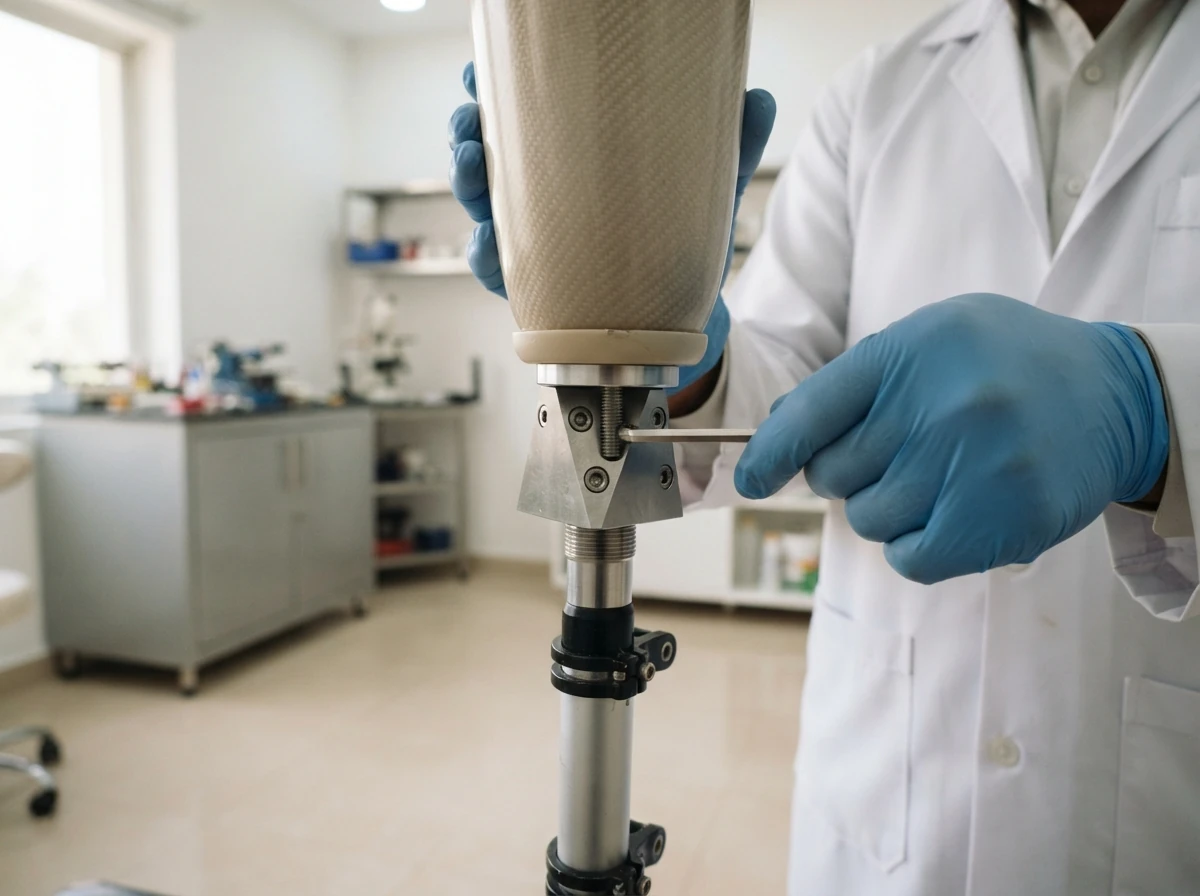
At the base of the socket is a small pyramid shaped adapter held by four set screws. Loosening one and tightening the opposite one tilts the leg by a degree or two. We adjust, you walk, we watch, and we repeat until your walk is smooth and you say it feels right.
Please never adjust these screws at home. If one works loose, do not walk on the leg. Call us.
How to prepare for a casting or fitting visit
Please do
- wear the shrinker or bandage right up until you arrive, so the stump is at its usual size
- bring shorts, and the shoes you will wear most
- eat normally, and take your medicines as usual
- come at the time of day you are usually most active
Please tell us if
- the stump has changed since the last visit: more swollen, smaller, sore
- your weight has changed
- anything about the test socket hurts, even slightly
- you felt unsteady or frightened at any point. It guides the alignment.
See your doctor before a fitting if
- the wound has not closed fully, or there is discharge, spreading redness or a bad smell
- the stump hurts at rest, is very swollen, or has changed colour
- you are diabetic and your sugar has been out of control in recent weeks
- there is a new sore on your other foot
A leg fitted over an unhealthy stump causes harm. We will wait, and we will tell you so.
Does casting hurt?
No. The plaster feels warm as it sets and the prosthetist presses firmly with their hands for a few minutes. If any pressure is painful, say so at once. That information improves the socket.
How many test sockets will I need?
One for most below knee legs. Above knee, through knee and hip level legs often need two. A second test socket is a sign of care, not of a mistake.
Why does the new leg feel strange even though it fits?
Your body has been without that leg for weeks or months, and the brain needs time to accept the new weight and length. Most of the strangeness goes within the first fortnight of wearing it.
Can I take the leg home on the alignment day?
Usually not. The test socket and alignment are then copied into the final laminated socket in the workshop, which takes a few days. Patients from out of town can be prioritised.
What if it becomes uncomfortable after a week at home?
Come back. Small adjustments in the first month are normal and are included. Do not pad it yourself or stop wearing it and wait. Early correction is easy, late correction is not.
Start with a free assessment
Tell us the amputation level and the city. We reply with honest guidance and a price range, on the phone or on WhatsApp, at any hour.
- Answered on WhatsApp, 24/7
- First assessment free, no obligation
- Nothing is stored on this website