Riding a motorcycle with an artificial leg
In Karachi a motorcycle is not a hobby. It is how a man gets to work, takes his children to school and keeps his job. So this is one of the first questions we are asked, and it deserves a straight answer for each side and each level.
Can you ride a motorcycle with an artificial leg?
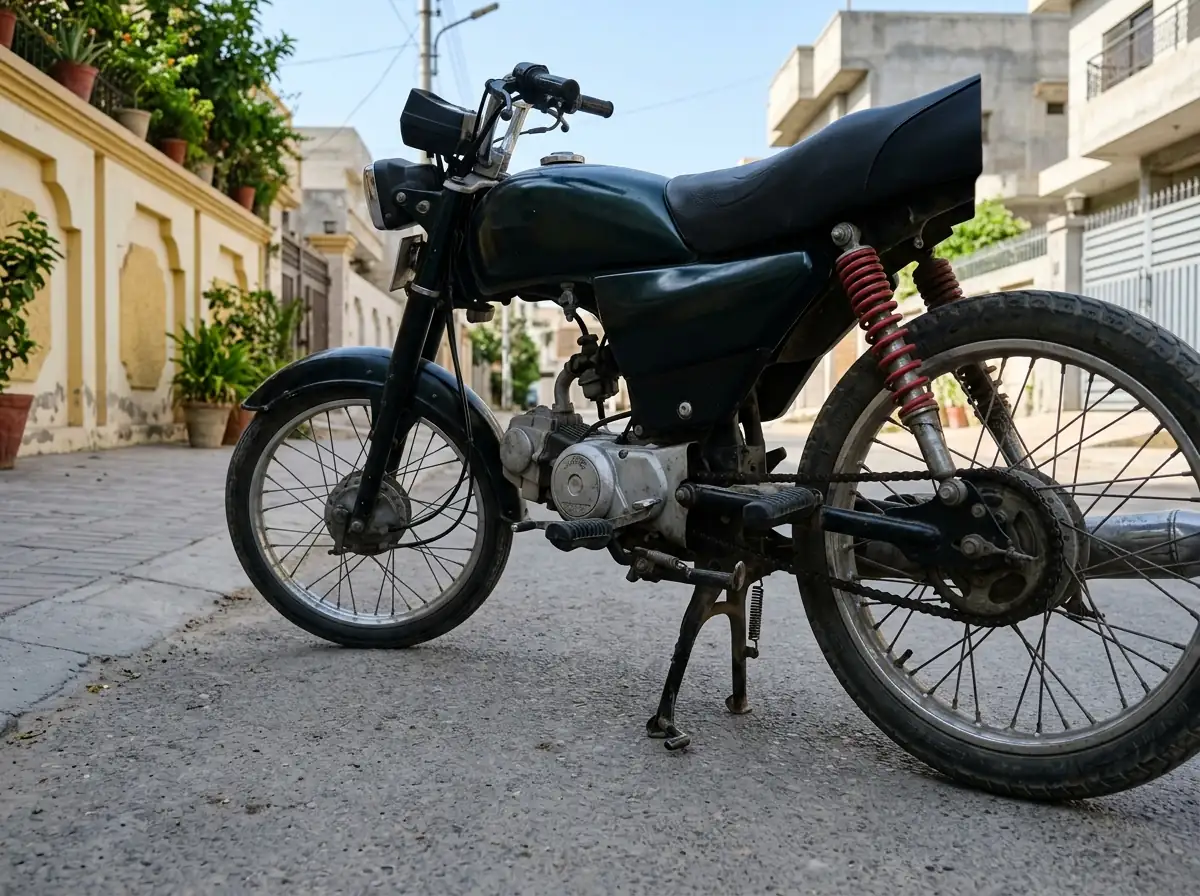
Many below knee amputees do ride again. On a standard Pakistani motorcycle the left foot changes gear and the right foot works the rear brake, so the side of the amputation decides what must be adapted. Above knee riders face a real risk of the knee folding when a foot is put down at a stop. An automatic scooter with both brakes on the handlebars removes the foot controls and is the safest option.
What each combination means on a standard motorcycle
| Your amputation | The difficulty | What usually works |
|---|---|---|
| Left, below knee | Changing gear without feel in the foot, and holding the bike up at a stop | A heel and toe rocker gear lever, pressed by moving the whole leg. Practise putting the left foot down with confidence, or stop with the right foot down and use the front brake. |
| Right, below knee | No feel on the rear brake pedal, and the kick starter | Rely more on the front brake, look at the foot when needed, and choose a self start motorcycle. Practise braking in an empty lane first. |
| Left, above knee | The knee may fold when the foot is put down. Gear changes are very hard. | A standard geared motorcycle is not advised. Consider an automatic scooter, or a motorcycle fitted with two extra rear wheels. |
| Right, above knee | Kick start is impossible, the brake is unreliable, and the knee may fold at a stop | As above. An automatic scooter with hand brakes, or a three wheel conversion. |
| Both legs | Balance at a stop | A three wheel conversion or a car with hand controls. |
This is general guidance. Whether you in particular are safe to ride is a decision to make after proper training, and within the licence rules that apply to you.
Why an automatic scooter solves most of the problem
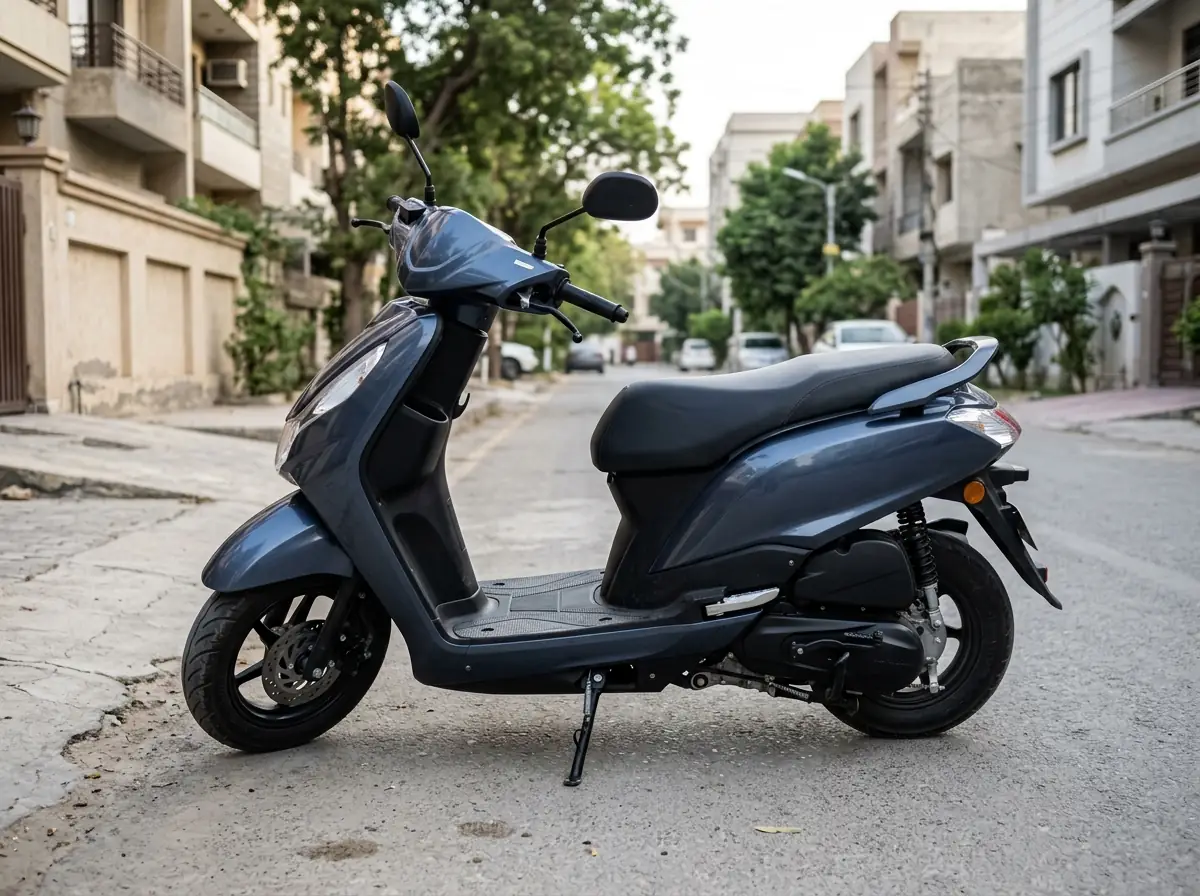
An automatic scooter has no gear lever and no foot brake. Both brakes are on the handlebars. Your feet rest on a flat floorboard and do nothing until you stop.
- No gear changes, so a left sided amputation no longer matters.
- No foot brake, so a right sided amputation no longer matters.
- Self start on every model, so no kick.
- A flat floorboard where the prosthetic foot sits securely, away from the exhaust.
- A low seat, so the good foot reaches the ground flat at a stop.
For riders who cannot balance at a stop at all, workshops in Pakistan fit two supporting rear wheels to a standard motorcycle. It is not elegant, and it keeps many people employed.
If you do ride: eight habits
- Practise first in an empty lane early on a Sunday, with someone walking beside you, until starting and stopping are automatic.
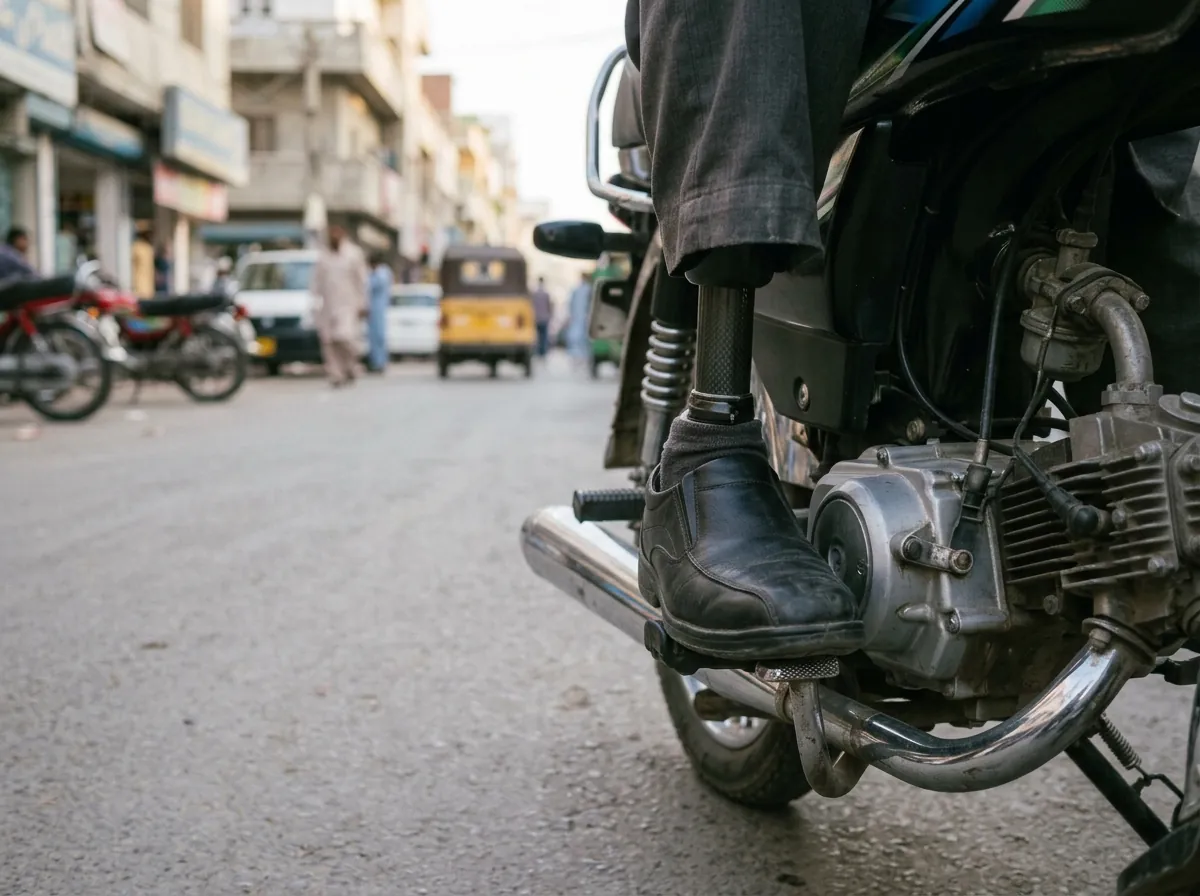
- Look at the prosthetic foot when placing it on the peg. You cannot feel whether it is there.
- Check the foot has not slipped off the peg every few minutes. A dangling prosthetic foot can catch the road.
- Keep the prosthetic foot away from the silencer. The foot shell will melt against a hot exhaust and you will feel nothing.
- Put the good foot down at stops wherever the controls allow it.
- Brake earlier. Leave more distance than you used to.
- Wear a helmet and a closed shoe on the prosthesis so the shell is protected.
- Do not carry a passenger until you have ridden alone for some weeks.
Riding pillion
Many of our patients are passengers, not riders: women, older men, children. Pillion is manageable at most levels with a few precautions.
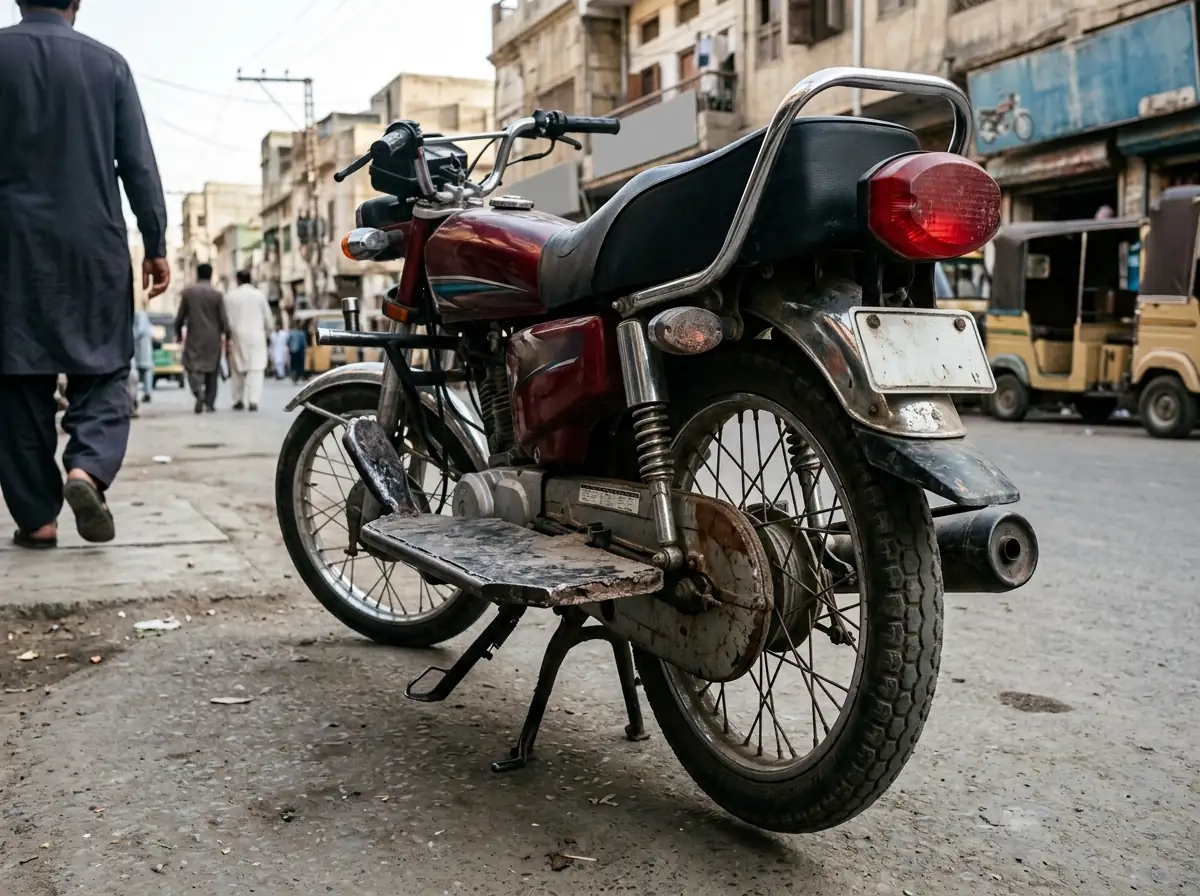
Sit astride if you can, not sideways. Astride, both feet are on pegs and your weight is centred. Sideways, the prosthesis hangs unsupported, pulls on the stump, and can swing into the wheel.
If you must sit sideways, sit with the prosthesis on the inner side, resting on the footrest plate, and hold the rider or the grab rail with both hands. Get on and off with the motorcycle on its stand, the good leg doing the work, and someone steadying you.
Above knee users should check that the knee will not swing freely in the wind. A knee with a manual lock can simply be locked for the journey.
When we advise against riding
Riding is usually realistic if
- the amputation is below the knee, on one side
- your socket is secure with no rotation or slipping
- you walk confidently without a stick
- you are willing to practise before entering traffic
We advise against a standard motorcycle if
- the amputation is above the knee, because of the knee folding at stops
- the socket is loose or due for replacement
- you have poor feeling or strength in the other leg, as with diabetic nerve damage
- balance or eyesight has become unreliable
- you have not yet finished gait training
Please also check your driving licence conditions and any rules on vehicle modification with the traffic licensing authority. We can provide a letter describing your amputation and prosthesis if one is asked for.
How soon after getting my leg can I ride?
Not before you have completed gait training and are walking steadily without support, which for a below knee user is typically two to three months after delivery. Riding too early, on a stump that is still changing, is how people get hurt.
Do I need a special prosthetic foot to ride?
No. A firm foot in a closed shoe works well. Tell us that you ride, so that we make sure the socket does not rotate and the back of the socket allows your knee to bend enough on the seat.
My socket presses behind my knee when I sit on the bike. Can that be fixed?
Usually, yes. The back edge of a below knee socket can be trimmed and flared for a riding position. Bring the motorcycle, or tell us the seat height, so it can be checked in that position.
Is a three wheel conversion safe?
It removes the balance problem at stops, which is the main risk. It handles differently in corners and must be built and welded properly. Ride slowly until you know how it behaves.
Can an above knee amputee ever ride?
Some do, mostly on automatic scooters or three wheel conversions, and mostly younger, strong riders. On a standard geared motorcycle in Karachi traffic, we advise against it.
Start with a free assessment
Tell us the amputation level and the city. We reply with honest guidance and a price range, on the phone or on WhatsApp, at any hour.
- Answered on WhatsApp, 24/7
- First assessment free, no obligation
- Nothing is stored on this website