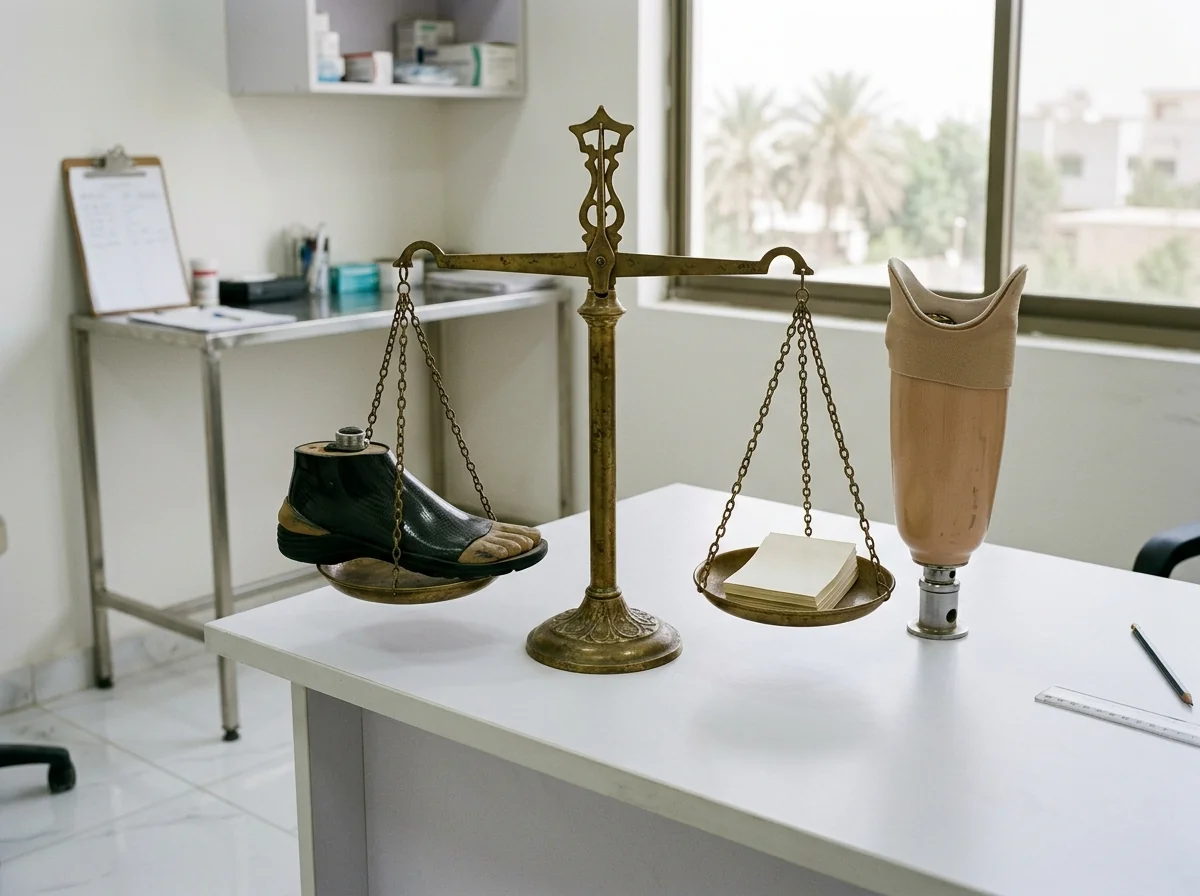
What decides the cost of an artificial leg
When two clinics quote two lakh and six lakh for the same patient, one of them is not necessarily cheating. They are almost certainly quoting different legs. This page shows you how to see the difference.
What affects the price of an artificial leg?
Eight things: the amputation level, the socket construction and number of test sockets, the liner and suspension, the knee joint if one is needed, the foot, whether parts are local, mid range or premium imported, the training and aftercare included, and the cosmetic finish. The knee and the foot cause the largest swings. The socket matters most to the result.
What moves the figure, and by how much
| Factor | Low end | High end | Effect on total |
|---|---|---|---|
| Amputation level | Partial foot, below knee | Above knee, hip level, both legs | Very large |
| Socket construction | Plastic, one fitting | Carbon with flexible inner, two test sockets | Moderate |
| Liner and suspension | Socks and a strap | Imported liner with suction or vacuum | Moderate |
| Knee joint | Locking knee | Microprocessor knee | The largest of all, above the knee |
| Foot | SACH | Imported carbon or hydraulic ankle | Large |
| Origin of parts | Local and mid range | Premium imported, tied to the exchange rate | Large |
| Training and aftercare | Leg handed over with brief advice | Full training and a month of adjustments included | Small on paper, very large in outcome |
| Cosmetic finish | Bare pylon | Shaped foam cover with skin toned stocking | Small |
Why two quotations differ by lakhs
Put the two quotations side by side and go down this list. In our experience the gap is explained by three or four of these, every time.
- Is the foot the same type and the same maker?
- Is there a liner in one and only socks in the other?
- Is the knee the same type? Is it new?
- Does one include a test socket and the other go straight to the final socket?
- Are training sessions included, and how many?
- Who takes the cast: a degree qualified prosthetist, or a technician?
- Are the adapters tested, weight rated parts?
- What happens, and what is charged, when the stump shrinks in six months?
When a low price should worry you
No parts list
A single figure with no breakdown. You cannot know what you are getting, or hold anyone to it.
Leg ready in two days
There is no time in that for a test socket or proper alignment. Speed here is not a service.
A famous brand far below market
Used, refurbished or copied parts are sold as new. Ask for the serial number and the sealed box.
No training offered
A leg without training ends up in a cupboard. That is the most expensive leg of all.
Seven honest ways to bring the figure down
- Choose parts for your real activity, not for the activity you imagine. Most people overbuy the foot.
- Start with a simpler knee and review it after a year.
- Skip the cosmetic cover at first. Trousers or shalwar cover the pylon.
- Take a plastic socket for the first leg, since the stump will shrink out of it anyway.
- Reuse sound parts from an old leg. Bring it to the assessment.
- Look after it. A liner washed nightly lasts twice as long. A leg kept dry keeps its bolts.
- Do the exercises. A stable stump size means fewer sockets over the years.
When the family cannot meet even the basic figure
We meet this situation often, and we would rather hear it plainly at the assessment than have a family disappear out of embarrassment.
A basic, safe leg is a respectable leg. There is no shame in it, and for many users it is the right leg regardless of money. We will always quote it as an option.
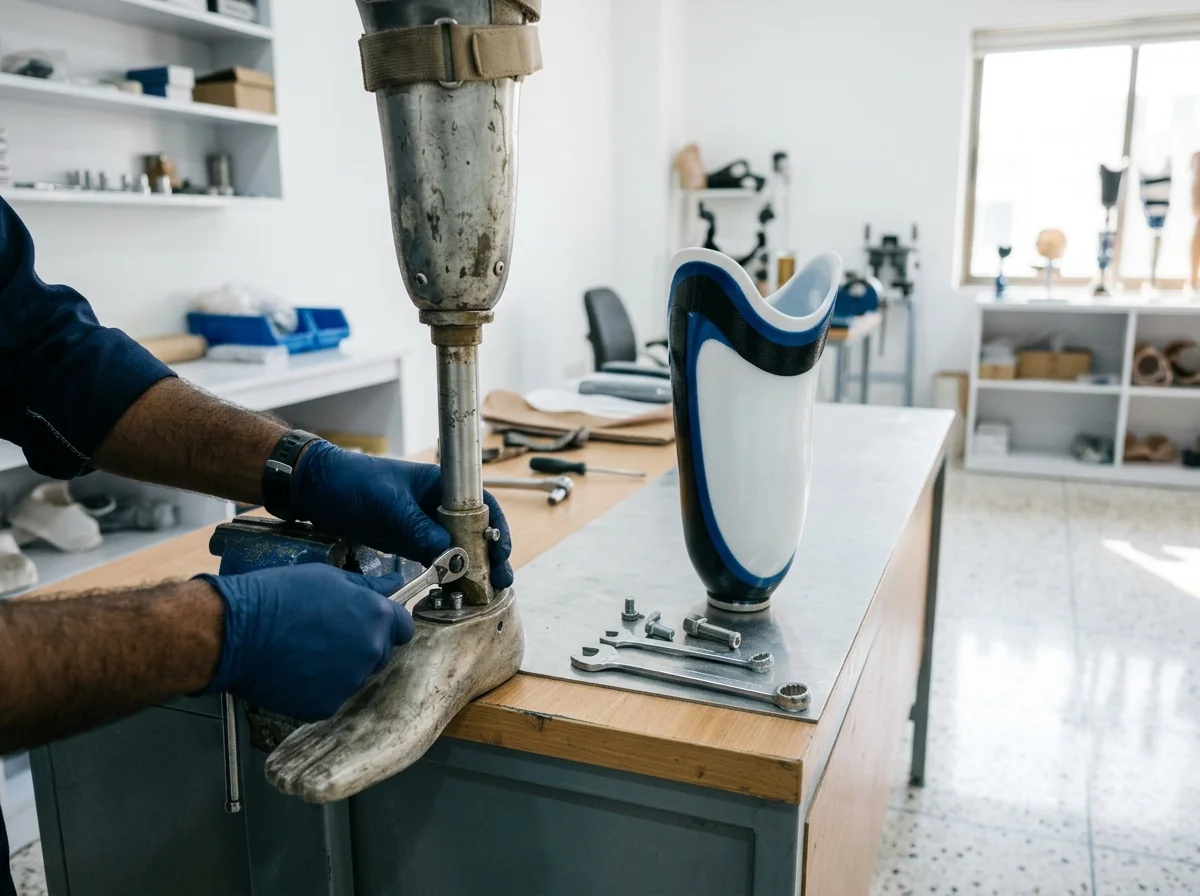
We provide a written quotation and a prescription letter describing the amputation and the device. Employers, insurers, welfare organisations, community trusts and relatives abroad commonly ask for exactly these two documents before they will help. We are glad to send them directly to whoever is assisting you.
What we will not do is cut the corners that make a leg unsafe. If the budget cannot reach a safe leg today, we will say so, and tell you what to do for the stump in the meantime so that nothing is lost when it can.
What is the single biggest cost factor?
Above the knee, the knee joint. Below the knee, the foot. In both, the amputation level sets the starting point.
Why does the socket cost so much when it is only plastic or resin?
You are paying for skilled hours, not material: the assessment, the cast, shaping the model, one or two test sockets, lamination, alignment and adjustments. It is the one part made for you alone.
Do imported parts always cost more here than abroad?
Usually a little more, because of freight, duty and the exchange rate. Against that, a part bought here comes with local fitting, local warranty handling and someone to hold responsible.
Will insurance or my employer pay?
Some employers, insurers and welfare funds do contribute, especially after workplace injuries. We supply the itemised quotation and prescription letter they typically require.
Is it cheaper to have the leg made in Pakistan than abroad?
Considerably, in most cases, because skilled labour costs far less here while the imported parts, if you want them, are the same parts. Many overseas Pakistanis arrange legs for relatives here for that reason.
Start with a free assessment
Tell us the amputation level and the city. We reply with honest guidance and a price range, on the phone or on WhatsApp, at any hour.
- Answered on WhatsApp, 24/7
- First assessment free, no obligation
- Nothing is stored on this website