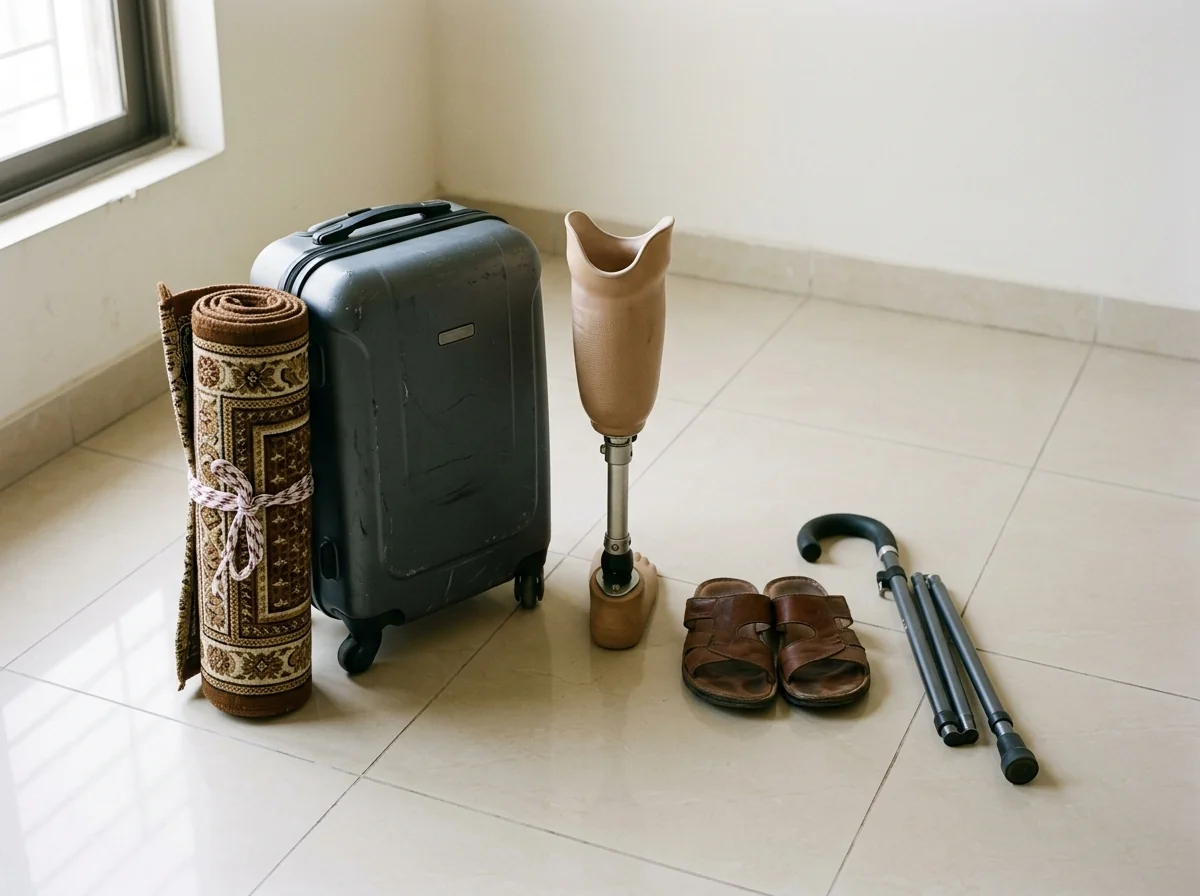
Hajj and Umrah with an artificial leg
Many of our patients tell us that performing Umrah or Hajj on their own feet is the reason they wanted a leg at all. It is entirely achievable. It is also the most demanding walking most people ever do: long distances, polished marble, great crowds and fierce heat. Preparation makes the difference.
Can you perform Umrah or Hajj with a prosthetic leg?
Yes. Many people do. It requires a well fitting, recently serviced leg, several weeks of building walking distance beforehand, spare liners and socks, and a willingness to use a wheelchair or mobility scooter for the longest stretches. The floors are polished marble and the distances in tawaf and sai run to several kilometres. Questions of ritual and dress should be put to a scholar.
Prepare the leg, the body and the paperwork
- 12 weeks before
Have the socket reviewed
If you are on many socks, or due a replacement socket, do it now. A new socket needs a month of wear before a journey, never a week.
- 10 weeks before
Start a walking programme
Add five minutes a week until you can walk forty five minutes without a rest, on hard floors, in the footwear you will use.
- 4 weeks before
Full service
Bolts, foot shell, liner, sleeve, lock. Replace anything half worn. A new foot shell is cheap insurance.
- 2 weeks before
Pack and letter
Spares, medicines, the clinic letter for airport security, and assistance requested from the airline for every flight.
What each part asks of the leg
| Rite or place | What it involves | Practical advice |
|---|---|---|
| Tawaf | Seven circuits. Short near the Kaaba but densely crowded. Longer on upper levels with more room. | Upper levels and roof are calmer and have wheelchair and scooter lanes. Go at quiet hours, late at night or mid morning. |
| Sai | Seven lengths between Safa and Marwah, over three kilometres in all, on smooth marble with slight slopes at each end | Rest at the ends. A wheelchair or scooter for part or all of it is common and sensible. |
| The Haram floors | Polished marble, often wet near Zamzam points | Take short steps. The prosthetic foot will be bare or in a sock, so grip is poor. Keep clear of wet patches. |
| Mina, Arafat, Muzdalifah (Hajj) | Long walks, tents, uneven ground, sleeping on the ground, basic toilets | Go with a group that provides transport. Carry a folding stool. A commode chair is worth arranging. |
| Jamarat (Hajj) | A long walk in dense crowds to and from the pillars | Appointing someone to stone on your behalf is widely permitted for those unable. Ask your scholar beforehand. |
| Madinah | Shorter distances, carpeted areas, cooler marble courtyards | The easier part of the journey. Still use assistance at the airport. |
Wheelchairs and scooters are part of the design
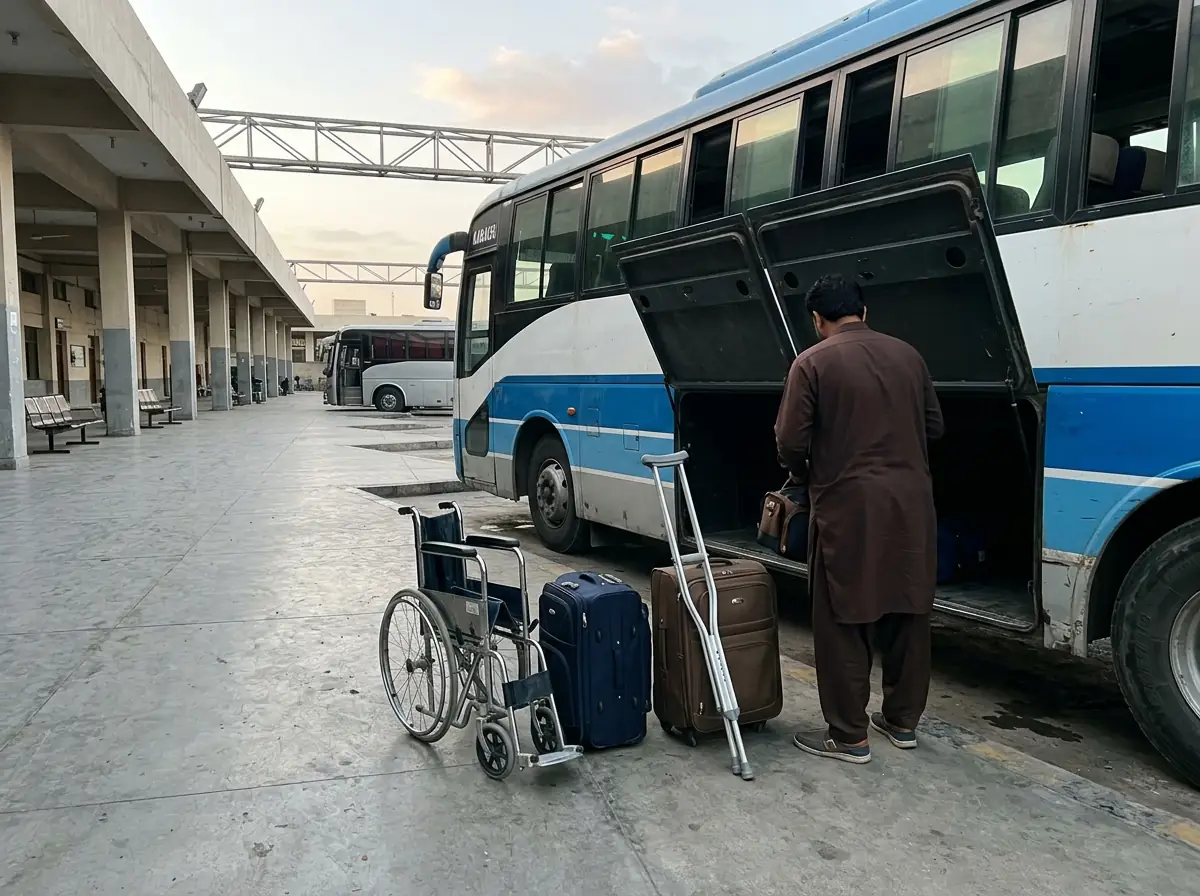
The Haram is one of the most wheelchair friendly places on earth. Manual wheelchairs and electric scooters are available, with dedicated lanes for tawaf and sai. Tens of thousands of pilgrims use them every day, and nobody looks twice.
The wise approach is mixed. Walk what you comfortably can. Ride the rest. A stump that is blistered on the second day ends the walking for the whole trip, whereas a stump that is looked after will carry you through all of it.
- Decide before each rite how much you will walk, and stop at that point even if you feel strong.
- Stay in a hotel as close to the Haram as the budget allows. The walk to and from prayers, five times a day, adds up to more than the rites.
- Travel with a companion who knows how your leg goes on and off.
Forty five degrees and a sealed socket
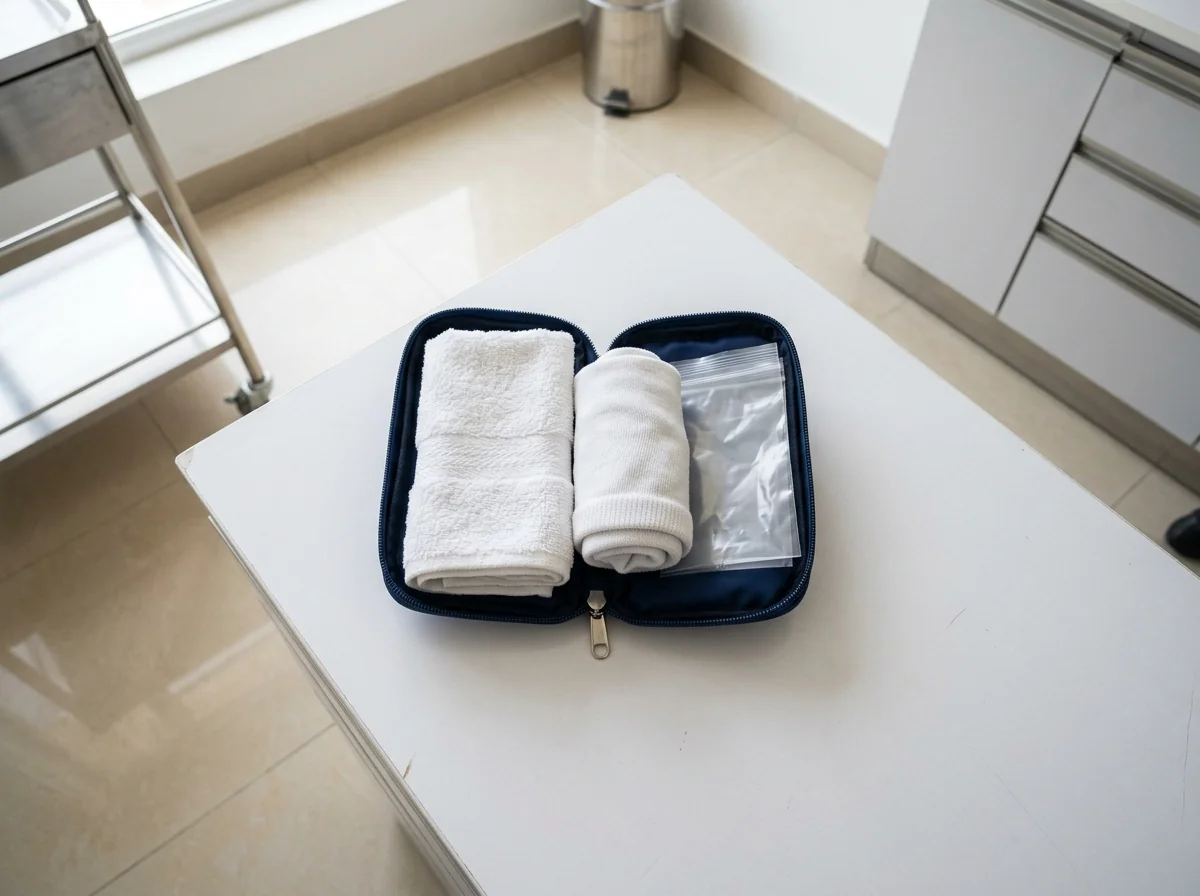
- Take two liners at the very least, and alternate them. Wash one every night.
- Dry the stump and liner at every prayer break if you can find a private corner.
- Carry socks of every thickness. Dehydration and long walking shrink the stump through the day.
- Drink far more water than feels necessary.
- Check the skin every night in good light, with a mirror. Treat the first red mark as a warning and ride the next day.
- Pack dressings, antifungal powder or cream if your doctor has advised it, and your usual medicines.
- Diabetic pilgrims: check the other foot twice a day. Hot marble burns a numb sole within seconds. Never walk barefoot outdoors.
Questions we are asked, and do not answer
Pilgrims often ask us whether a prosthesis may be worn in ihram, whether a liner or a stump sock counts as a stitched garment, what footwear is permitted over a prosthetic foot, how wudu is affected, and whether the rites may be performed seated or in a wheelchair. These are religious questions. Scholars have addressed all of them, and the answers are generally accommodating toward those with a genuine need. Please ask a scholar you trust, before you travel, and follow that guidance.
Our part is only the physical one: keeping you on your feet, comfortably and safely, for as much of it as you wish to walk.
The pilgrim's prosthetic kit
Essential
- two or three liners, six or more socks in mixed thickness, shrinker sock
- spare sleeve or strap, spare foot shell if yours is worn
- hand mirror, small towel, mild soap, dressings
- folding walking stick, even if you do not use one at home
- clinic letter and our WhatsApp number
Worth the space
- folding stool for bathing and for wudu
- rubber soled non slip socks for the prosthetic foot indoors
- a water leg, if you have one
- hex keys in the hold luggage
- your old leg as a spare, if it is still safe
Should I get a new leg before going?
Only if the current one does not fit, and then at least two to three months before travel. A brand new socket needs weeks of wear and adjustment. Never travel on a leg you received the week before.
Is Umrah easier than Hajj with a prosthesis?
Considerably. Umrah can be done at quiet hours in a day, with a hotel bed to return to. Hajj adds days of long walks, crowds, tents and basic facilities. Many people do Umrah first to learn how their leg copes.
Will the marble be a problem?
It is smooth and sometimes wet, and a prosthetic foot without a shoe has little grip. Take short steps, use a stick, avoid wet areas, and consider non slip socks over the foot if your scholar is content with that.
What if the leg breaks there?
Send us a video on WhatsApp at any hour. Many faults can be made safe with a hex key. Large hospitals in Makkah and Madinah have prosthetic services. This is why a full service beforehand and a spare leg matter.
I am above knee. Is it realistic?
Yes, with more reliance on a wheelchair or scooter for tawaf and sai, a knee you trust completely, and a rotation adapter if you sit on the floor. Build your stamina for longer beforehand.
Planning Umrah or Hajj?
Tell us your travel date on WhatsApp. We will book the socket review and service at the right time, and prepare your letter for the airport.
- Answered on WhatsApp, 24/7
- First assessment free, no obligation
- Nothing is stored on this website