Prosthetic sockets and liners
You can buy a knee or a foot from a catalogue. You cannot buy a socket. It is made by hand, from your body, and its fit decides whether you wear the leg fourteen hours a day or leave it behind the door.
What is a prosthetic socket and liner?
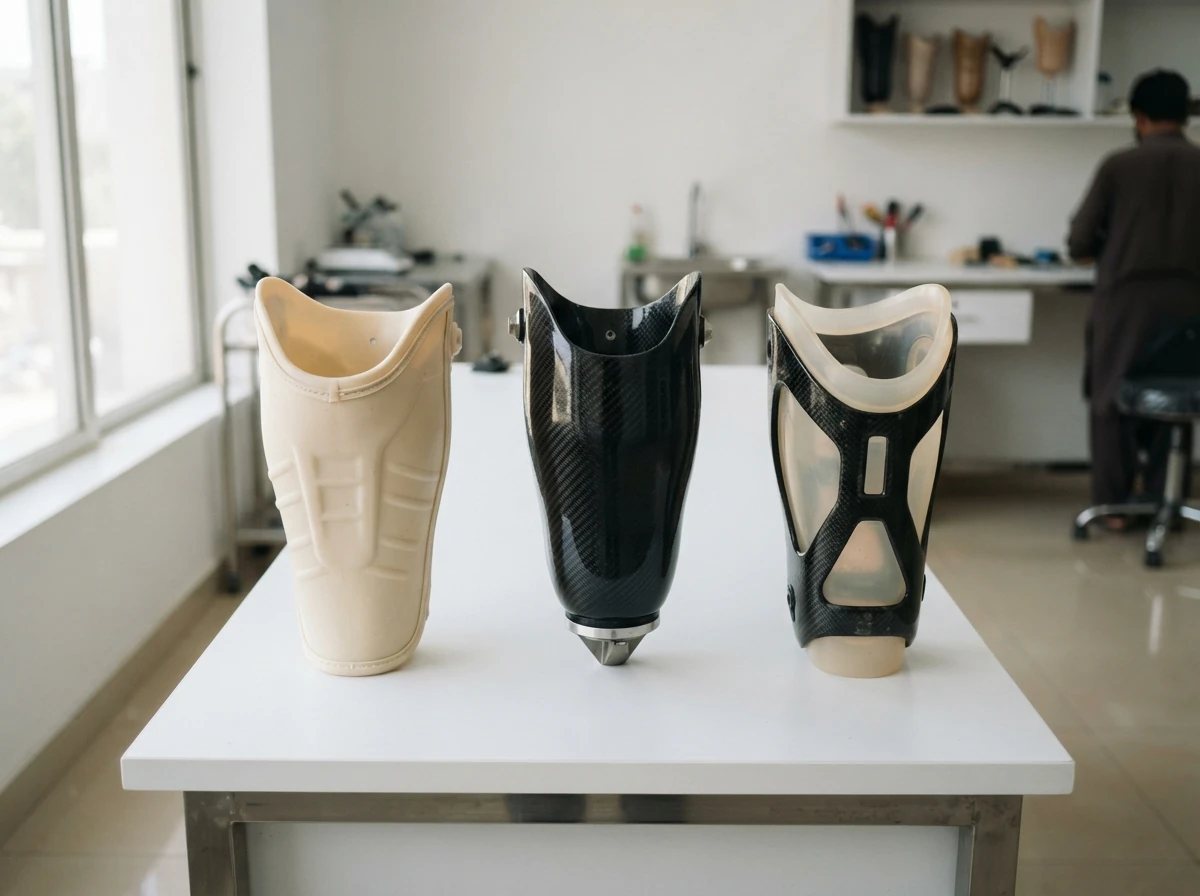
The socket is the rigid shell of an artificial leg that the stump sits inside. It is custom made from a cast or scan of your limb. The liner is a soft sleeve of silicone or gel that is rolled onto the stump first. It cushions the skin, reduces rubbing and often carries the pin or seal that holds the leg on.
What sockets are made of
| Material | Strengths | Limits | We use it for |
|---|---|---|---|
| Polypropylene (heat formed plastic) | Lower cost, can be reheated and adjusted, tough | Heavier and thicker, less rigid for heavy users | First and temporary legs, growing children, tight budgets |
| Laminated resin with glass fibre | Strong, moderate weight, holds its shape for years | Hard to adjust once made | Most definitive legs |
| Laminated resin with carbon fibre | Lightest and stiffest for its strength | Higher cost, little adjustment possible | Active users, heavier users, above knee sockets |
| Flexible inner socket in a rigid frame | Soft brim, comfortable for sitting, some room for change | More labour, higher cost | Above knee sockets, sensitive or bony stumps |
Socks, foam inserts and liners
Stump socks
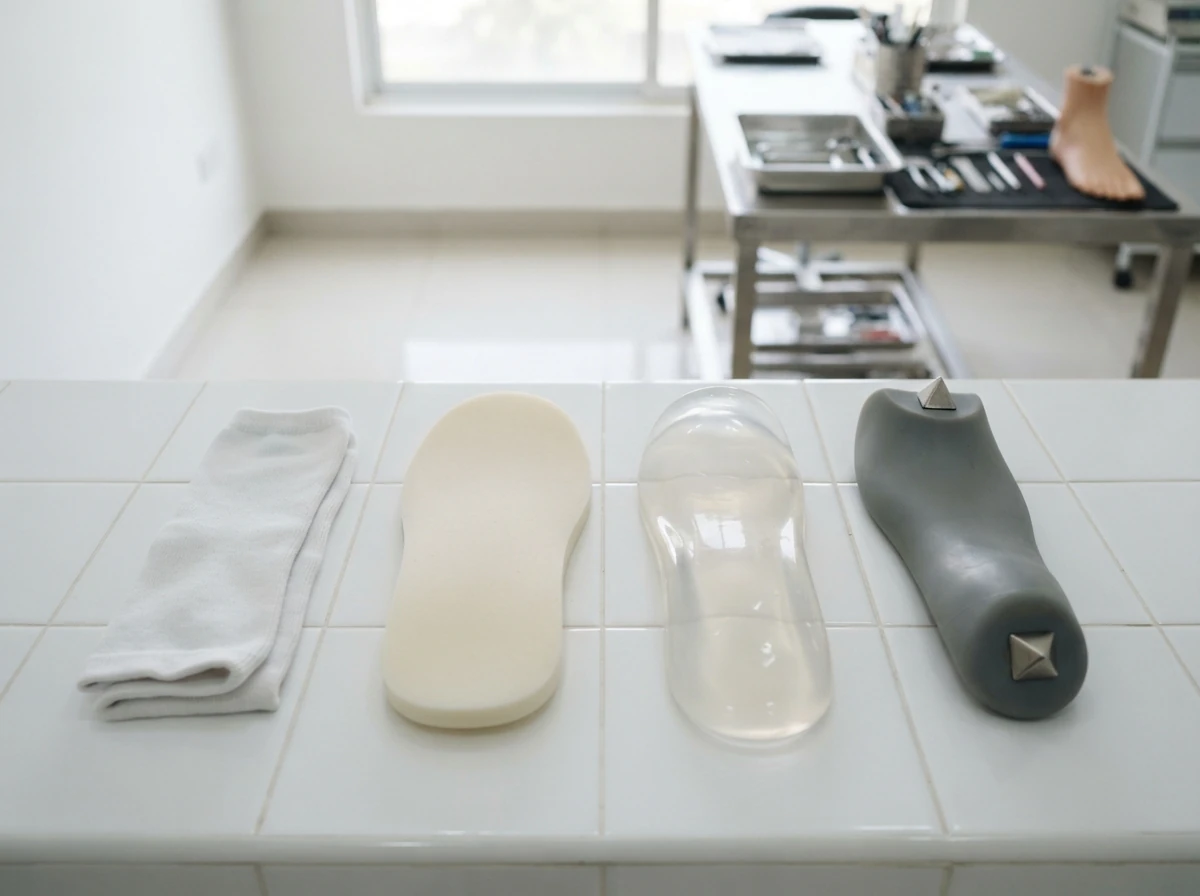
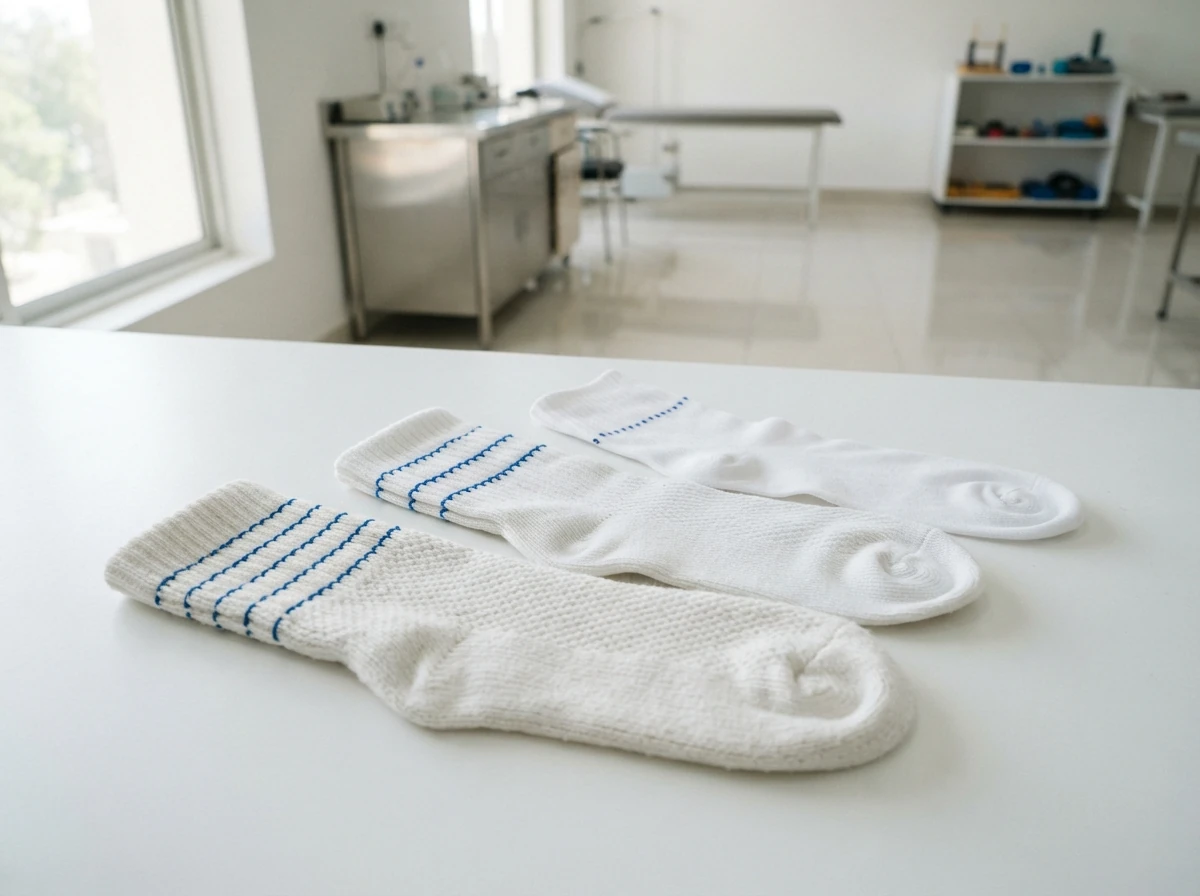
Cotton or wool socks of different thickness, worn directly in a hard socket or over a liner. They are cool, washable and cheap, and they are how you adjust the fit as the stump changes size during the day.
Soft foam insert
A closed cell foam inner boot shaped over your cast. It is the traditional choice in Pakistan, reasonably cool, easy to repair, and lasts about a year. It cushions less than gel.
Gel liners
Soft, stretchy and very cushioning. A good match for bony, scarred or diabetic stumps. They wear faster than silicone and hold more heat.
Silicone liners
Firmer and more durable, with good grip on the stump. They suit stable, well padded stumps and active users.
Custom liners
Made from a cast of your stump when the shape is unusual or scarred and an off the shelf size will not sit flat.
Living with a liner from May to September
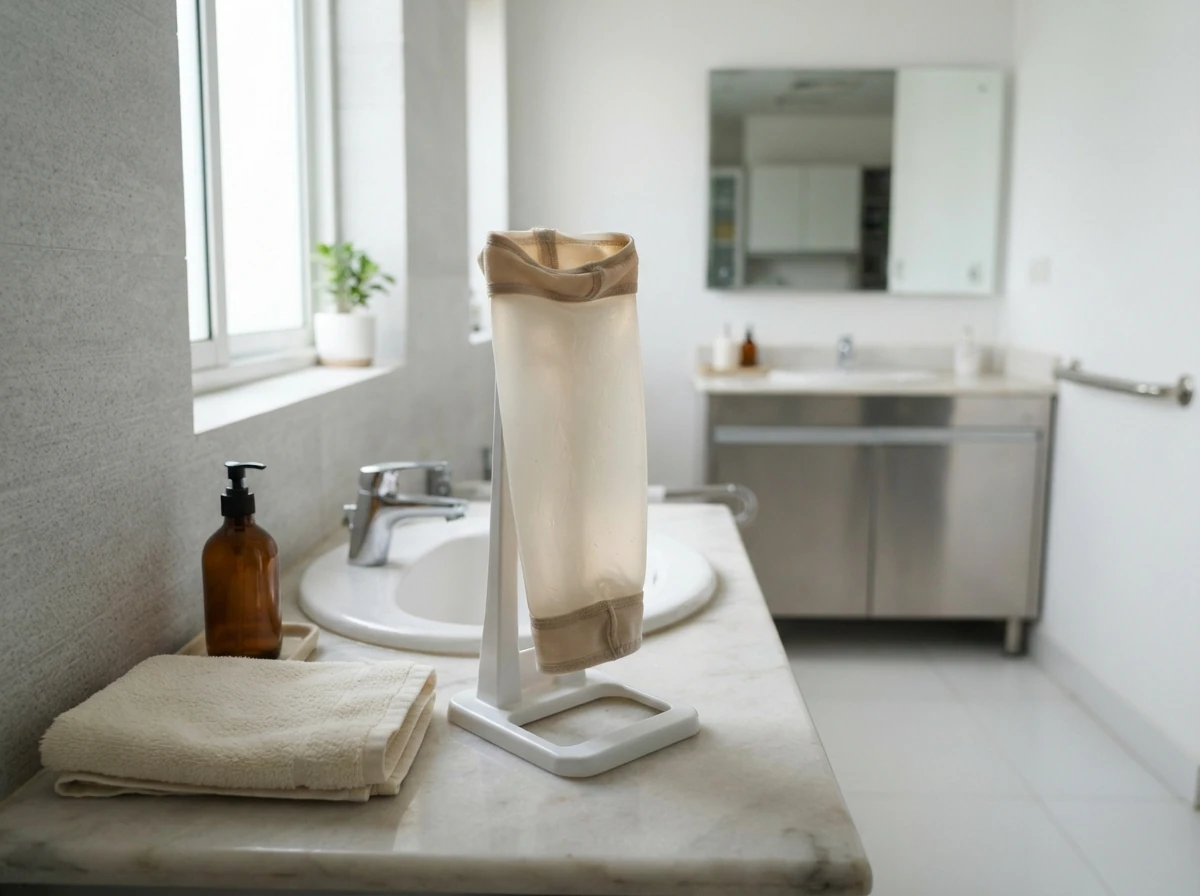
A liner seals the skin. In a Karachi summer, sweat collects inside within an hour or two. Wet skin is soft skin, and soft skin blisters. Almost every liner problem we see between May and September comes from this.
- Take the liner off at midday, dry the stump and the inside of the liner with a clean towel, and put it back on.
- Wash the liner every night with mild soap, rinse well, and dry it on its stand, fabric side out. Never in direct sun.
- Own two liners and alternate them. Each lasts longer, and one is always fully dry.
- Ask your doctor about an antiperspirant for the stump if sweating is heavy.
- A rash of small red bumps is usually heat rash or a reaction to soap left in the liner. Rinse more, and see a doctor if it spreads or weeps.
Using socks to keep the fit right through the day
Your stump is larger in the morning and smaller by evening. It shrinks over months after surgery. It changes with weight, with salt, with dialysis. The socket is rigid, so socks make up the difference.
Socks come in thicknesses called ply: one, three and five. You combine them. If the leg feels loose, drops when you lift it, or you feel the end of the stump hitting the bottom, add a ply. If it feels tight, or you cannot get fully in, remove one.
Carry a spare sock when you go out. Adding one at three in the afternoon prevents the sore that would appear by evening.
When you are wearing around ten ply or more just to feel secure, the socket is now too big. Padding can buy a few weeks. After that, a replacement socket is the proper fix.
Signs the socket fits, and signs it does not
A good fit feels like
- firm, even pressure all round, like a firm handshake
- no up and down movement when you lift the leg
- pink marks after wear that fade within twenty minutes
- the leg follows when you turn, without twisting on the stump
Come in for an adjustment if
- the end of the stump is sore, or feels as if it touches the bottom
- a red or dark mark stays longer than twenty minutes, or the skin breaks
- the leg rotates, clicks or drops as you walk
- you need ten ply or more of socks
- your weight has changed by about five kilos in either direction
See your doctor, not only your prosthetist, if
- a sore does not start to improve within two or three days of resting from the leg
- there is pus, spreading redness, heat or fever
- you are diabetic and find any break in the skin
We will adjust the socket, but infected or broken skin needs medical treatment first.
Socket and liner prices in Karachi
| Item | Indicative range (PKR) |
|---|---|
| Below knee socket, polypropylene | 40,000 to 70,000 |
| Below knee socket, laminated, with test socket | 60,000 to 150,000 |
| Above knee socket, laminated ischial containment, with test socket | 90,000 to 220,000 |
| Carbon or flexible inner socket construction, extra | 30,000 to 80,000 |
| Foam inner insert | 8,000 to 20,000 |
| Gel liner, mid range | 15,000 to 45,000 |
| Imported silicone or gel liner | 45,000 to 120,000 |
| Custom made liner | 90,000 to 200,000 |
Replacing only the socket while keeping your other parts is covered in the replacement socket guide.
How long does a liner last?
With daily wear in Karachi, six to twelve months. Heat, sweat and body weight shorten its life. Tears at the top edge and a liner that has gone thin or slippery at the end are signs to replace it.
Is a liner necessary, or can I use socks only?
Socks alone in a well made socket work for many healthy below knee users and are cooler and far cheaper. A liner is strongly advised for diabetic, scarred, bony or grafted stumps, and for pin lock or suction suspension.
Why do you make a test socket first?
A clear test socket lets us see the skin under load. Pressure shows as pale patches, gaps show as air. We correct the shape before the final socket is laminated, because a laminated socket can hardly be changed.
Can a socket be adjusted after it is made?
To a degree. Pads can be added, edges trimmed and flared, and plastic sockets can be reheated. If the stump has changed a great deal, a new socket is the honest answer.
Is a scan better than a plaster cast?
Neither is better in every case. A scan is quick and clean. A plaster cast lets the prosthetist shape the tissues by hand while it sets, which matters on soft or irregular stumps. The skill of the person matters more than the method.
Start with a free assessment
Tell us the amputation level and the city. We reply with honest guidance and a price range, on the phone or on WhatsApp, at any hour.
- Answered on WhatsApp, 24/7
- First assessment free, no obligation
- Nothing is stored on this website