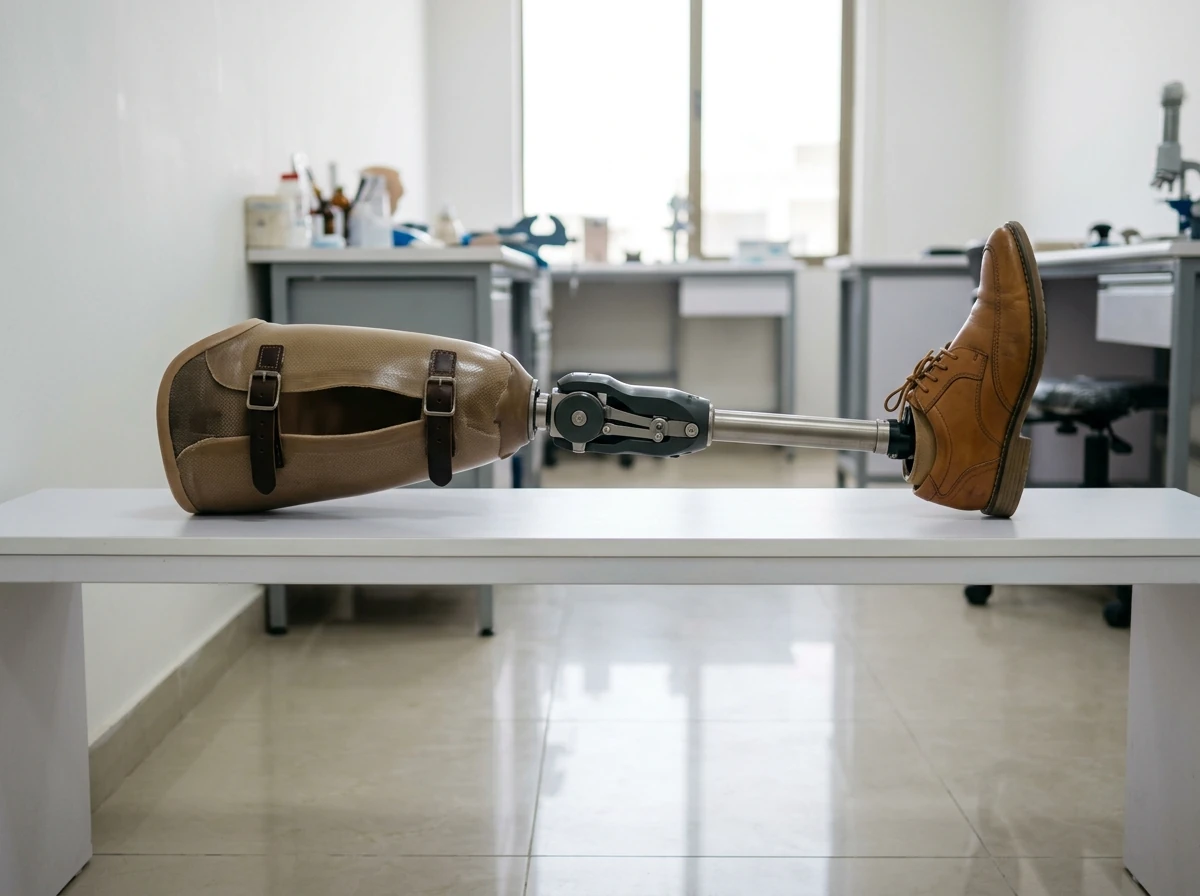
Knee disarticulation artificial leg in Karachi
When the leg is removed through the knee joint, the whole thigh bone is kept. That gives you a long, strong lever and a stump that can carry weight on its end. The leg must be built to use both.
What is a knee disarticulation leg?
It is a prosthesis for an amputation through the knee joint, where the full thigh bone remains. The rounded end of the bone can carry body weight directly, so the socket does not need to press near the groin. A compact four bar knee is fitted under the socket to keep the thigh length close to the other side.
Three advantages, and one problem the prosthetist must solve
Weight on the end of the stump
The wide end of the thigh bone is built to carry load. Standing feels solid, and the top of the socket can be lower and more comfortable.
A long, strong lever
All the thigh muscles are still attached. You control the leg with more power and less effort than at above knee level.
The leg holds itself on
The end of the bone is wider than the shaft above it. A socket shaped over that bulge grips the stump without belts.
The problem: thigh length
The stump is already full thigh length. Any knee placed under it makes the thigh longer than the other side, which shows when you sit.
Why a four bar knee is used at this level
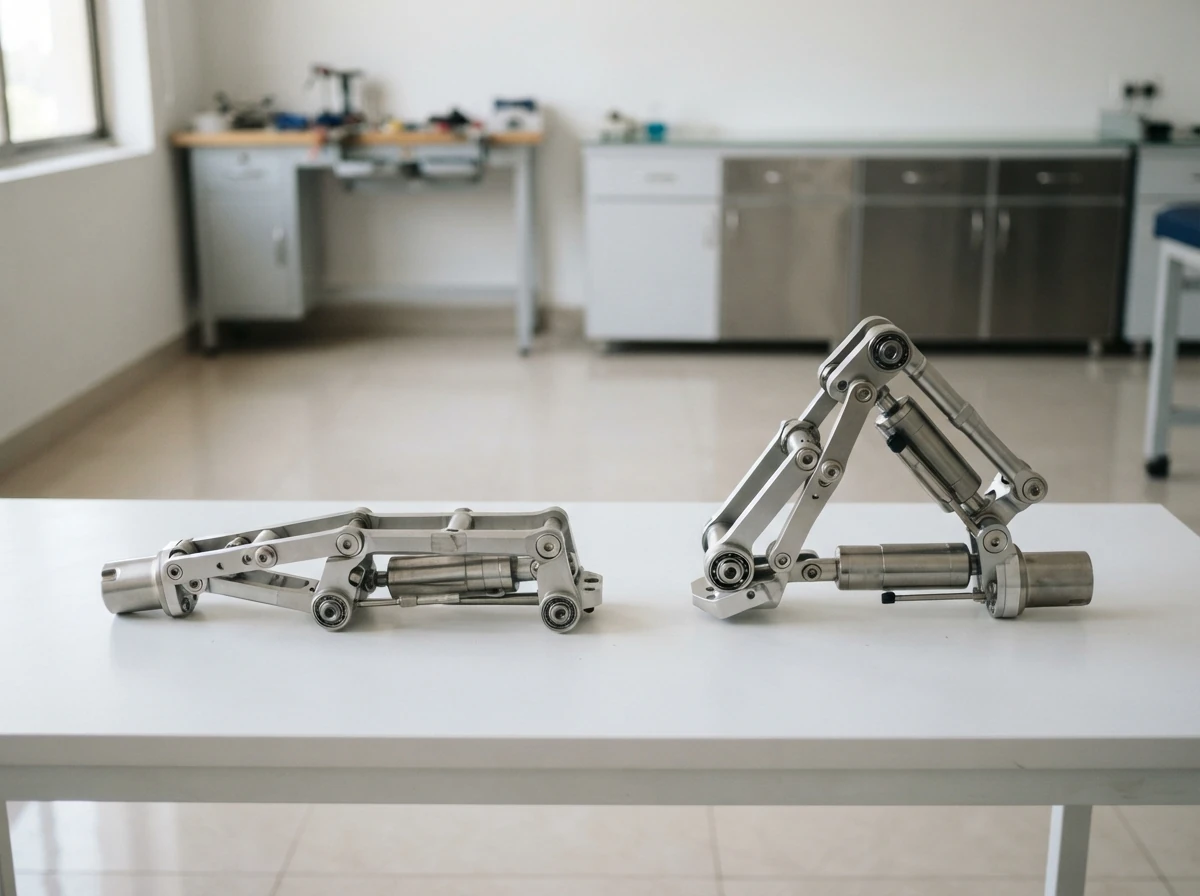
An ordinary single axis knee adds several centimetres below the socket. On a through knee stump, that pushes the artificial knee lower than your real one. When you sit, one knee sticks out further than the other, and the shin looks short.
A four bar polycentric knee folds back under the socket as it bends, so the extra length almost disappears when you sit. Several are designed specifically for this level. It is also a stable knee at heel strike, which suits most users.
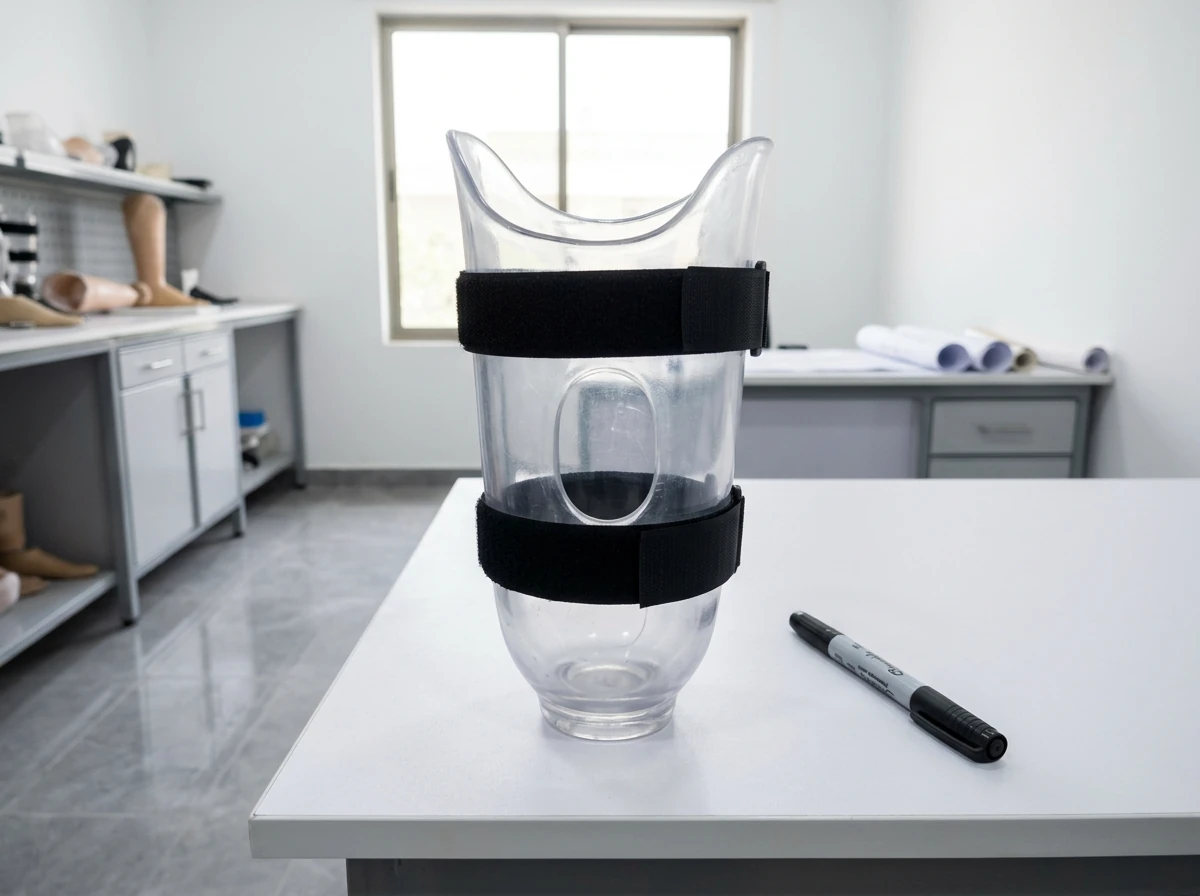
The socket has its own challenge: the wide end of the stump must pass a narrower section above it. We solve this with a side window closed by straps, or a soft inner liner that fills the narrow part.
Who does well at this level
Results are usually good if
- the skin over the end of the bone is healthy and well padded
- you can press the end of the stump into your palm without sharp pain
- the hip moves freely in all directions
- you accept a small difference in knee position when sitting
We look more carefully if
- the skin at the end is thin, grafted or stuck to the bone. End bearing may need to be reduced.
- the amputation was for poor circulation and the end heals slowly
- the look of the knee when sitting matters a great deal to you. We will show you in advance.
- a child is the patient. This level protects the growth plate, and the leg is planned around growth.
See your doctor before a fitting if
- the wound has not closed fully, or there is discharge, spreading redness or a bad smell
- the stump hurts at rest, is very swollen, or has changed colour
- you are diabetic and your sugar has been out of control in recent weeks
- there is a new sore on your other foot
A leg fitted over an unhealthy stump causes harm. We will wait, and we will tell you so.
Casting and fitting at through knee level
This level is cast differently from an above knee stump, and it is worth knowing what should happen so you can tell careful work from rushed work.
- End bearing test. You press the end of the stump onto a padded block while standing, so we learn how much weight it accepts without pain.
- Cast under load. The plaster is taken with some weight on the stump end, because its shape changes when loaded.
- Bone end mapped. The two rounded sides of the thigh bone are marked on the cast. The socket grips just above them.
- Clear test socket. We watch the skin at the end go pale evenly under load. Patchy colour means pressure is in the wrong place.
- Knee set as high as possible. The four bar knee is mounted tight under the socket to keep the thigh short.
Knee disarticulation leg price in Karachi
| Build | What it usually includes | Indicative range (PKR) |
|---|---|---|
| Affordable | End bearing socket with strap window, simple four bar knee, SACH foot | 170,000 to 300,000 |
| Mid range | Socket with soft inner liner, quality four bar knee, multi axis or basic carbon foot | 300,000 to 650,000 |
| High activity, imported | Imported hydraulic four bar knee made for this level, carbon foot | 650,000 to 2,500,000 and above |
See what decides the cost for how each part moves the figure.
Is through knee better than above knee?
For walking, usually yes. The longer stump, the intact thigh muscles and end weight bearing give more control and less effort than an above knee amputation. The trade off is the knee position when sitting, and a smaller choice of knee joints.
Can I kneel or take weight on the stump without the leg?
Many people can, which helps when moving around the home at night or in the bathroom. Only do this if the skin at the end is healthy and you have been shown how.
Will my knees look uneven?
Slightly, when sitting. With a four bar knee the difference is usually two to three centimetres. When standing and walking, the legs are level and the difference is not seen.
How long does this leg take to make?
About three weeks from the cast. The socket needs an extra trial because both the end bearing and the grip over the bone end must be right.
Does the leg need a belt?
Usually not. The shape of the bone end holds the socket on. A light strap is sometimes added for users who are nervous in the first months.
Send a photo of the stump for a free opinion
Three clear photos on WhatsApp, front, side and end, with the date of surgery. The prosthetist replies with whether it is the right time, the kind of leg that suits, and a price range.
- Answered on WhatsApp, 24/7
- First assessment free, no obligation
- Nothing is stored on this website