Symes and partial foot prosthesis in Karachi
Losing part of a foot is often treated as a small thing. It is not. Without the front of the foot you lose push off and balance, and the remaining skin takes pressure it was never built for. The right device protects what is left.
What is a partial foot or Symes prosthesis?
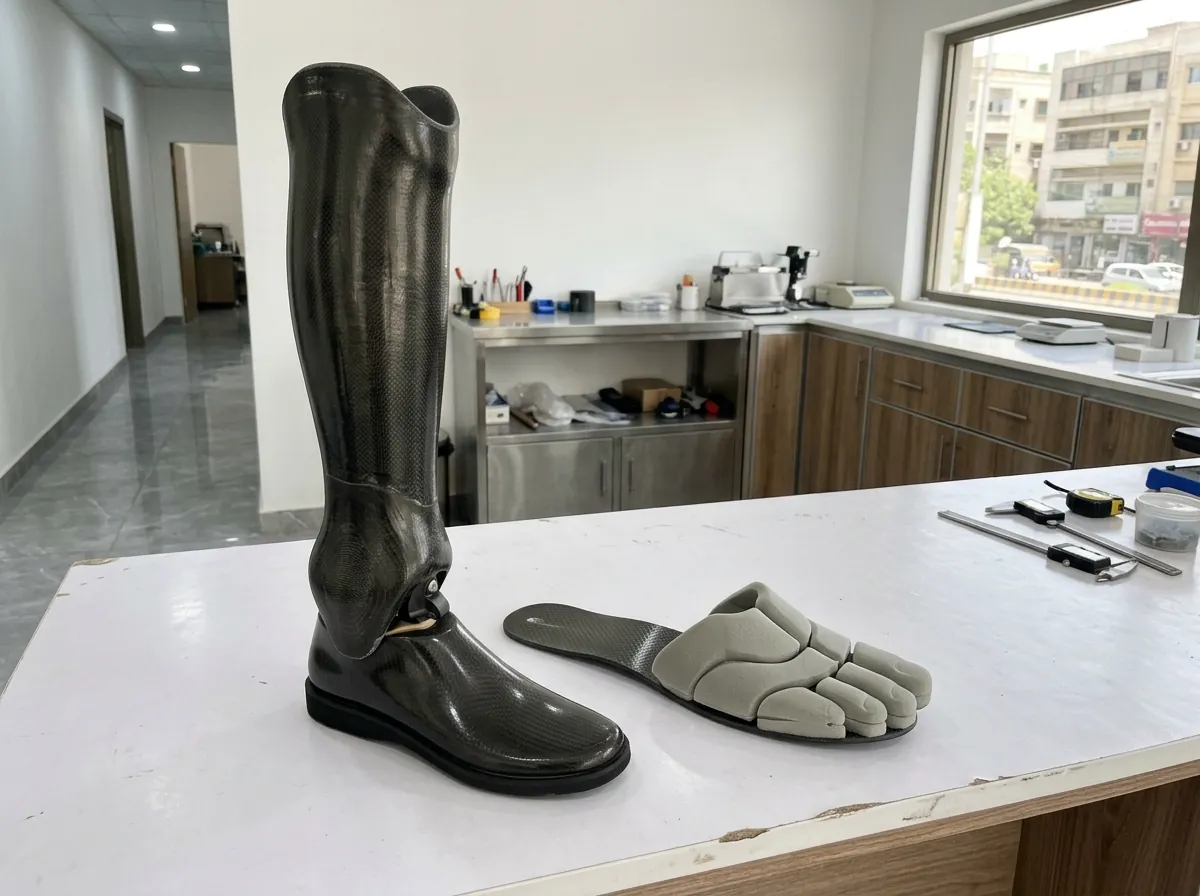
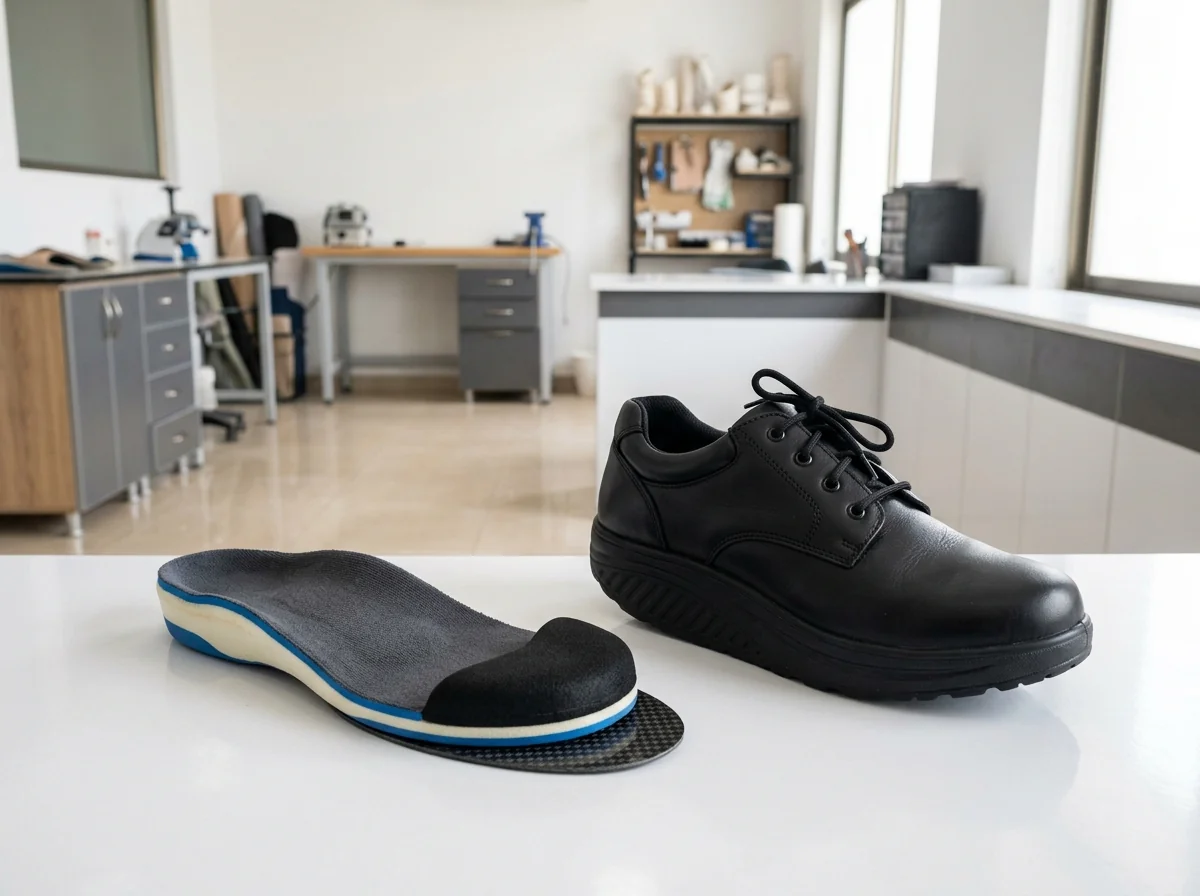
A partial foot prosthesis replaces the missing front part of the foot with a filler and a stiff plate inside the shoe, so you can push off and the shoe keeps its shape. A Symes prosthesis is for an amputation through the ankle where the heel pad is kept. It has a slim socket up to the knee and a low foot, and you can take weight on the end of the stump.
Five levels in the foot, five different answers
| Level | What is missing | What we usually make | Shoe needed |
|---|---|---|---|
| One or more toes | Toes only | Soft toe filler on a custom insole | Normal closed shoe |
| Transmetatarsal | Front third of the foot | Custom insole, toe filler and a carbon footplate | Closed shoe with a rocker sole |
| Lisfranc | Front half of the foot | Slipper type silicone or laminated prosthesis with a carbon plate | Lace up shoe or boot |
| Chopart | All but the heel and ankle bone | Clamshell socket that rises above the ankle, with a footplate | High lace up boot |
| Symes | Whole foot. Heel pad kept. | Below knee height socket with a side window and a low profile foot | Normal shoe on the prosthetic foot |
A short foot puts all its pressure in the wrong place
When you walk, your weight rolls from the heel to the ball of the foot and leaves through the toes. Take away the front of the foot and that roll stops early. The cut end of the foot takes the load, inside a shoe that now bends in the wrong place and rubs.
For a person with diabetes this is dangerous, because the skin at the cut end often has no feeling. A sore starts, nobody notices, and a partial foot amputation becomes a below knee amputation within months.
A carbon plate under the full length of the shoe gives back the lever. A rocker sole lets the foot roll without bending. A custom insole spreads pressure away from the scar. Together they do the job of the missing forefoot.
The Symes leg: end bearing, slim, and hard to make look slim
A Symes amputation keeps the thick pad of skin from under your heel and places it over the end of the shin bones. This is the same skin you have always stood on, so many people can walk a few steps at home without any prosthesis, which helps at night.
- End bearing. Weight goes through the heel pad, so the socket does not need to load the knee tendon heavily.
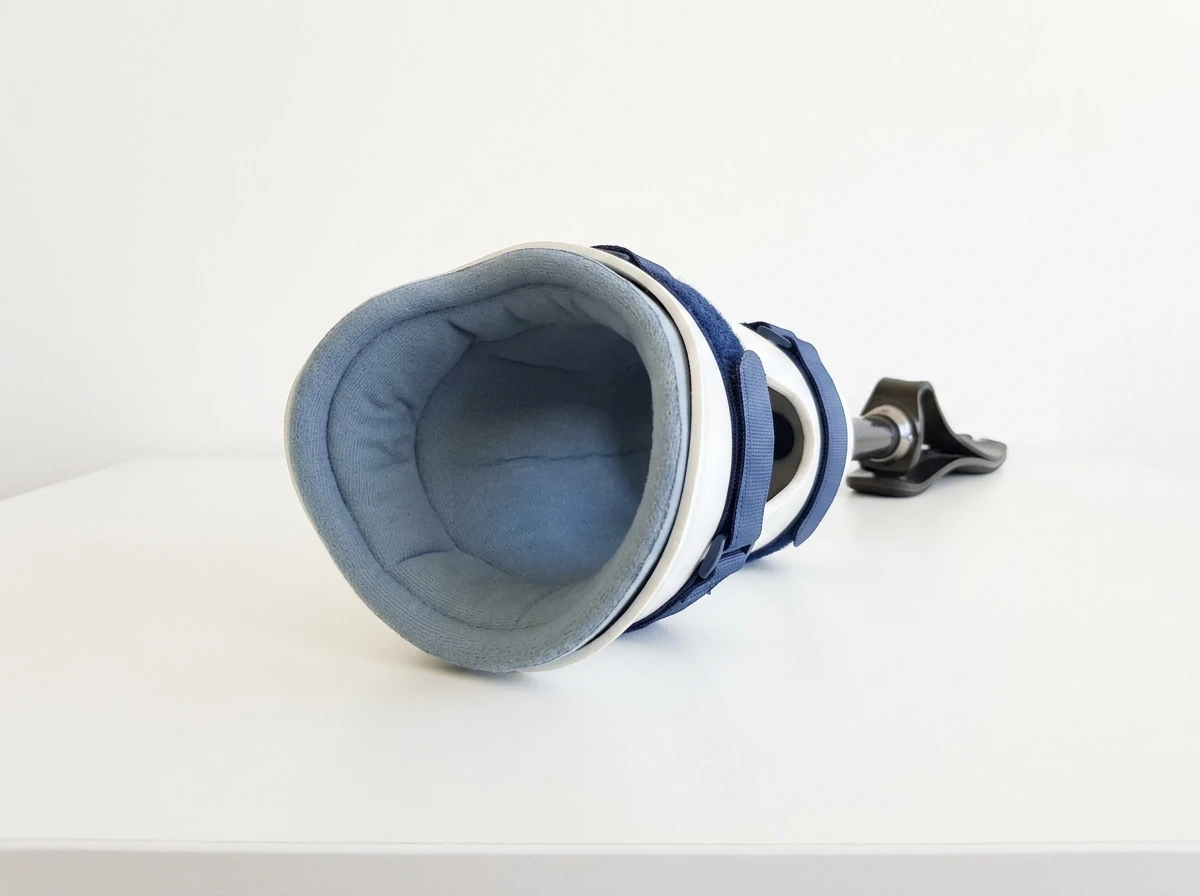
- Self suspending. The end of the stump is wider than the shin above it. The socket grips over that bulge.
- The window. To get the wide end in, the socket has a side opening closed with straps, or a stretchy inner liner.
- The trade off. The ankle looks thick. We keep it as slim as the bone allows, and it sits well inside trousers or shalwar.
Who needs what
A simple insole and filler is enough if
- only toes are missing and the scar is healthy
- you wear closed shoes most of the day
- you have normal feeling in the foot
- you walk short to moderate distances
You need a plate, a higher device or a rethink if
- the front third or more of the foot is gone. Without a carbon plate the scar will break down.
- the heel is pulling up and the foot points down, which is common after Chopart. It must be held.
- you are diabetic with poor feeling. Both feet need protective footwear, not one.
- sores keep returning at the cut end. Ask your surgeon whether a higher level would heal better.
See your doctor before a fitting if
- the wound has not closed fully, or there is discharge, spreading redness or a bad smell
- the stump hurts at rest, is very swollen, or has changed colour
- you are diabetic and your sugar has been out of control in recent weeks
- there is a new sore on your other foot
A leg fitted over an unhealthy stump causes harm. We will wait, and we will tell you so.
Partial foot and Symes prosthesis price in Karachi
| Device | Indicative range (PKR) |
|---|---|
| Toe filler on custom insole | 10,000 to 35,000 |
| Custom insole, filler and carbon footplate | 45,000 to 110,000 |
| Silicone slipper type partial foot, cosmetic finish | 90,000 to 220,000 |
| Chopart clamshell prosthesis | 90,000 to 220,000 |
| Symes prosthesis with low profile foot | 110,000 to 350,000 |
| Symes prosthesis with imported carbon Symes foot | 350,000 to 500,000 |
Rocker sole shoe modification, if needed, is quoted separately and is usually a small part of the total.
Can I wear chappals after a partial foot amputation?
With only toes missing, a sandal with a back strap can work. From transmetatarsal level upward, open chappals give no lever and no protection, and we advise a closed shoe outdoors. At home, a slipper type prosthesis or a firm house shoe is safer than bare feet.
Is a Symes amputation better than below knee?
For walking, often yes: you keep nearly the full length of the leg, take weight on the end, and use less energy. It needs a healthy heel pad and good circulation to heal. The look of the ankle is the main drawback. That decision belongs to your surgeon and you.
Can I walk without the Symes prosthesis?
Short distances indoors, yes, many people can. That leg is a few centimetres shorter, so do not make a habit of it over long distances, because the hip and back begin to complain.
My toes were removed for diabetes. Do I really need anything?
Yes. You need a custom insole that spreads pressure, a filler so the shoe does not crease onto the scar, and the same protection for the other foot. This is the cheapest device on this site and it prevents the most expensive outcome.
How long do these devices take?
An insole with filler takes about one week. A carbon plate device or a Chopart prosthesis takes two weeks. A Symes leg takes two to three weeks with a test socket.
Send a photo of the stump for a free opinion
Three clear photos on WhatsApp, front, side and end, with the date of surgery. The prosthetist replies with whether it is the right time, the kind of leg that suits, and a price range.
- Answered on WhatsApp, 24/7
- First assessment free, no obligation
- Nothing is stored on this website