Running blades and sports legs
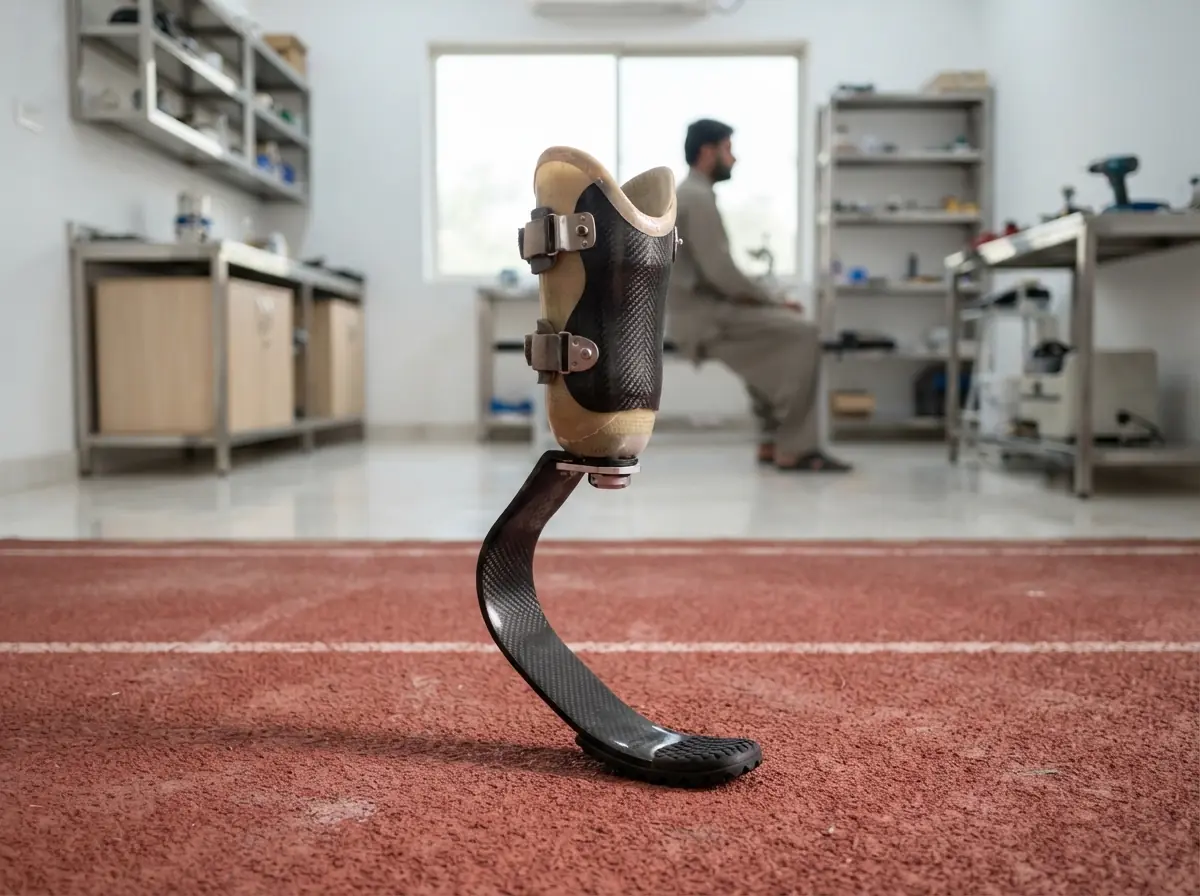
The carbon blade is the most recognised artificial leg in the world, and the least understood. It is a specialist tool for running, poor for everything else, and it comes after a good everyday leg, never instead of one. Most sport in Pakistan can be played very well without it.
What is a running blade?
A running blade is a curved carbon fibre spring fitted to a prosthetic socket in place of a foot. It has no heel. It compresses when the runner lands and returns that energy to push them forward. It is built for running only, is unstable for standing and walking, and needs its own socket or a quick change adapter, separate alignment, and good strength and balance.
Most sport needs a good everyday leg, not a blade
| Activity | Everyday leg with a dynamic carbon foot | Specialist leg |
|---|---|---|
| Brisk walking, hiking on paths | Yes | Not needed |
| Gym: weights, machines, stationary cycle | Yes. Check the weight rating if lifting heavy. | Not needed |
| Cricket: batting, bowling at club pace, fielding | Yes for most below knee players | A blade helps only fast bowlers and sprint fielding |
| Cycling | Yes. A toe clip or strap keeps the foot on the pedal. | Not needed |
| Badminton, table tennis | Yes, with a multi axis or dynamic foot | Not needed |
| Football, jogging a few kilometres | Possible, though hard on the foot and the stump | A blade is kinder and far more efficient |
| Sprinting, distance running, competitive athletics | No | Running blade |
| Swimming | No. Standard legs must stay dry. | Water leg for the poolside, or swim without |
Before a blade makes sense
You are probably ready if
- you have walked on a definitive leg for at least six to twelve months
- your stump size has been stable for three months or more
- you walk without a stick, climb stairs step over step if below the knee, and can hop on your sound leg
- your skin tolerates a full day without marks
- you can already jog twenty metres on your everyday leg, however awkwardly
Wait, or choose a dynamic everyday foot, if
- the first leg is less than six months old and the stump is still shrinking
- there is diabetes with reduced feeling, or circulation problems, unless your doctor agrees
- the knee or hip on that side is stiff or painful
- the amputation is above the knee and you have not yet mastered a free swinging knee
- the budget would be taken from the everyday leg. That one comes first, always.
What a running leg actually is
- No heel. You land and leave on the forefoot, which is why standing still on a blade is tiring and wobbly.
- Longer than your other leg. The blade compresses under load, so at rest it is set about two centimetres long.
- Stiffness by body weight and event. A sprinter's blade and a distance runner's blade are different springs.
- A tighter socket. Running loads are two to three times body weight. Suspension must be secure, usually suction or a sleeve over a pin.
- Above the knee, a sports knee designed for running is needed, and learning takes much longer.
- A sole is added. Track spikes or a cut down running shoe sole is bonded to the tip.
Some blades mount on a quick change adapter so that one socket serves both the everyday foot and the blade. It saves cost and works well when the socket fit is excellent.
Learning to run again
- Weeks 1 to 2
Strength and hopping
Single leg balance, hip and core strength, hopping and skipping on the sound leg. The stump side hip is usually the weak link.
- Weeks 2 to 4
Bounce and trust
Standing bounces on the blade holding a rail, then marching, then skipping. You learn to load the spring and let it return.
- Weeks 4 to 8
Run and walk intervals
Thirty seconds of easy running, ninety of walking, on a flat track or grass. Skin is checked after every session.
- Month 3 onward
Distance and speed
Intervals lengthen as the skin and the hip allow. A coach or an experienced para runner is a great help.
Sports leg prices in Karachi
| Item | Indicative range (PKR) |
|---|---|
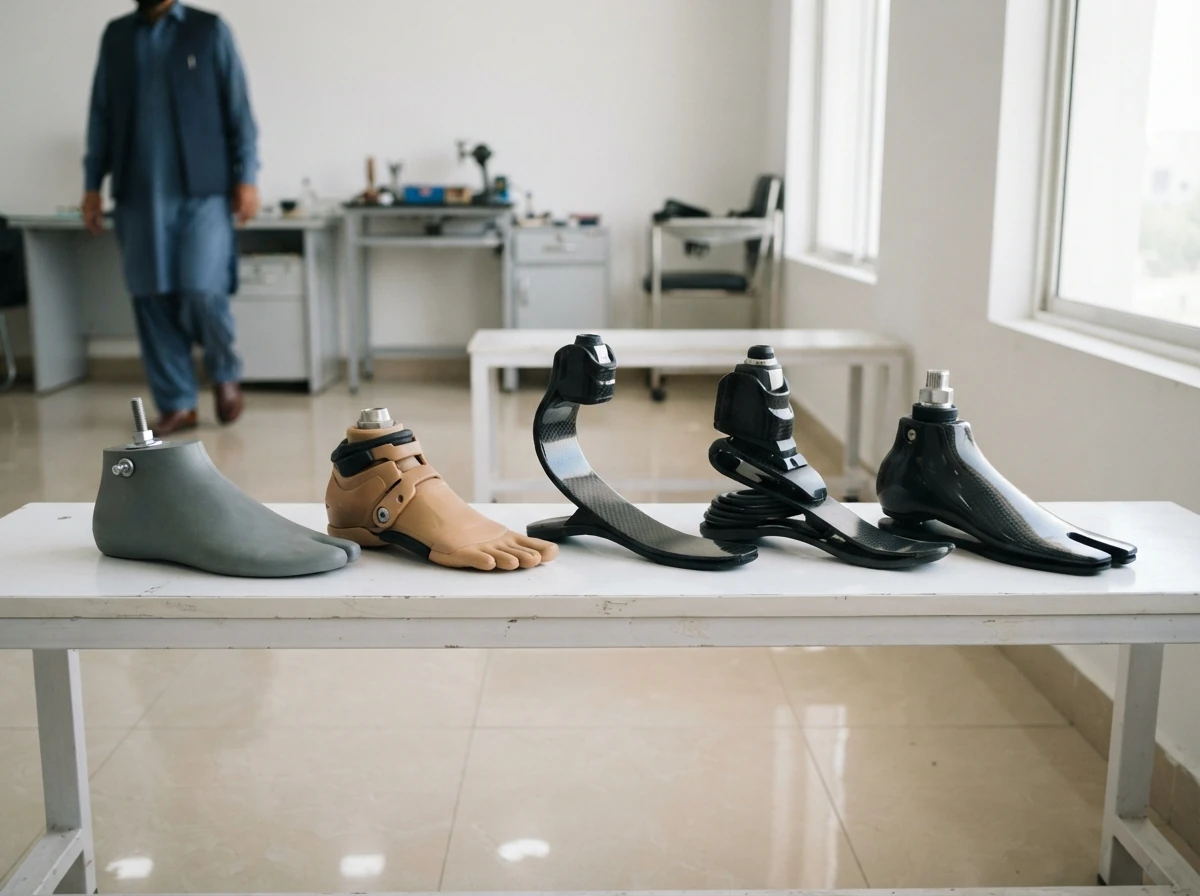
| Dynamic carbon everyday foot, suitable for most sport | 80,000 to 450,000 |
| Running blade, imported | 350,000 to 1,000,000 |
| Dedicated sports socket with secure suspension | 90,000 to 220,000 |
| Quick change adapter | 40,000 to 120,000 |
| Sports knee for above knee running, imported | 600,000 to 1,500,000 |
Blades are imported to order by body weight and event, so lead times and exchange rates apply.
Can I play cricket with an artificial leg?
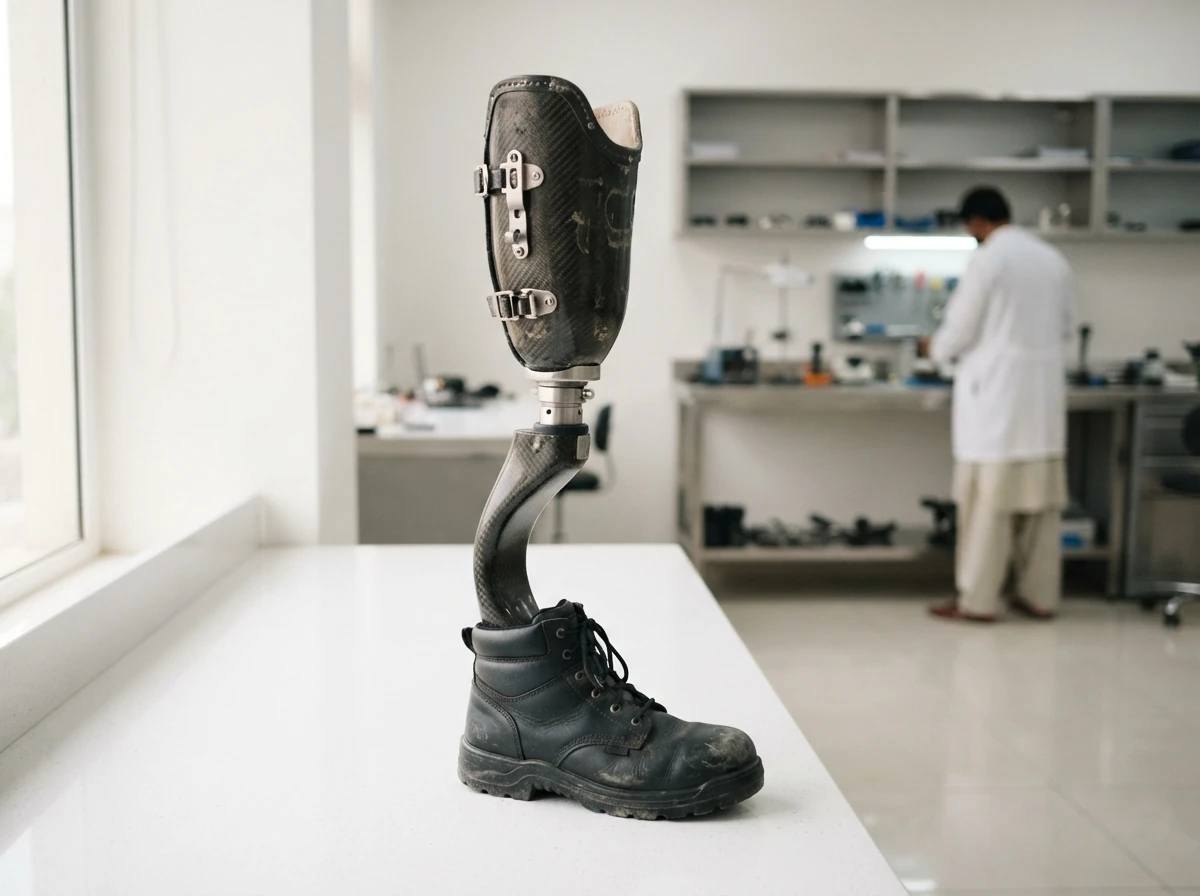
Yes. Many below knee players bat, bowl spin or medium pace, and field in the ring on an everyday leg with a dynamic foot. Tell us you play, so the socket is trimmed for a batting stance and the foot stiffness suits quick singles.
Can I walk around on a running blade?
Only briefly. With no heel it is unstable for standing and awkward for walking, and the extra length tilts the pelvis. Runners change into it at the track and out of it afterwards.
Is a blade available in Pakistan?
Blades are imported to order from the major makers, chosen by body weight and the type of running. We handle the order, the sports socket and the alignment, and tell you the lead time before any advance is paid.
Can above knee amputees run?
Yes, with a running knee and a blade, and much more training. Some above knee runners use a straight leg without a knee and swing it outward, which is simpler and cheaper to begin with.
Will sport damage my stump?
Not if the socket fits and you build up gradually. Stop for any broken skin, and let it heal fully before returning. Sweat management matters more in sport, so dry the liner at every break.
Send a photo of the stump for a free opinion
Three clear photos on WhatsApp, front, side and end, with the date of surgery. The prosthetist replies with whether it is the right time, the kind of leg that suits, and a price range.
- Answered on WhatsApp, 24/7
- First assessment free, no obligation
- Nothing is stored on this website