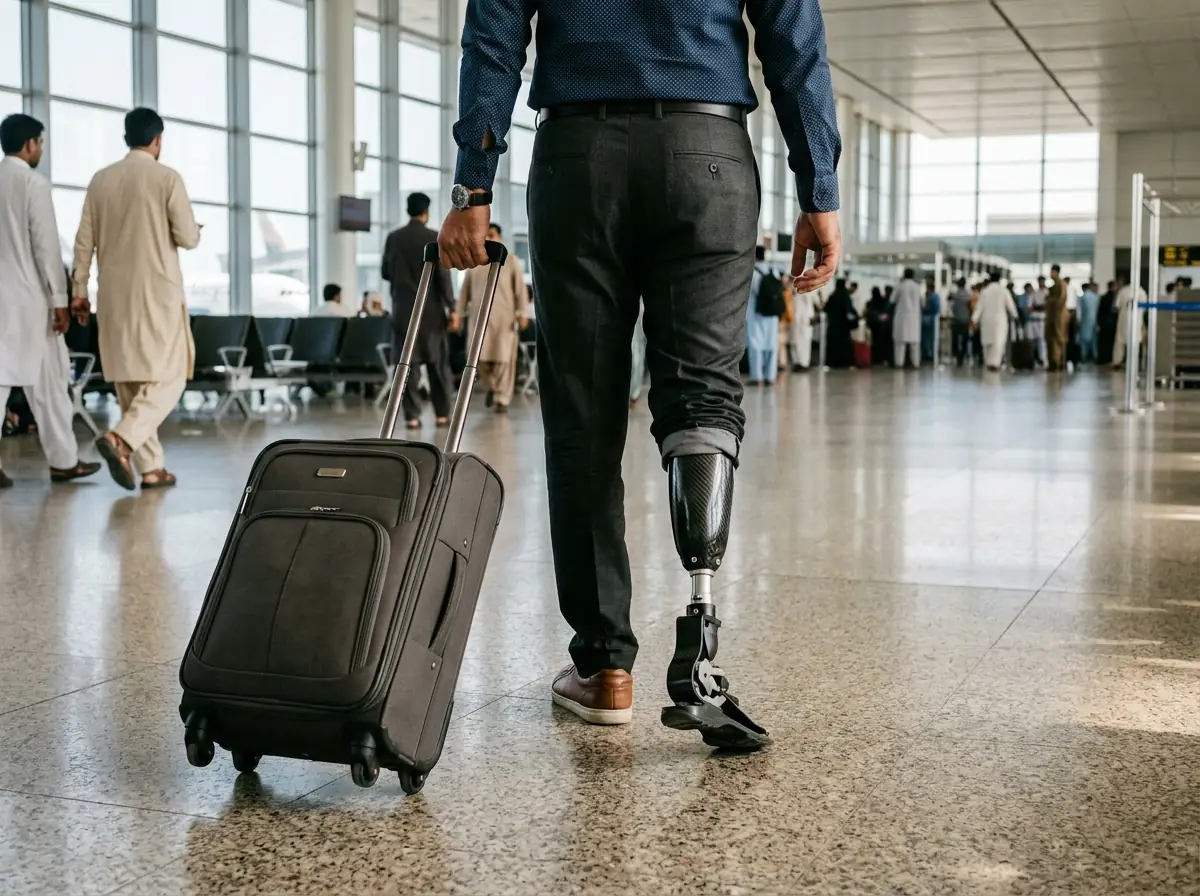
Flying with an artificial leg
People with prostheses fly every day, to Umrah, to see children abroad, for work. Nothing about it is difficult once you know three things: what happens at security, what happens to a stump at altitude, and what must be in your hand luggage.
Can you fly with a prosthetic leg?
Yes. You keep the prosthesis on through security and on the aircraft. It will set off the metal detector, so expect a hand search or a swab, which you may ask to have done in private. Book wheelchair assistance if distances are long, choose an aisle seat, loosen or remove the leg on long flights if the stump swells, and carry your liner, spare socks and any charger in hand luggage.
Security, step by step
- Before the scanner
Say it first
Tell the officer you wear an artificial leg before you walk through. It saves confusion when the alarm sounds.
- Screening
What to expect
A metal detector alarm, then a pat down or a hand held scanner, and often a swab of the leg and your hands to test for traces. Body scanners will show the leg clearly.
- Your rights
Privacy
You should not be asked to remove the leg in public. If any closer look is needed, ask for a private room and for an officer of your own gender. You may have your companion with you.
- Documents
A letter helps
A short letter from the clinic stating that you wear a lower limb prosthesis, with metal and sometimes electronic components, smooths things at unfamiliar airports. Ask us for one.
Use the wheelchair service without embarrassment
Large airports involve a kilometre or more of walking and long queues on hard floors. Arriving at your seat with a sore stump is a poor start to a long journey.
- Request assistance from the airline when you book, or at least 48 hours ahead. It is free.
- You can ask for help only over distance, or up the steps, or all the way to the seat. Say which.
- Assistance passengers are usually taken through dedicated queues and boarded first.
- At Jeddah, Madinah, Dubai and Doha the distances are very long. Book assistance for transit as well as arrival.
- If you bring your own wheelchair or crutches, they travel free and are returned at the aircraft door or the belt.
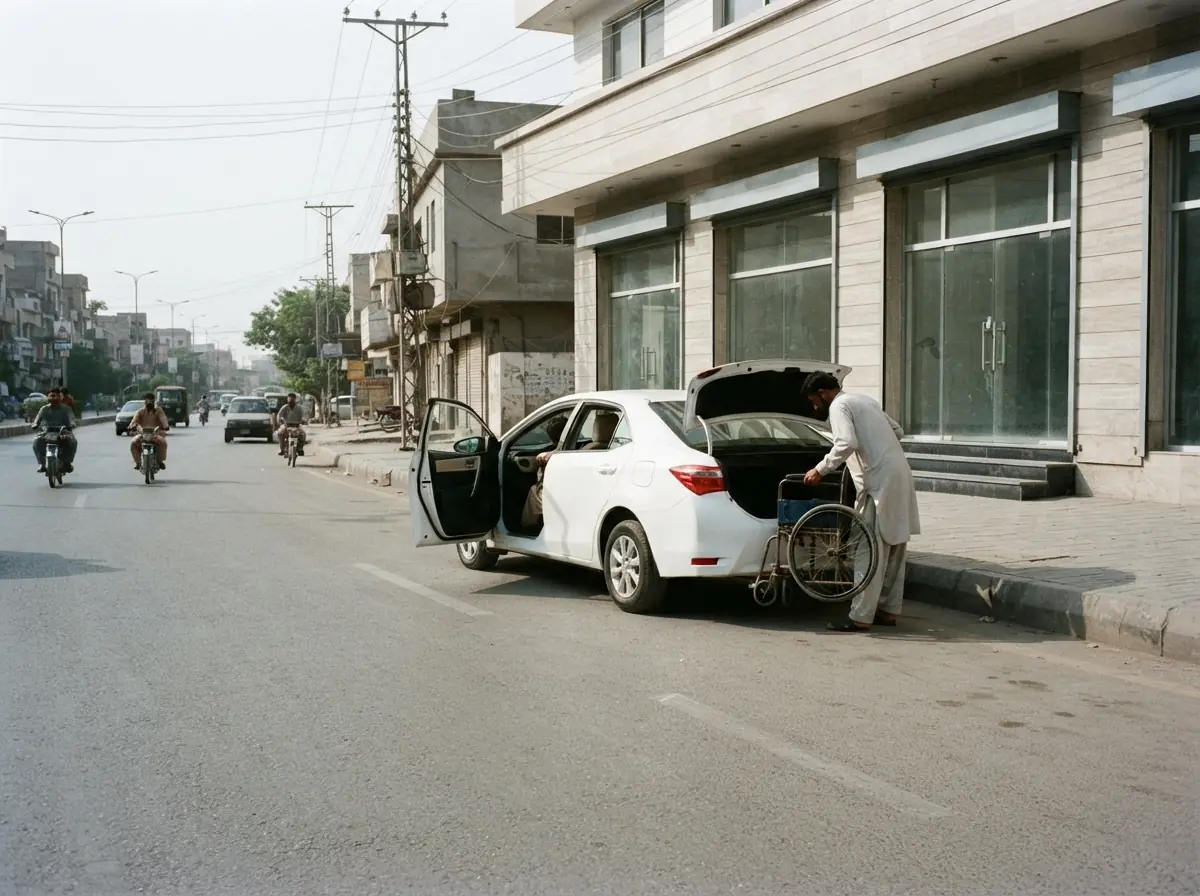
Seats, swelling and the stump
- Choose an aisle seat, with the prosthesis on the aisle side, so the leg can stretch out and you can stand without climbing over anyone.
- The stump swells at altitude, as feet do. On a flight over three or four hours, loosen the leg, or take it off and put the shrinker sock on.
- Putting it back on may need one sock fewer. Do it before the descent, seated, not in the aisle queue.
- Stand and walk every hour or two, and move the sound ankle. Long stillness raises the risk of a clot in the good leg.
- Drink water. Cabin air is very dry, and a dehydrated stump shrinks and rubs.
- Aircraft toilets are tiny. Go before the queue forms, and use the grab handle.
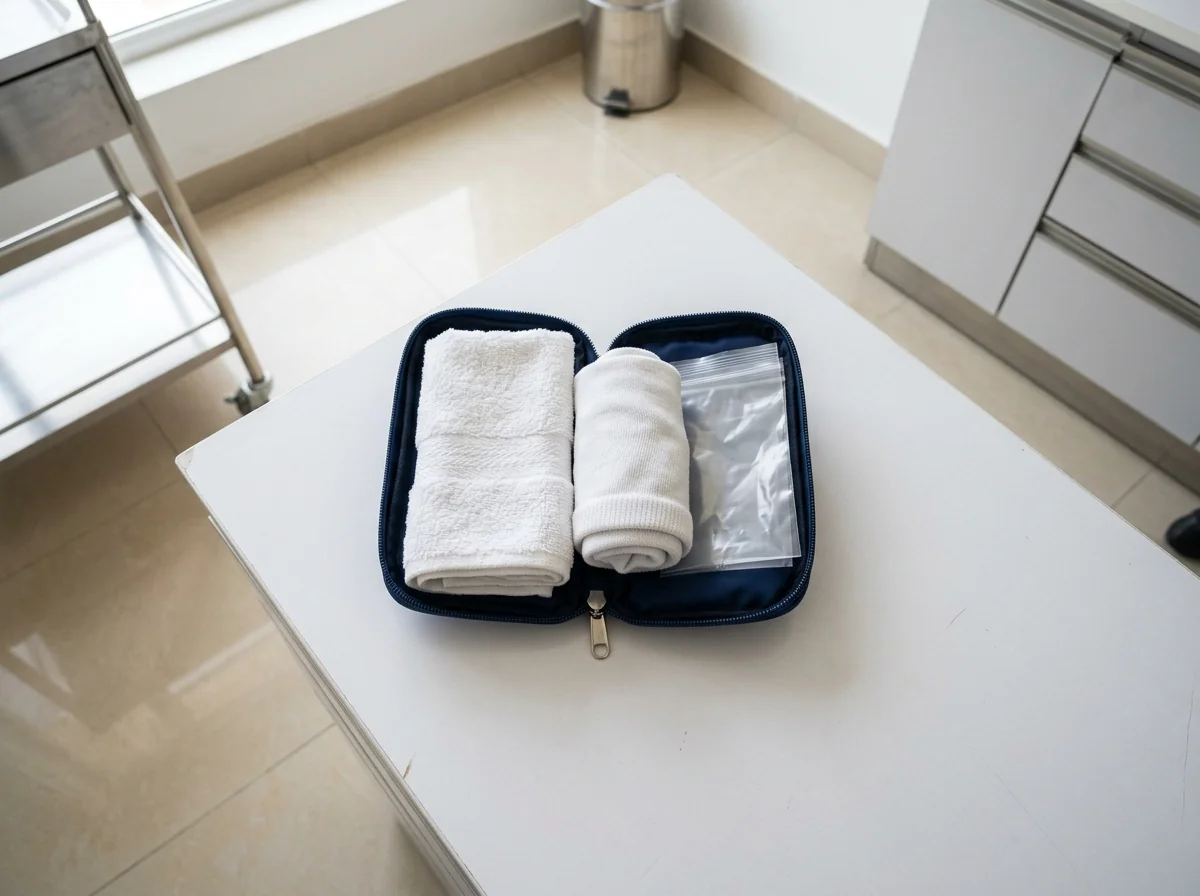
Hand luggage and hold luggage
In your hand luggage, always
- the liner you are not wearing, and at least two spare socks of different ply
- the shrinker sock
- the charger and any spare battery for an electronic knee or foot. Lithium batteries belong in the cabin.
- skin dressings, and your usual medicines
- the clinic letter, and our phone number
In the hold
- hex keys and any tools. Tools may be refused in the cabin.
- a spare or water leg, well padded
- spare foot shell, sleeve and stockings
- a folding stool if you will be bathing somewhere without one
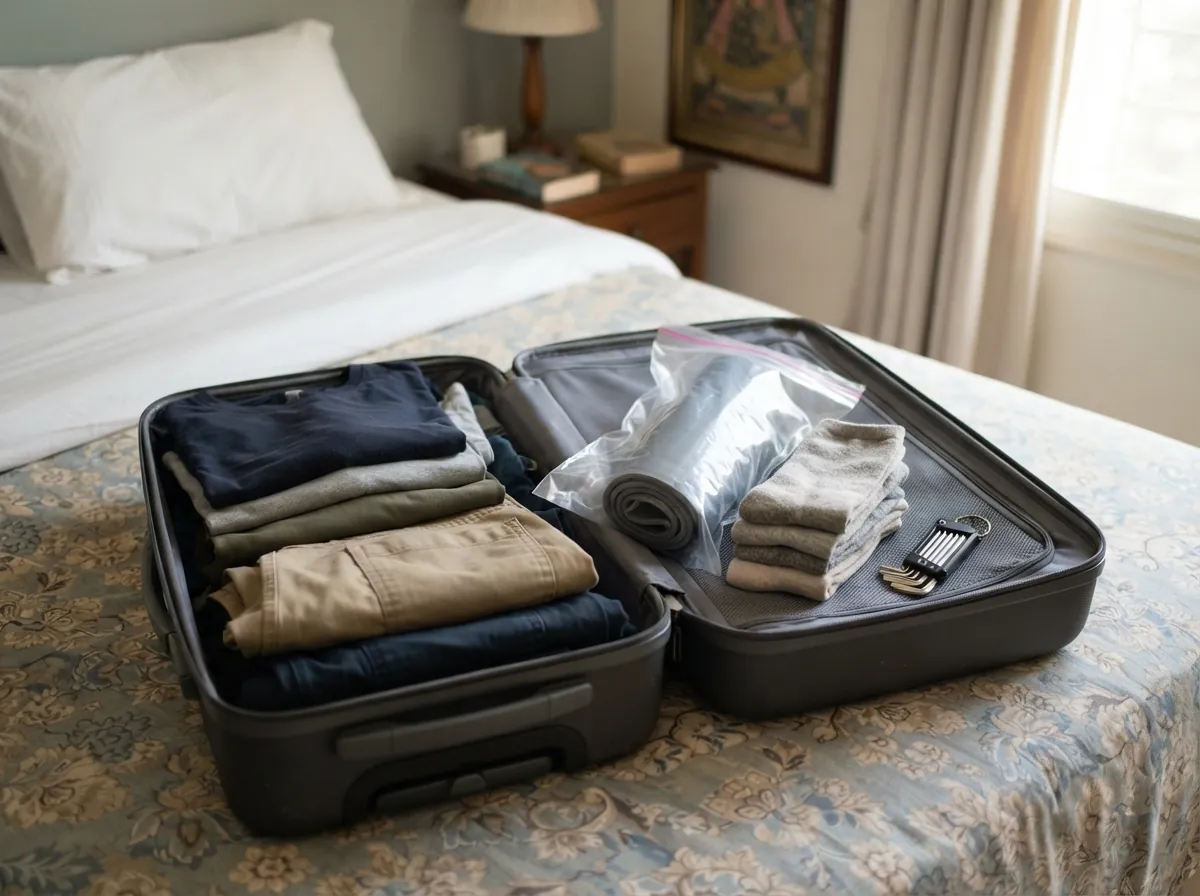
Different climate, different fit
A stump that fits perfectly in humid Karachi may feel loose in the dry cold of a northern winter, and tight in Gulf summer heat. Take the full range of sock thicknesses. In cold climates skin dries and cracks, so moisturise at night. In very hot ones, follow the midday drying routine.
Have the leg serviced two to three weeks before a long trip, not the day before, so that any adjustment has time to settle. If something fails abroad, send us a video. Many problems can be talked through, and we can tell you whether it is safe to walk on.
Will airport security make me take my leg off?
You should not be required to remove it in public. Screening is normally done with the leg on, by pat down and swab. If removal is ever requested, ask for a private room, a chair and an officer of your gender.
Is a microprocessor knee allowed on a plane?
Yes. It is a medical device worn on the body. Carry the charger and any spare battery in the cabin, and follow the maker's guidance on flight mode if the knee has wireless functions.
Should I take the leg off during the flight?
On short flights there is no need. On long flights many people loosen or remove it after take off and wear the shrinker, then put it back on before descent. Keep it beside you, not in the overhead locker.
Can I use an emergency exit row seat for the legroom?
Usually not. Airlines require exit row passengers to be fully able to assist in an evacuation, and most will not seat a passenger with a prosthesis there. Ask for a bulkhead or an aisle seat.
Do I need to tell the airline?
Only if you want assistance or are carrying extra medical equipment. It costs nothing, and it is wise for long haul and for Hajj and Umrah flights.
Start with a free assessment
Tell us the amputation level and the city. We reply with honest guidance and a price range, on the phone or on WhatsApp, at any hour.
- Answered on WhatsApp, 24/7
- First assessment free, no obligation
- Nothing is stored on this website