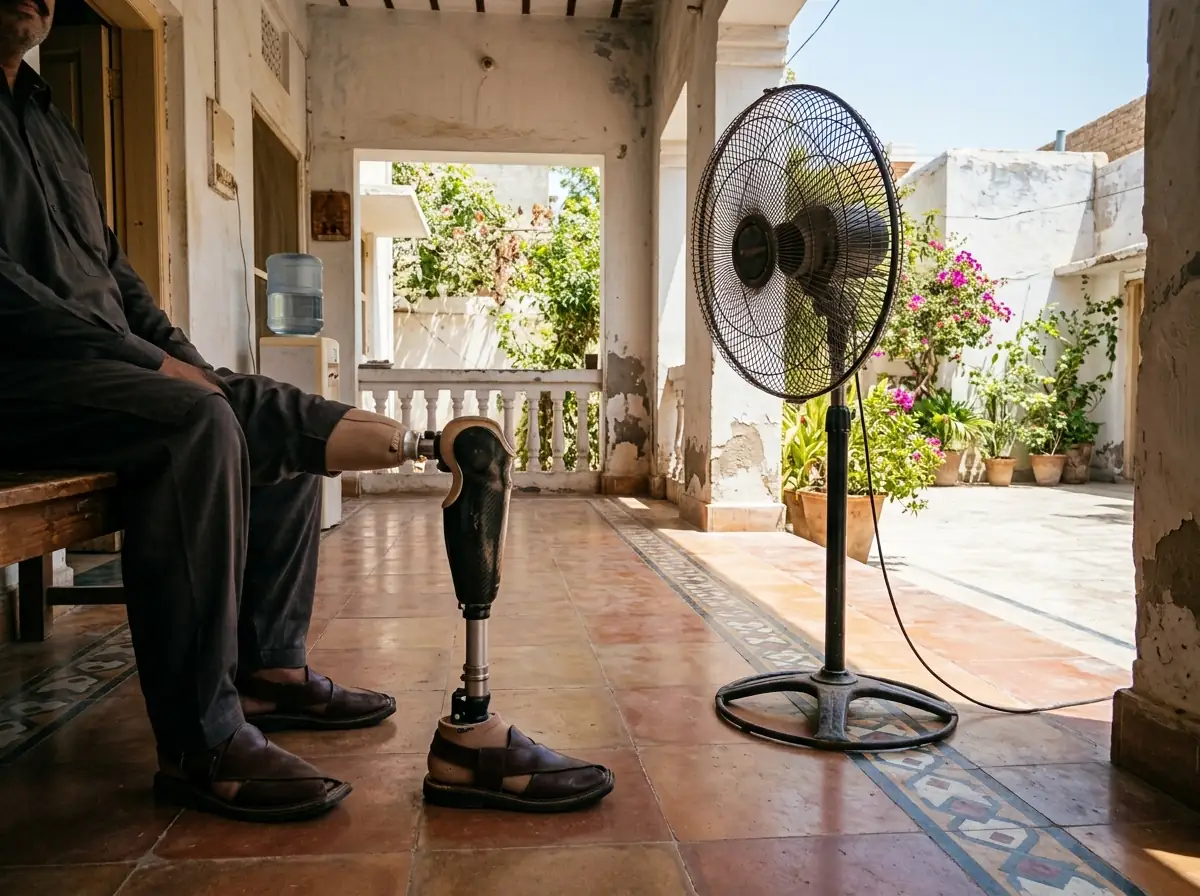
Heat, sweat and the monsoon
A prosthetic socket is a sealed container worn against the skin in a city that sits near forty degrees with sea humidity. No catalogue was written for this. What follows is what we have learned from patients who wear their legs through every Karachi summer.
How do you manage sweating with a prosthetic leg in hot weather?
Take the leg off at midday, dry the stump and the inside of the liner, and put it back on. Wash the liner every night and alternate between two. Wear a fresh sock daily and carry a spare. Ask your doctor about an antiperspirant for the stump. Drink enough water, since dehydration shrinks the stump and loosens the socket. Most people sweat less after the first summer.
Karachi seasons, as your stump experiences them
| Season | What happens | What to do |
|---|---|---|
| March to June: dry heat | Heavy sweating, liner slipping, heat rash | Midday dry off, two liners in rotation, antiperspirant, light coloured loose clothing over the leg |
| July to September: monsoon humidity | Skin never fully dries, fungal rashes, rusting bolts, slippery floors | Air the stump in the evening, dry the leg after every outing, deep tread shoes, a stick |
| October to November: second summer | Heat returns after the rains, often catching people off guard | Return to the summer routine |
| December to February: mild and dry | Dry, cracked skin. Stump may be slightly smaller. | Moisturise at night, and check whether you need an extra sock |
The midday routine that prevents most summer problems
Sweat inside a liner cannot evaporate. It pools at the bottom, softens the skin, and lets the stump slide up and down. That sliding is what blisters. Five minutes at midday stops the chain.
- Find a private place. At work, a washroom or prayer room.
- Remove the leg and the liner. Pour out any sweat.
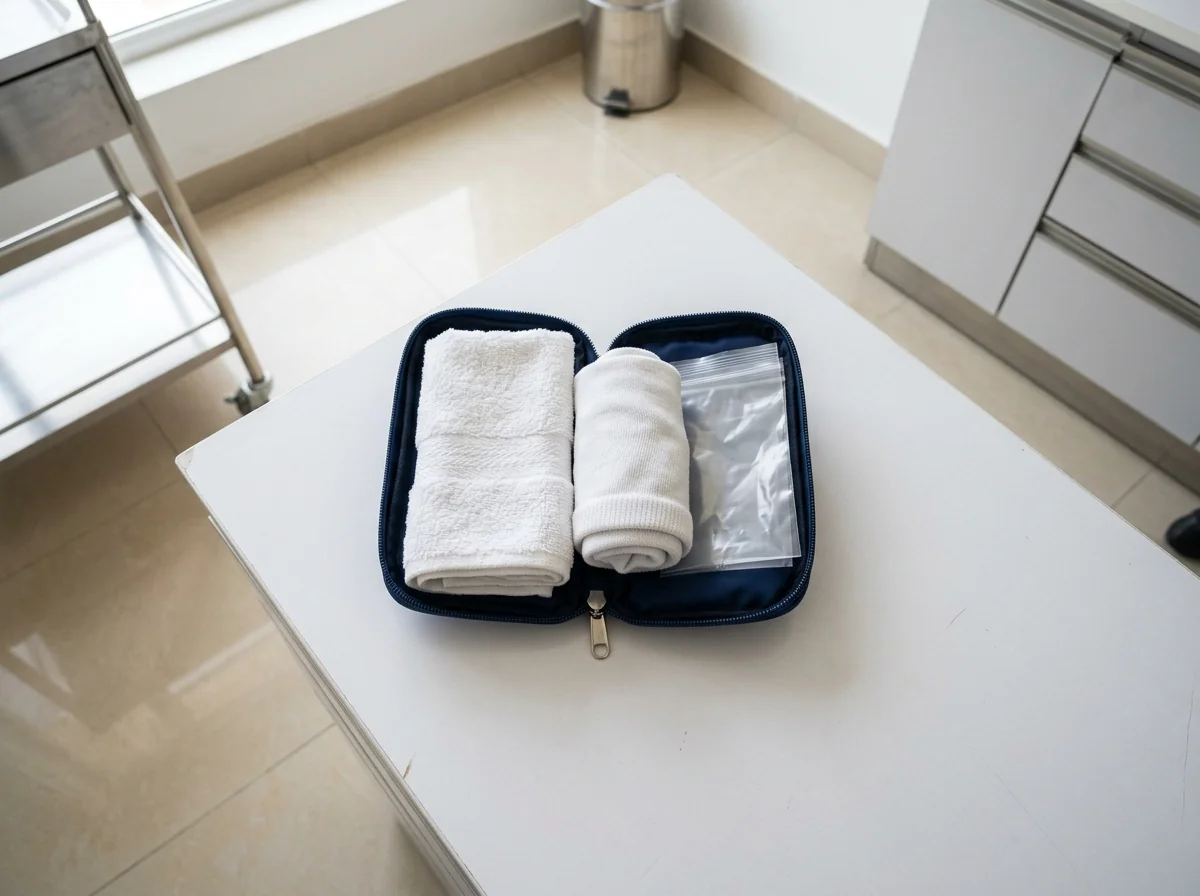
- Dry the stump with a small towel kept for the purpose.
- Wipe the inside of the liner dry.
- Let the skin air for two or three minutes.
- Put on a fresh sock if you use one, then the liner and the leg.
Keep a small kit in your bag: a hand towel, a spare sock, and a zip bag for the damp one.
Summer rashes: which is which
Heat rash
Tiny red or clear bumps that prickle. Blocked sweat glands. Cool the skin, air it, and it clears in days.
Fungal rash
Red, itchy, scaly, often ring shaped with a clear edge, in folds and at the liner top. Needs an antifungal from your doctor, and thorough drying.
Infected hair roots
Pimples around hairs, sometimes with pus. Do not shave, wash gently, and see a doctor if they spread.
Liner reaction
Redness exactly where the liner sits. Usually soap left in the liner. Rinse far more thoroughly before suspecting an allergy.
Any rash that weeps, spreads quickly, or comes with fever needs a doctor promptly, and the same day if you are diabetic.
Ramadan in the hot months
A long summer fast affects the stump in a way few people expect. Without water through the day, the body and the stump lose fluid. By late afternoon the socket is noticeably loose, exactly when you are most tired.
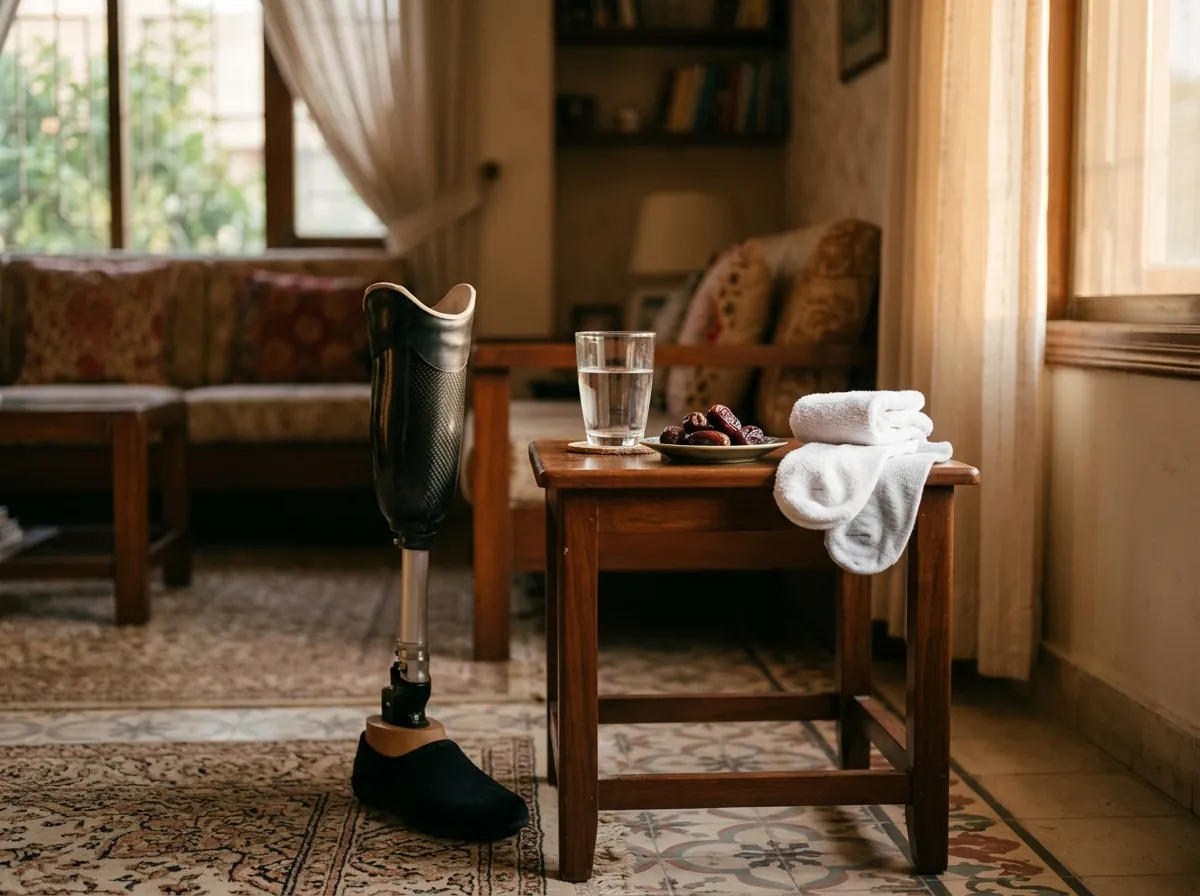
Add a sock after Zuhr, and perhaps another before Asr. Take the leg off for a rest in the afternoon if you can. After iftar and through the night, as you drink, the stump fills again, so remove the extra sock before taraweeh or the leg will feel tight.
Standing for long taraweeh prayers is demanding on a new stump. A chair for part of it is sensible. If you are diabetic, whether and how to fast is a decision to make with your physician, and low or high sugar both slow the healing of any skin problem.
Monsoon: water, rust and flooded streets
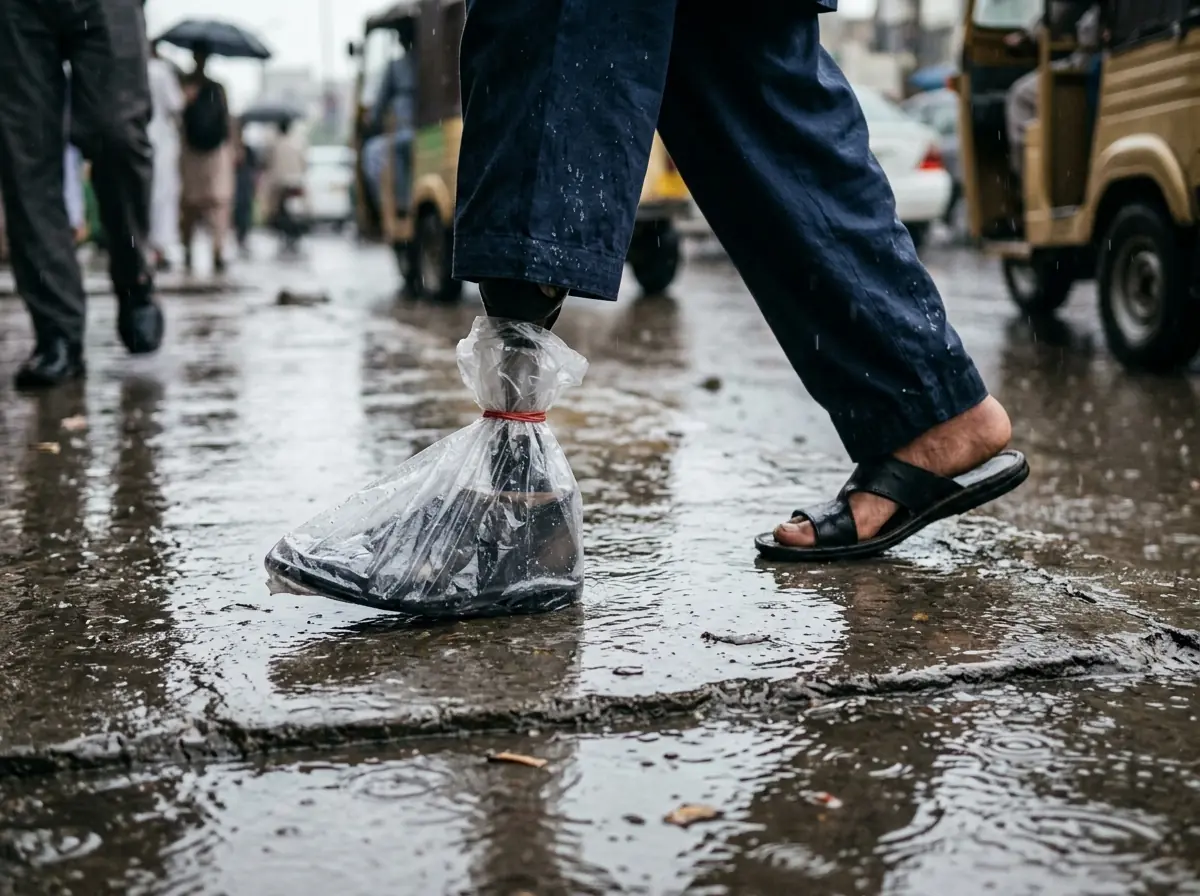
- Never wade through standing water in the leg if it can be avoided. Street water is dirty, enters the foot and ankle, and stays there.
- Carry a large plastic bag and a rubber band. Pulled over the foot and ankle, it is a crude and effective rain cover.
- When you get home, dry the leg. Remove the foot shell if you have been shown how, wipe everything, and stand it in moving air under a fan.
- Do not dry it with a heater, an iron or in the sun. Heat warps plastic sockets and ruins liners.
- Bring it in after a bad soaking. We can open it, dry it properly and treat the bolts before rust sets in.
- Wear deep tread shoes and assume every tiled entrance is slippery.
Load shedding, storage and smell
When the fan stops
Hours without a fan in summer mean heavier sweating. Take the leg off while you are sitting at home. There is no benefit in wearing it in a chair, and the skin gets a rest.
Electronic knees
Charge whenever power is available, not only at night, and keep a power bank or UPS socket for it. Know how your knee behaves when its battery is flat.
Storage
Never leave the leg in a parked car or on a sunny windowsill. A closed car in June is hot enough to soften a socket. Store the leg upright, in the shade, outside the bathroom.
Smell
Smell is bacteria feeding on sweat. It is solved by nightly washing with mild soap, complete drying, and alternating liners. Perfume and powder only cover it. A liner that still smells after proper washing is at the end of its life.
Is a sock fit leg cooler than a liner?
Yes, noticeably. Cotton and wool socks breathe and a liner does not. If your skin is healthy and your stump well padded, a sock fit below knee leg is a reasonable choice for this climate. Fragile or diabetic skin still does better in a liner.
Can I use antiperspirant on my stump?
Many prosthesis users do, applied at night to dry skin. Please ask your doctor first, particularly if you have diabetes or broken skin, and stop if it irritates.
Are there waterproof legs?
Yes. Waterproof feet and simple shower or water legs exist, built with no parts that rust. They are worth considering for people who work in wet conditions. A standard leg should be kept dry.
My leg feels loose every afternoon in summer. Is the socket wrong?
Probably not. Heat, sweating and walking all reduce stump volume through the day. Add a thin sock after lunch. If you need many plies even in the morning, then it is time for a socket review.
How do I stop the liner slipping when I sweat?
Dry the stump and liner at midday, make sure the liner is the right size, and ask your doctor about an antiperspirant. A thin sweat wicking sheath worn under the liner helps some people. Persistent slipping can also mean the stump has shrunk.
Start with a free assessment
Tell us the amputation level and the city. We reply with honest guidance and a price range, on the phone or on WhatsApp, at any hour.
- Answered on WhatsApp, 24/7
- First assessment free, no obligation
- Nothing is stored on this website