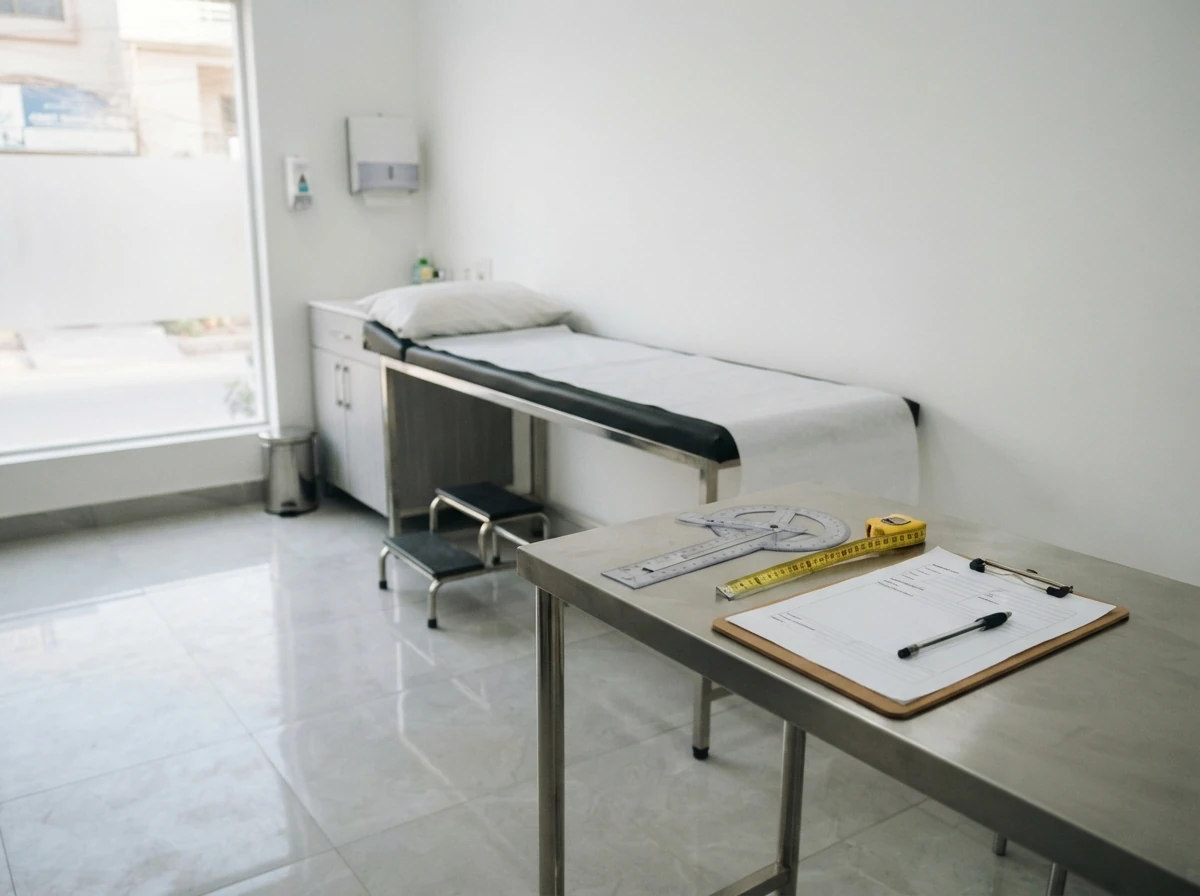
Free artificial leg assessment in Karachi
The assessment is where we find out whether a leg is right for you now, which kind, and roughly what it will cost. You should leave knowing more than when you arrived, whether or not you ever order from us.
What happens at an artificial leg assessment?
The prosthetist examines the stump, scar and skin, measures its length and shape, checks how far the joints above it move and how strong the muscles are, and looks at your other leg, balance and general health. You discuss your home, work and goals. You leave with a recommended type of leg, an indicative price range, and exercises to begin at once.
Eight things we look at, and why
| We check | Because |
|---|---|
| Wound and scar | A leg cannot be fitted over unhealed skin. A scar stuck to bone needs relief in the socket. |
| Stump shape, length and swelling | These decide the socket design and whether the size is stable enough to cast. |
| Joint movement above the amputation | A knee or hip that cannot straighten must be treated first, or the leg cannot be aligned. |
| Muscle strength | The hip muscles control the leg. Weak muscles call for a safer knee. |
| The other leg and foot | It carries you through the whole process. If it is at risk, it needs protecting now. |
| Balance and arm strength | These tell us which walking aid you will start with. |
| Hands and eyesight | They decide which suspension you can manage on your own each morning. |
| Heart, lungs, diabetes and medicines | Walking on a prosthesis is harder work. We match the goals to what your health allows. |
What to bring to the assessment
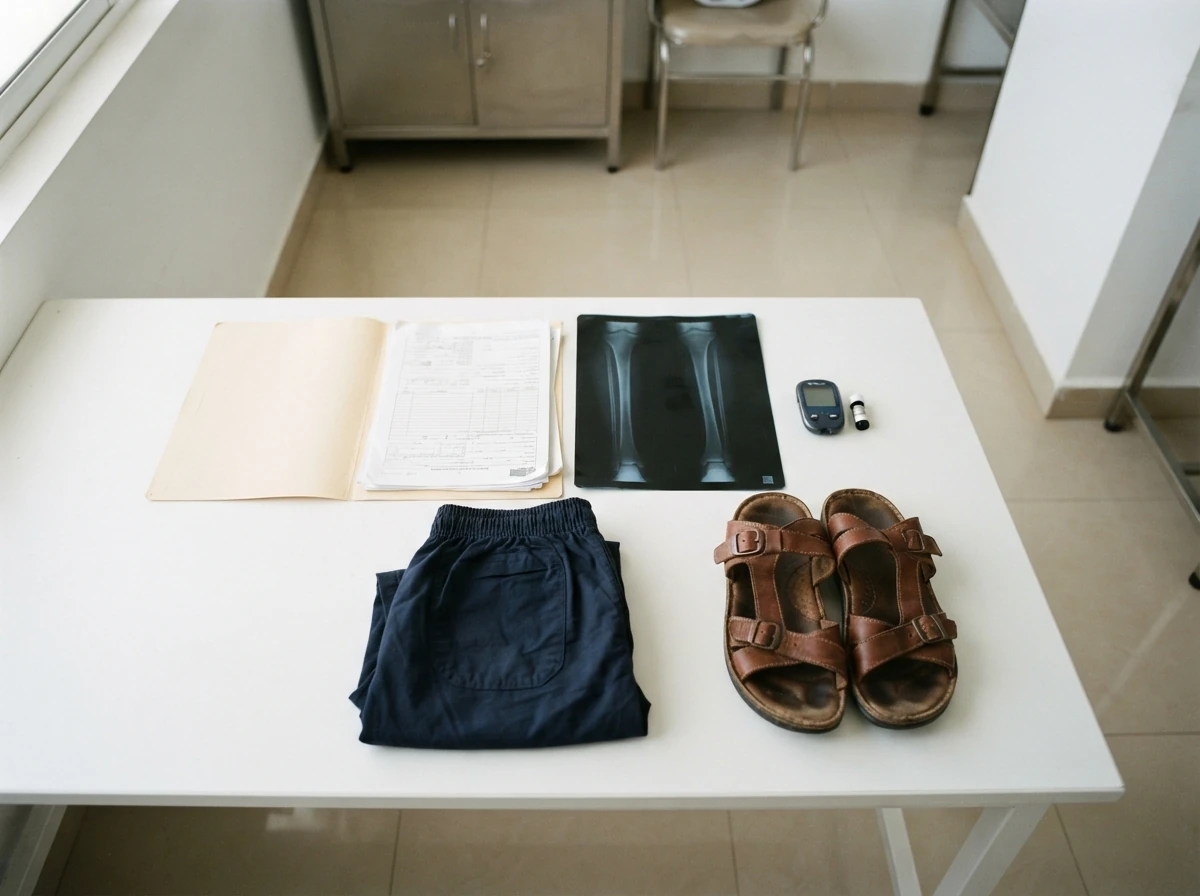
- The hospital discharge slip, and any X rays of the stump
- A list of your medicines, and recent sugar readings if you are diabetic
- Your old artificial leg, if you have one, even if it is broken
- The shoes or chappals you wear most days
- Shorts or loose clothing, so the stump and the other leg can be examined
- A family member, ideally the one who helps you at home
- Your questions, written down. People forget half of them in the room.
Women patients are welcome to bring a female relative into the room, and may ask for the examination to be arranged in whatever way they are comfortable with.
What to send on WhatsApp before you come
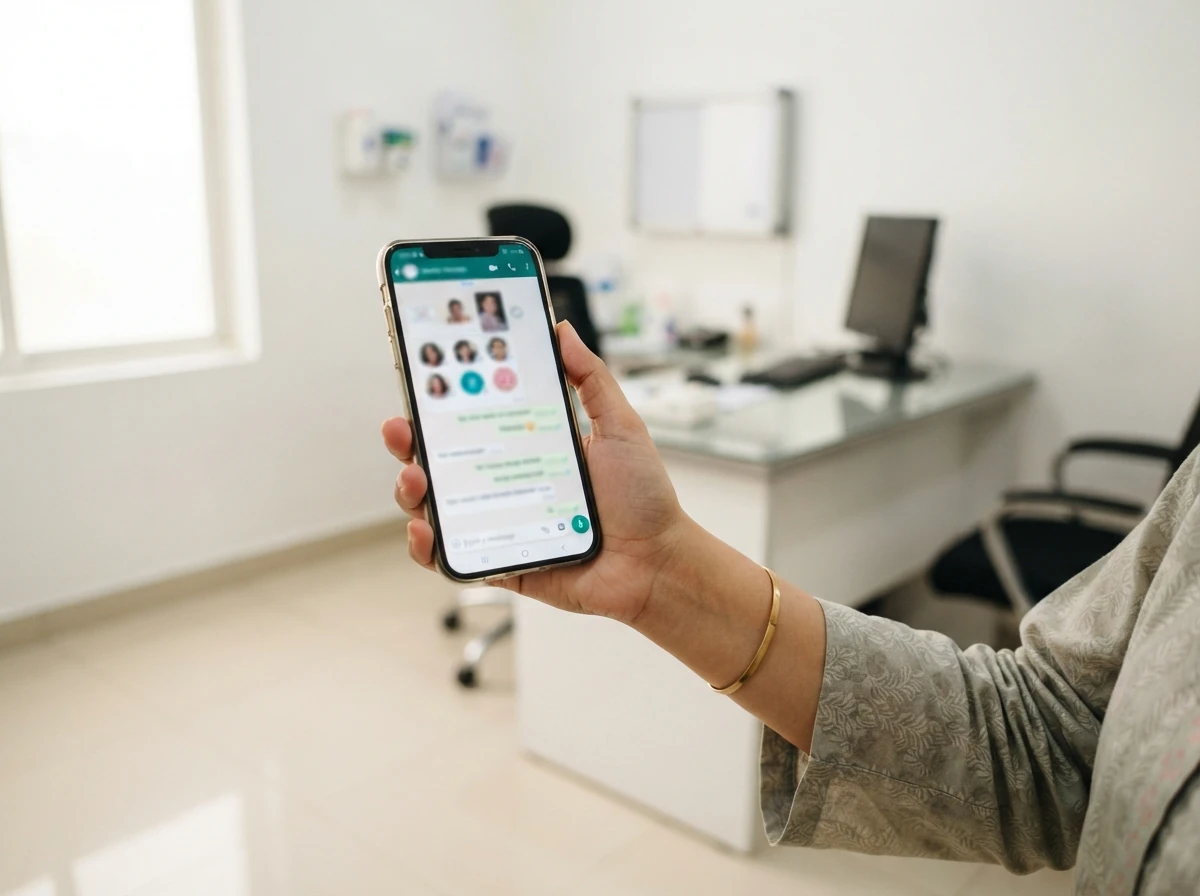
If you live far from the clinic, in another city, or abroad and arranging this for a parent, start on WhatsApp. It costs nothing and saves wasted journeys. Send us:
- The amputation level and side, and the date of surgery
- The reason: accident, diabetes, circulation, infection, tumour, or from birth
- Age, approximate weight, and main health conditions
- Three clear photos of the stump in good light: front, side and end
- A short video of the knee or hip being straightened as far as it goes
- What the patient did before the amputation, and what they hope to do again
The prosthetist will reply with whether the time is right, what type of leg is realistic, a price range, and what to do in the meantime. Photos are used only for your assessment.
Four things in your hand when you go
A clear recommendation
The type of leg, the kind of socket, knee and foot we suggest, and why. Or an honest statement that it is not yet time.
A price range, then a written quotation
A range on the day. If you wish to proceed, a written quotation with every part named.
A home programme
Stretches, strengthening and stump care to start that evening.
A plan of dates
When to cast, how many visits, and how they can be grouped if you are travelling.
Sometimes the answer is not yet, or not a leg
We will say not yet if
- the wound is not fully closed
- the stump is still very swollen or changing size daily
- a knee or hip is stiff in a bent position
- blood sugar or another condition needs to be brought under control first
We may advise against a leg if
- heart or lung disease makes the effort unsafe
- the other leg cannot support standing
- severe confusion or memory loss means the leg cannot be used safely
- a wheelchair and good transfers would give more independence with less risk
These are hard conversations, and we have them plainly and kindly. A leg that is never worn helps nobody, and it is your money.
Is the assessment really free?
Yes. There is no charge and no obligation to order. If you later order elsewhere, you still keep the advice and the exercise programme.
How long does it take?
About one hour. Allow ninety minutes if a cast is to be taken on the same visit.
Which clinic should I come to?
Whichever is nearer: Gulshan-e-Iqbal on Main University Road, or DHA Phase 2 Extension. Tell us when you call and we will book you there.
Can the patient be assessed at home?
Start with photos and video on WhatsApp, which answers most early questions. Casting and fitting need clinic equipment, such as parallel bars, so those visits are at the clinic.
Do I need a doctor's referral?
No referral is needed to be assessed. Before casting, we do ask that your surgeon has confirmed the wound is healed, and for some patients that a physician is content with the heart.
Book your free assessment
Call or WhatsApp at any hour. Tell us the level, the date of surgery and which clinic is nearer, and we will give you a time.
- Answered on WhatsApp, 24/7
- First assessment free, no obligation
- Nothing is stored on this website