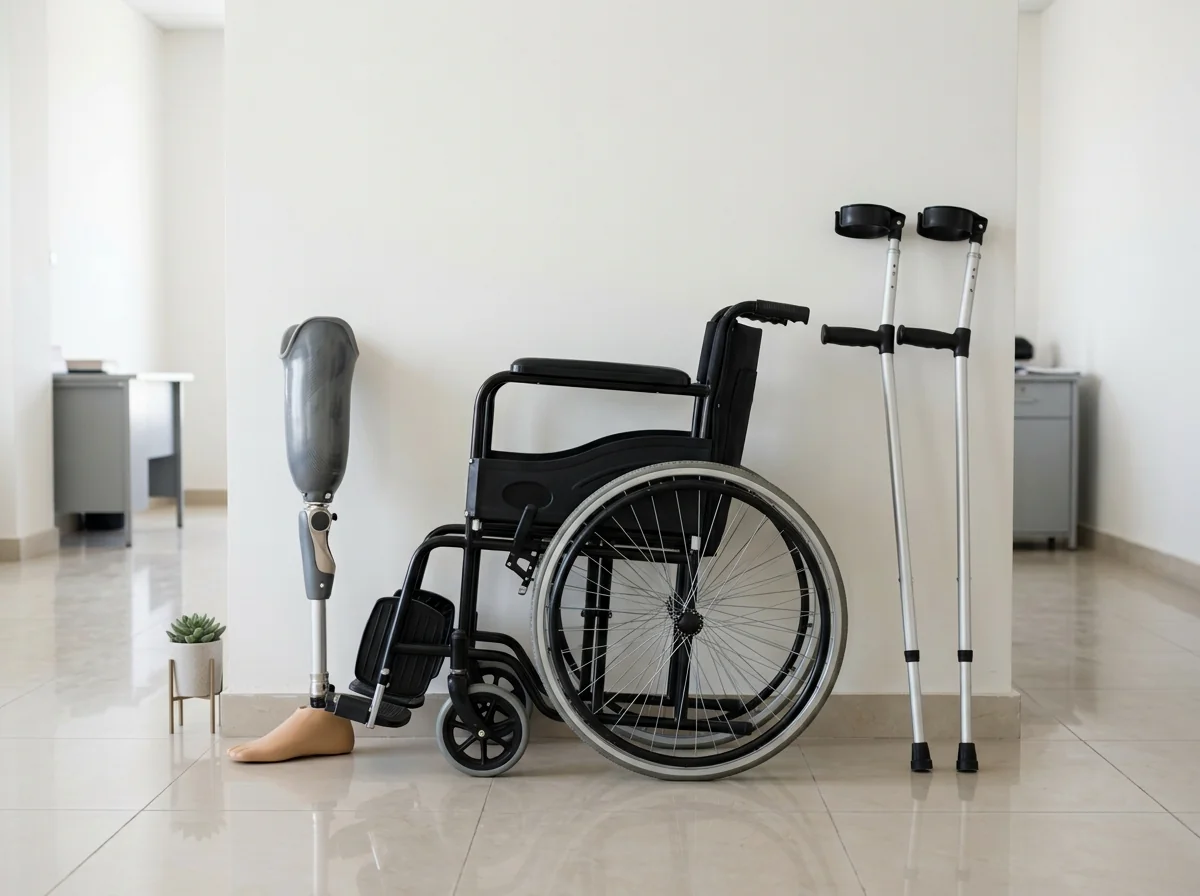
Artificial leg, wheelchair or crutches?
We make artificial legs for a living, so you might expect us to say that everyone needs one. We do not. For most amputees a leg is the best single tool. For some it is not. And for nearly everyone, the real answer is a leg plus one of the others.
Is an artificial leg better than a wheelchair or crutches?
For most people with one amputation at or below the knee, yes: a leg frees both hands, handles stairs and rough ground, and protects the shoulders. Crutches are faster over short distances and cost almost nothing, but occupy the hands and wear the wrists and shoulders. A wheelchair is best for distance, for frail users and for both leg amputees, but is blocked by steps. Most people use a leg together with one of the others.
What each one gives, and what it costs you
| Artificial leg | Crutches | Wheelchair | |
|---|---|---|---|
| Hands | Both free | Both occupied | Both occupied while moving |
| Stairs, kerbs, rough ground | Yes, with training | Yes, with strength and care | No, without ramps or help |
| Long distance | Tiring above the knee | Very tiring | Easy on level ground |
| Speed over a short distance | Moderate | Fast | Fast on smooth floors |
| Energy used | A little more than normal below knee. Much more above knee or at the hip. | High. Roughly double normal walking. | Low |
| Wear on the body | Skin of the stump. Back, if alignment is poor. | Wrists, hands, shoulders, and the sound leg | Shoulders over years. Pressure sores if sitting all day. |
| Standing to work, cook, pray | Yes | Awkward | No |
| Cost in Karachi, indicative | PKR 80,000 upward, plus upkeep | PKR 3,000 to 12,000 | PKR 25,000 to 150,000 for a decent manual chair |
| Learning | Weeks to months | Days | Days |
Matching the tool to the person
Leg as the main tool
One leg lost at or below the knee, reasonable health, a life that includes stairs, work, standing or uneven ground. Also most above knee amputees under about sixty five.
Wheelchair as the main tool
Both legs above the knee, hip level with poor stamina, serious heart or lung disease, marked frailty or confusion. A leg may still serve for transfers and standing.
Crutches as the main tool
Young, strong, short term: while the wound heals, while a socket is remade. As a lifelong choice they cost the shoulders dearly.
A deliberate mix
A leg for the house, work and the masjid, and a wheelchair for the mall, the airport, Hajj and bad days. This is what most experienced amputees actually do.
What twenty years on crutches does
Families sometimes decide against a leg because the young man manages so well on crutches. He does, today. Shoulders, wrists and the one remaining knee were never built to carry the whole body for decades.
- By their forties, long term crutch users commonly have painful shoulders and wrists, and nerve compression in the hands.
- The sound leg takes every landing. Its knee and hip wear early.
- With both hands occupied, a person cannot carry a child, a cup of tea or a tool. That limits work and family life more than the amputation does.
- A fall on crutches, on a wet floor, is a common cause of a second serious injury.
Crutches remain essential as a backup for every leg user: at night, during repairs, and when the skin needs a rest. Every amputee should own a pair.
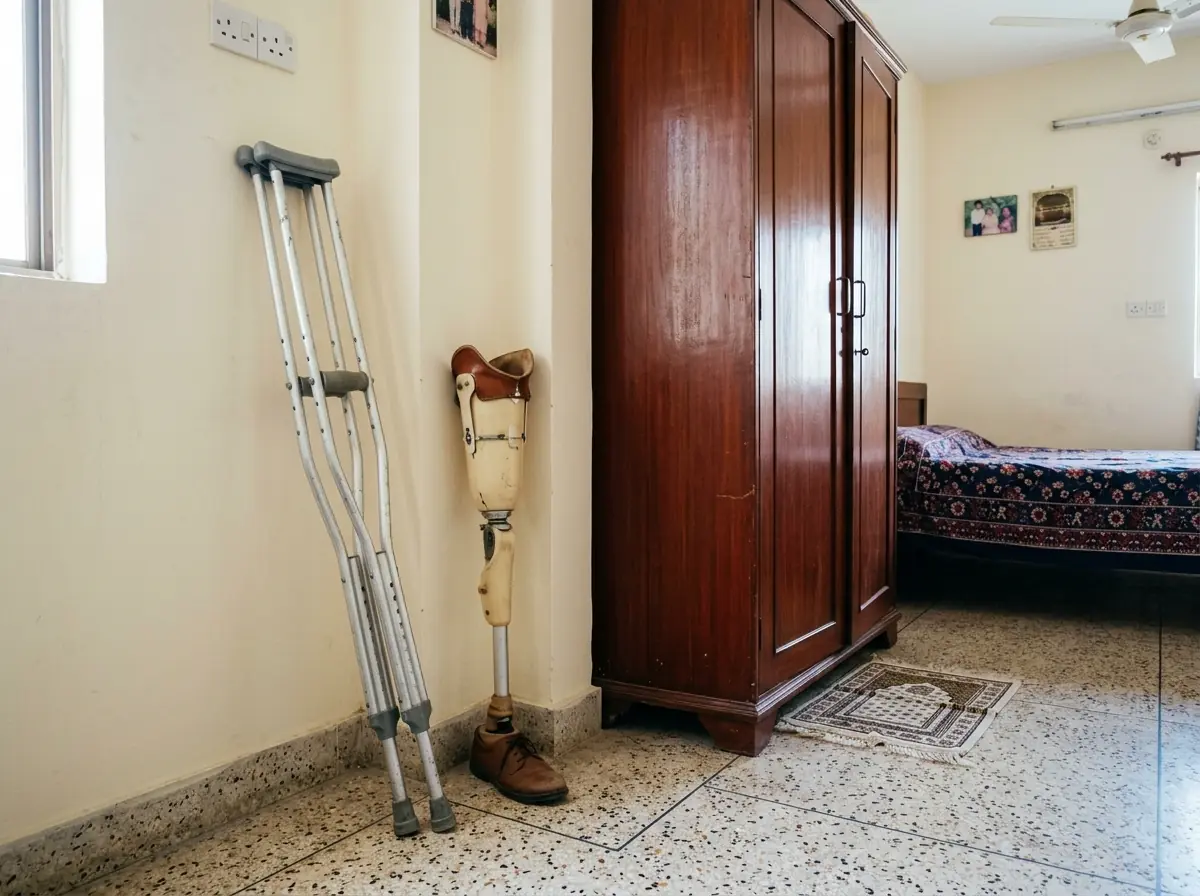
Our honest no
We are likely to recommend a leg if
- the wound has healed and the joints above are straight
- you can stand on the other leg with support
- your heart and lungs cope with ordinary activity
- you have something you want to get back to
We may advise a wheelchair instead if
- chest pain or breathlessness comes with light effort
- the other leg cannot bear weight
- memory loss means the leg cannot be used safely
- both legs are lost high up and arm strength is limited
- a leg was tried properly before and was not worn. We will want to understand why first.
Saying this costs us a sale and saves a family several lakh rupees and a good deal of disappointment. When a wheelchair is the right answer, the money is far better spent on a good, light, correctly sized chair, a cushion that protects the skin, and a ramp at home.
Choosing a wheelchair well
- Size matters as it does with shoes. Seat width, depth and footrest height should fit the user. The cheapest hospital chair fits nobody.
- Amputee setting. With a leg missing, the body's weight sits further back and the chair can tip backward. The rear axle should be set back, or anti tip bars fitted.
- A stump support board keeps a below knee stump straight and prevents the knee stiffening bent.
- A pressure relieving cushion, not a folded towel, if sitting for hours.
- Light and folding, if it must go in a car boot or up a step.
- At home: a ramp at the entrance, doors wide enough, and a bathroom the chair can enter.

My son is fine on crutches. Why spend on a leg?
Because he has forty or fifty years ahead, and his shoulders, wrists and remaining knee will not tolerate crutches for that long. A leg also frees his hands, which decides what work he can do.
Can a wheelchair user still benefit from a leg?
Often, yes. A light leg used only to stand and pivot makes transfers to the bed, commode and car far easier, reduces lifting for the family, and allows standing at a counter.
Is a walking frame the same as crutches?
A frame is more stable and much slower. It is the usual starting aid for older leg users, and many keep it indoors. It cannot manage stairs.
Does using a wheelchair sometimes mean I have failed with my leg?
No. Experienced amputees choose the tool for the task, just as a person who can walk still takes a car to the airport. Saving your stump for what matters is good judgement.
How do I decide?
Come for the free assessment and tell us about your home, your work and your health. We will give you a straight recommendation, including when it is not a leg.
Start with a free assessment
Tell us the amputation level and the city. We reply with honest guidance and a price range, on the phone or on WhatsApp, at any hour.
- Answered on WhatsApp, 24/7
- First assessment free, no obligation
- Nothing is stored on this website