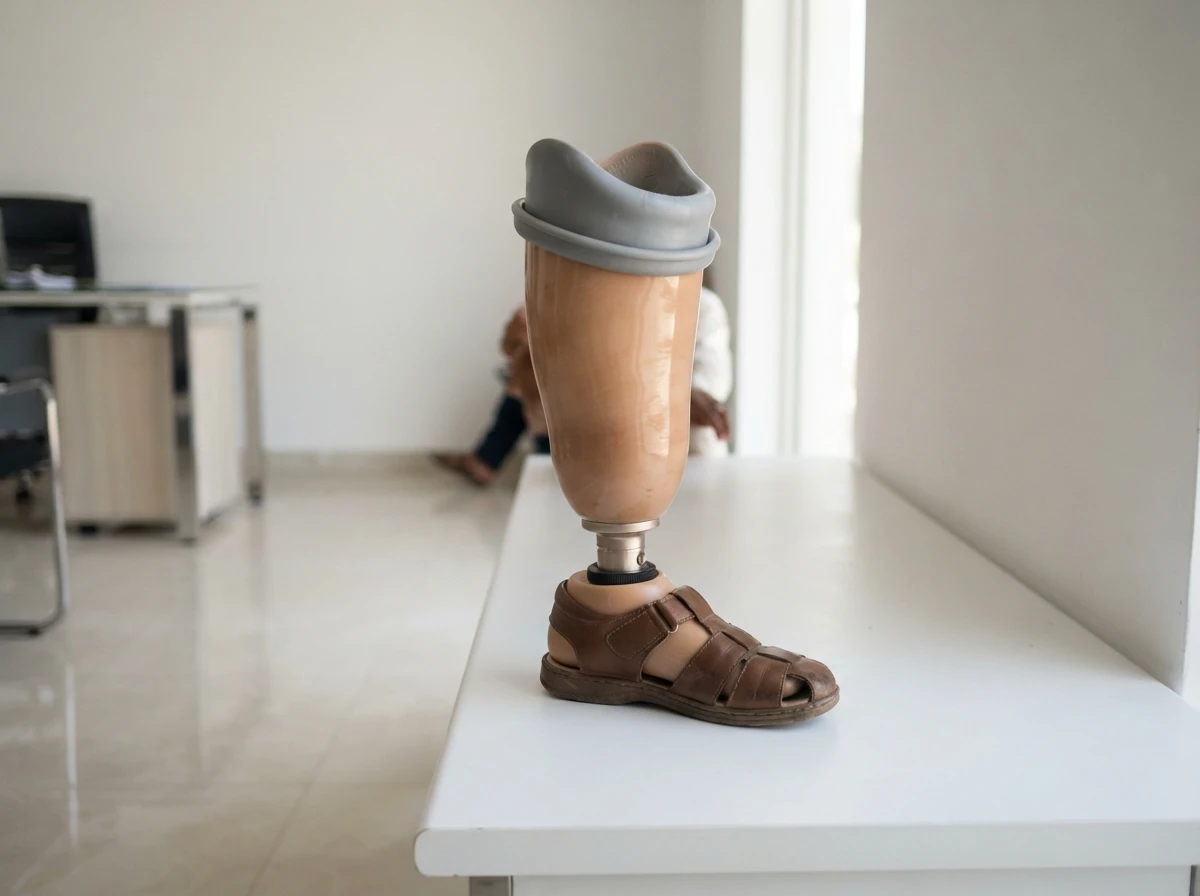
Below knee artificial leg in Karachi
Your own knee was saved, and that changes everything. With a socket that fits and a few weeks of training, most below knee users in Karachi return to walking without a stick, to work, and to the masjid.
What is a below knee artificial leg?
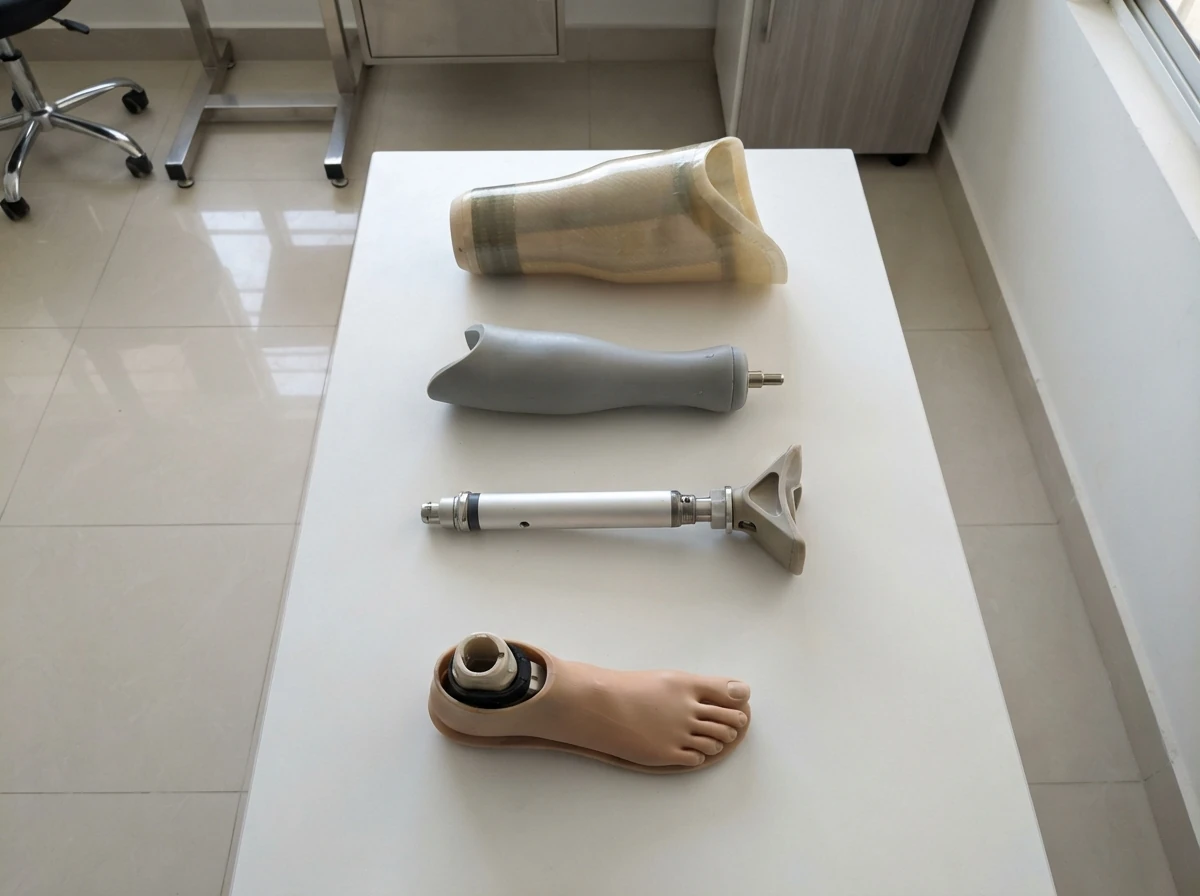
It is a prosthesis for an amputation between the knee and the ankle, also called a transtibial prosthesis. It has four parts: a socket shaped to your stump, a liner or sock inside it, a pylon that replaces the shin, and a foot. Because your own knee still bends and controls the leg, this level gives the most natural walk of any artificial leg.
What a below knee leg is made of
Socket
The socket is cast from your stump and carries your body weight. Older designs load the tendon below the kneecap. Newer total surface designs spread the load over the whole stump and are kinder to fragile skin.
Liner or sock
A silicone or gel liner cushions the skin and grips the stump. A simple cotton or wool sock costs far less and is cooler, but protects less.
Suspension
This is what stops the leg slipping off: a strap above the knee, a rubber sleeve, a pin that locks into the socket, or suction.
Pylon and foot
An aluminium or carbon tube joins the socket to the foot. The foot is chosen for your ground, your shoes and how much you walk.
Four ways a below knee leg stays on, and who each suits
| Method | How it works | Good for | Watch for |
|---|---|---|---|
| Cuff strap | A leather or webbing strap above the kneecap | Tight budgets, simple repair anywhere | Some up and down movement, strap shows under trousers |
| Sleeve | A stretchy sleeve rolls from the socket up onto the thigh | Most stump shapes, a secure feel | Hot in summer, wears through at the knee |
| Pin lock liner | A pin on the liner clicks into a lock in the socket | Easy to put on, good for weak hands | Pulls at the stump end if the fit is poor |
| Suction or vacuum | A valve pushes air out so the stump is held by suction | Active users with a stable stump size | Needs a stump that does not change size during the day |
Who does well, and when we advise waiting
A below knee leg usually goes well if
- the wound is fully healed and the swelling has settled
- your knee straightens fully, or nearly fully
- you can stand on your other leg holding a support
- you or a family member can check the skin every day
We advise waiting, or a different plan, if
- the knee is fixed in a bent position of more than about 30 degrees. Physiotherapy comes first.
- there is an open wound, or a bone end pressing under thin skin
- the stump is very short. A different socket design or a thigh corset may be needed.
- heart or lung disease makes even short walks unsafe. Ask your physician first.
See your doctor before a fitting if
- the wound has not closed fully, or there is discharge, spreading redness or a bad smell
- the stump hurts at rest, is very swollen, or has changed colour
- you are diabetic and your sugar has been out of control in recent weeks
- there is a new sore on your other foot
A leg fitted over an unhealthy stump causes harm. We will wait, and we will tell you so.
What to do before the cast, while the wound heals
The weeks between surgery and the first cast decide how good the final leg will be. Three habits matter more than any part you can buy.
- Keep the knee straight. Do not rest the stump on a pillow or hang it over the bed edge for hours. A knee that stiffens in a bent position is the most common reason a below knee leg fails.
- Shape the stump. Use the elastic bandage or shrinker sock exactly as shown. A cone shaped stump fits a socket. A bulb shaped stump does not.
- Keep the other leg and your arms strong. You will need them to stand, to balance and to learn.
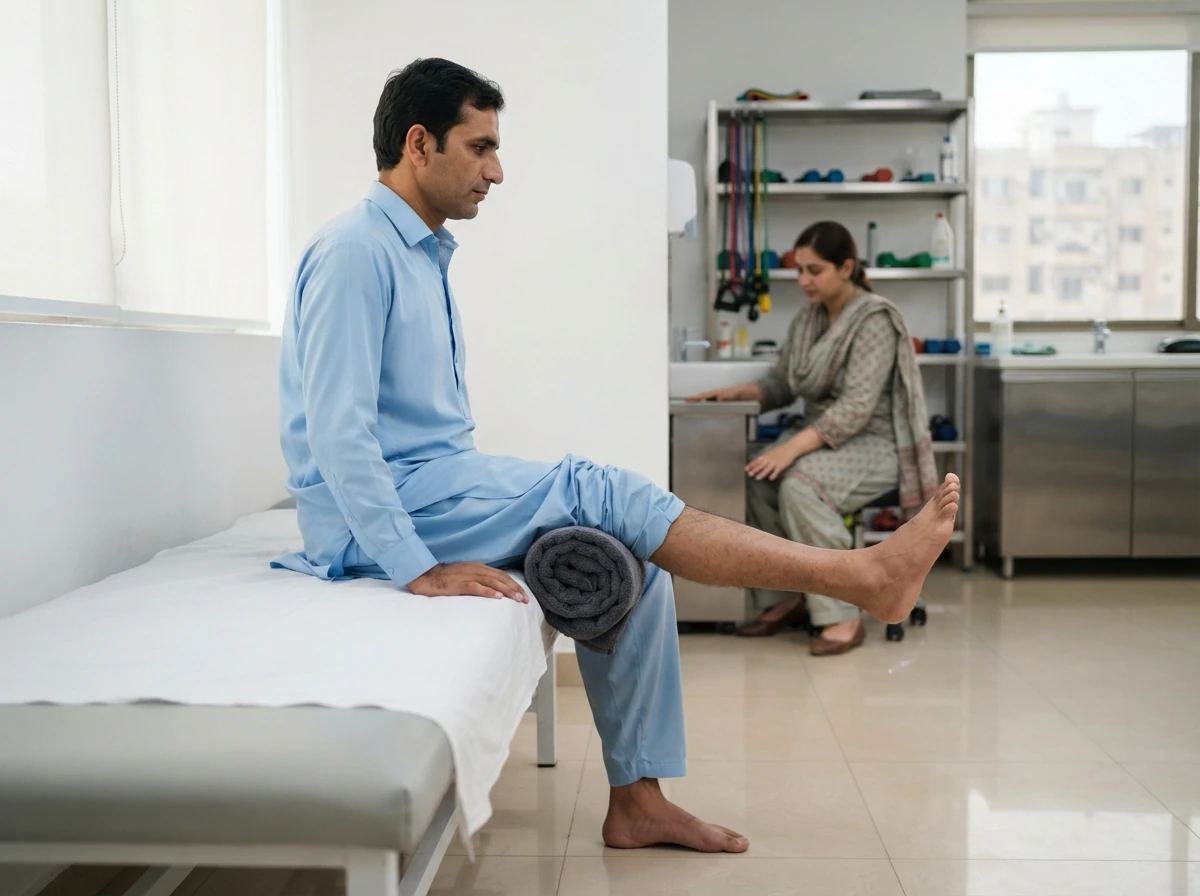
A below knee leg in Karachi conditions
Advice written for cooler countries does not always hold here. Four local facts shape how we build and how you use the leg.
Heat and sweat
A gel liner in June is hot. Sweat pools at the bottom, softens the skin and lets the stump slip. We show you how to dry the liner at midday, and we will suggest a sock fit instead if your skin cannot tolerate a liner.
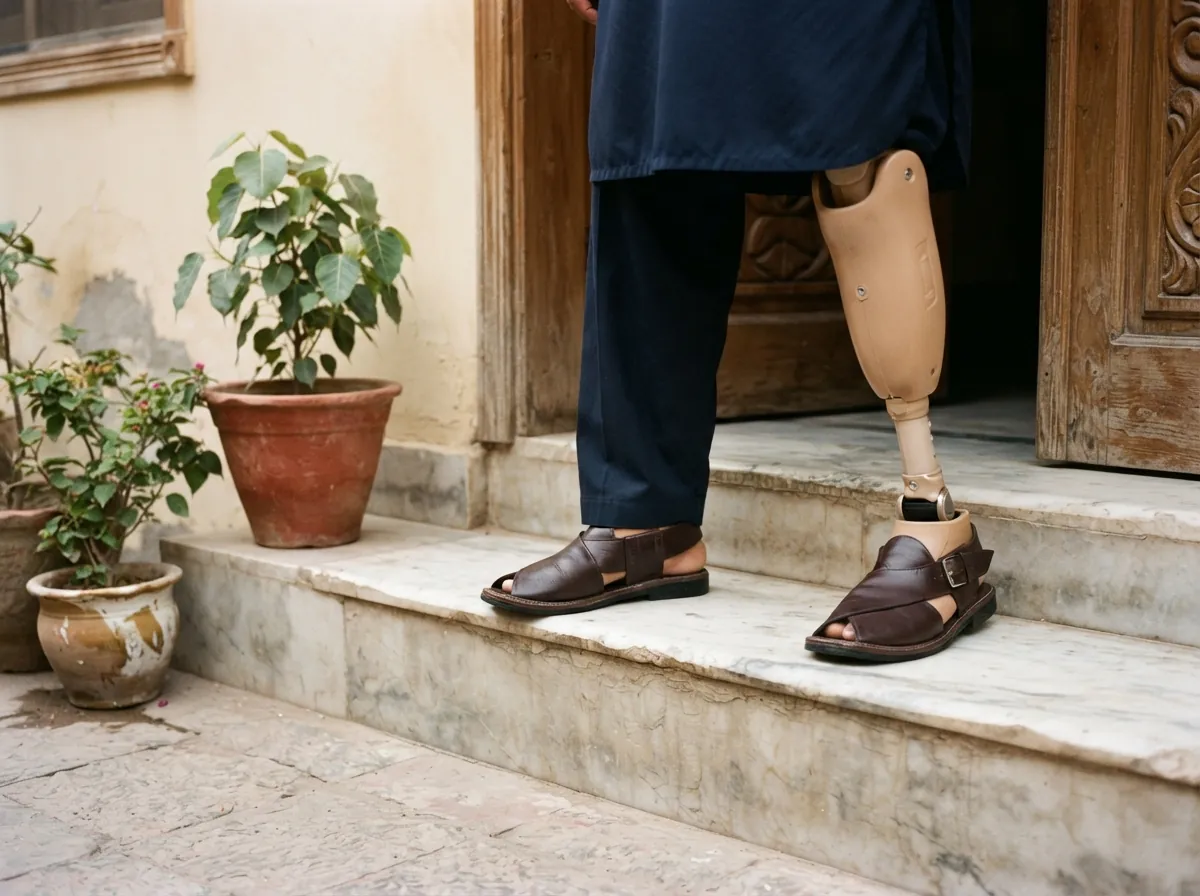
Chappals and sandals
Open footwear is normal here, so the foot shell should look natural and have a separated big toe if you wear a thong chappal. Say so before the foot is ordered.
Water
Standard legs are not waterproof. Wudu, bathing and monsoon puddles will rust bolts and rot the foot from inside. Remove the leg for bathing, keep a dry cloth for wudu, and ask about a simple water leg if you need one.
Broken footpaths
A multi axis foot that tilts side to side is often a better buy in Karachi than a stiff sports foot, because it absorbs uneven ground before it reaches your stump.
Below knee leg price in Karachi
Indicative ranges for 2026. The firm figure comes in writing after the free assessment.
| Build | What it usually includes | Indicative range (PKR) |
|---|---|---|
| Affordable | Laminated socket, sock fit, cuff or sleeve, SACH foot | 80,000 to 150,000 |
| Mid range | Total surface socket, gel liner with pin lock, multi axis or basic carbon foot | 150,000 to 350,000 |
| High activity, imported | Custom liner, suction or vacuum, imported carbon energy return foot | 350,000 to 900,000 and above |
A full breakdown is in the below knee price guide.
How long does a below knee artificial leg take to make?
Usually two to three weeks from the cast to walking out with the finished leg, if the stump is healed and its size is stable. Patients from outside Karachi can have the visits grouped into about five working days plus one return visit.
Will I walk without a stick?
Most healthy below knee users do, within four to eight weeks of training. Older users and people with diabetes or a weak other leg often keep a stick for outdoor walking, which is a sensible safety choice and not a failure.
How much harder is walking with a below knee leg?
Studies generally put the extra energy at roughly 10 to 40 percent above normal walking, lower after an accident and higher after vascular disease. This is far less than any level above the knee.
Can I wear normal shoes and chappals?
Yes, but the foot is set for one heel height. If you change between flat chappals and heeled shoes, the leg will tilt. Tell us what you wear most. Feet with an adjustable heel height exist and cost more.
Can I sit on the floor or squat?
Sitting cross legged and kneeling are possible for many users with a well trimmed socket. Full squatting is limited, because the back wall of the socket presses behind the knee. We trim the socket as low as safety allows if floor sitting matters to you.
How often will the socket need changing?
The stump shrinks most in the first year, so expect one replacement socket between six and eighteen months. After that, a socket commonly lasts two to four years if your weight stays steady.
Send a photo of the stump for a free opinion
Three clear photos on WhatsApp, front, side and end, with the date of surgery. The prosthetist replies with whether it is the right time, the kind of leg that suits, and a price range.
- Answered on WhatsApp, 24/7
- First assessment free, no obligation
- Nothing is stored on this website