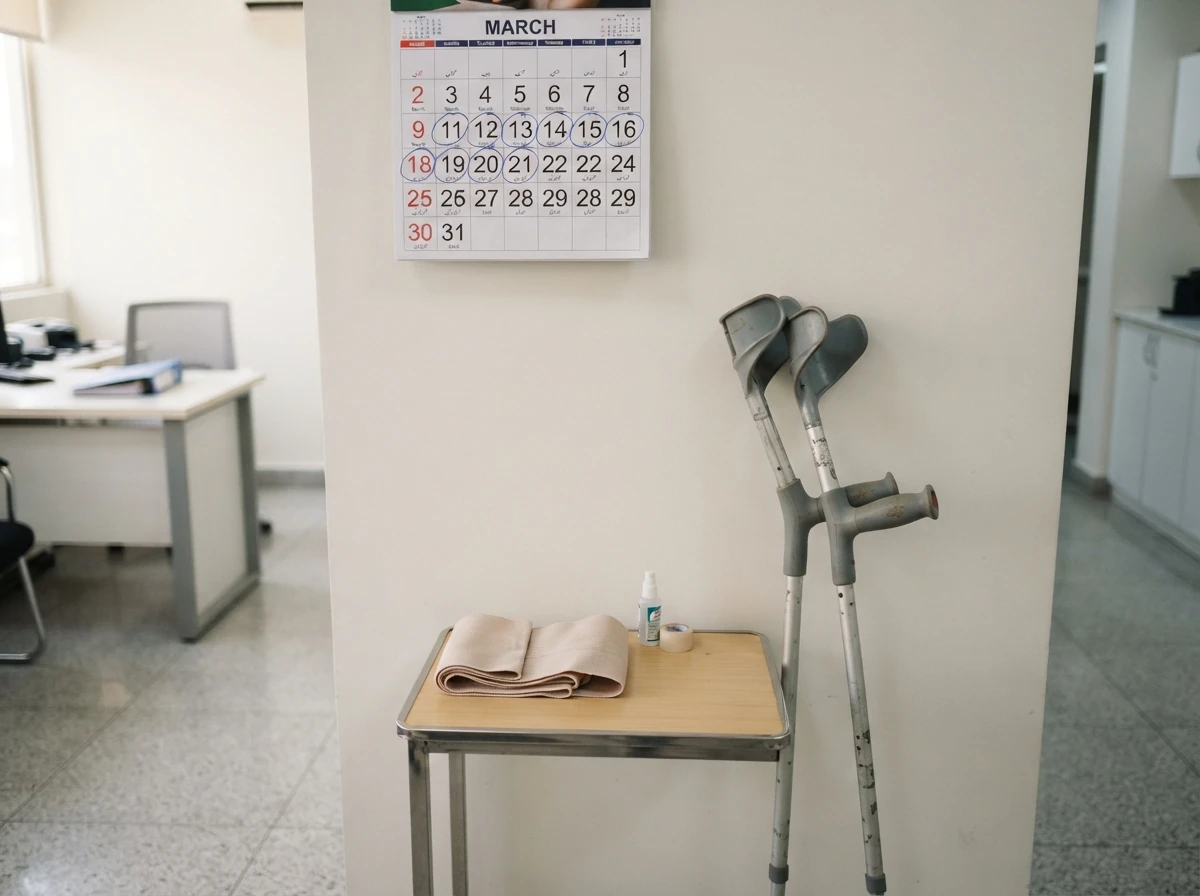
Your first artificial leg: the timeline
The question every family asks in the hospital corridor is: when will he walk again? Here is an honest timeline. The dates move with healing, but the order never changes, and the work you do in the first weeks shapes everything after.
How long after amputation until you can walk with an artificial leg?
For a healthy person after an accident, the cast is usually taken six to eight weeks after surgery and walking on the finished leg begins two to four weeks later. With diabetes or poor circulation, healing often takes ten to sixteen weeks before a cast is safe. Independent walking typically follows after one to three months of training.
The stages, in order
- Week 0 to 3
Healing
Dressings, pain control and rest, under your surgeon. Your job is positioning: knee straight, hip flat, no pillow under the stump. Start arm and sound leg exercises in bed.
- Week 2 to 3
Stitches out
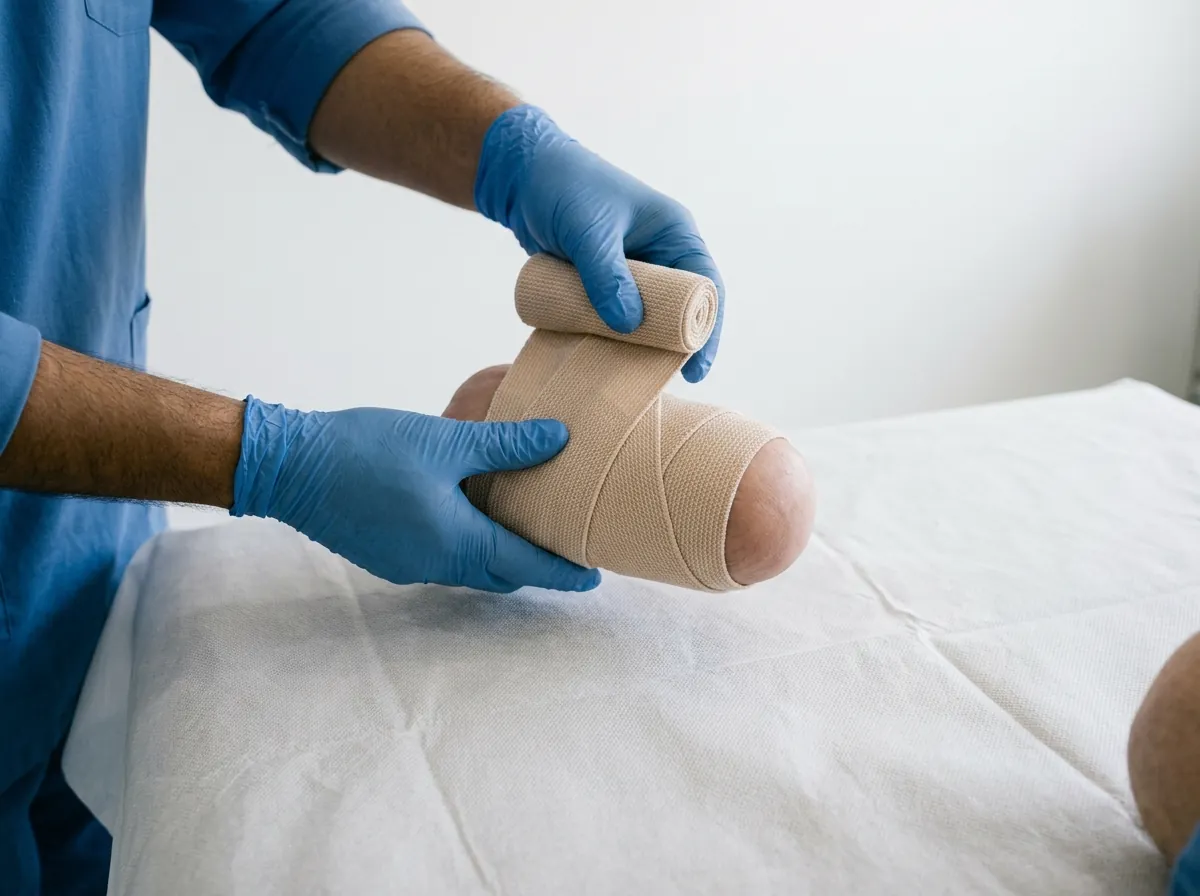
Once the surgeon removes stitches or clips and the wound is dry, stump bandaging or a shrinker sock begins, to reduce swelling and shape the stump.
- Week 3 to 8
Shaping and strengthening
Bandage or shrinker day and night. Daily exercises. Touch and massage the stump so it learns to accept pressure. Contact us on WhatsApp so we can guide you.
- Week 6 to 12
Assessment and cast
When the wound is fully closed and the stump is cone shaped and stable, we assess and cast. With diabetes or vascular disease this may be week 10 to 16.
- Plus 2 to 4 weeks
Fitting and delivery
Test socket, alignment and the finished leg. You take your first steps between the bars.
- Plus 1 to 3 months
Training
From bars to walker to stick to nothing, as your level and health allow. Stairs, slopes and outdoors.
- Month 3 to 12
The stump keeps shrinking
You add socks as the socket loosens. Follow up visits keep the fit safe.
- Month 6 to 18
Replacement socket
When socks are no longer enough, a new socket is made and your other parts are kept.
The five things to do while you wait
These cost nothing and decide more than any part you will buy. We would rather you did these well and bought a basic leg than skipped them and bought an expensive one.
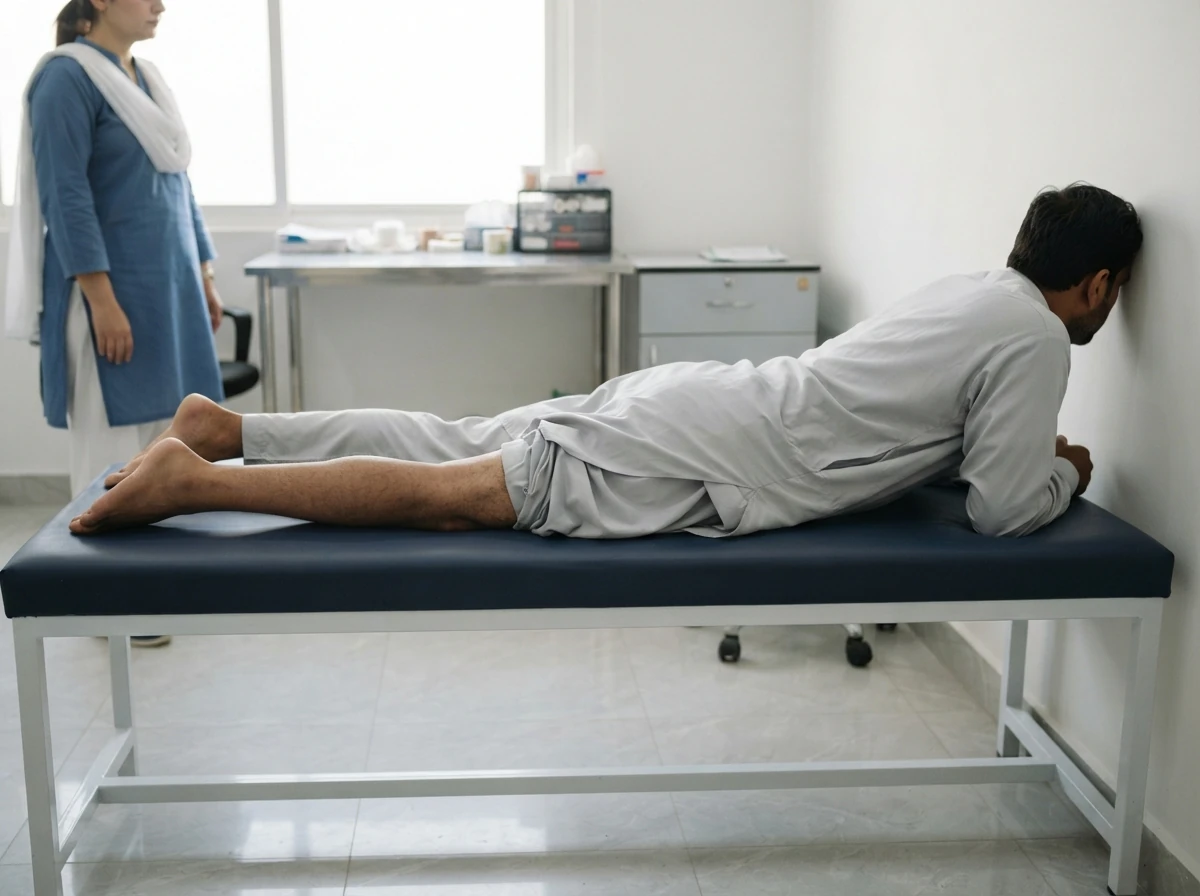
- Keep joints straight. Below knee: never rest with the knee bent over a pillow or the bed edge. Above knee: lie flat on your stomach for twenty minutes, two or three times a day, to stretch the hip.
- Shape the stump. Wear the bandage or shrinker as instructed. Rewrap a bandage every four to six hours. It must be firmest at the end and looser higher up, never tight like a ring.
- Toughen the skin. Once healed, massage, tap and rub the stump daily with soft then rougher cloth.
- Stay strong. Exercise the arms, the sound leg and the stump muscles every day. Sitting for weeks costs more strength than the surgery did.
- Look after the other foot. It is doing double duty. Wear a proper shoe on it, even indoors.
Common reasons the timeline stretches
Slow wound healing
Diabetes, poor circulation, smoking, infection and poor nutrition all slow healing. A wound that is nearly closed is not closed.
A bent, stiff joint
A knee or hip that has stiffened in a bent position must be stretched with physiotherapy before a leg can be aligned under it.
Swelling that comes and goes
A stump that is a different size each morning cannot be cast accurately. Consistent bandaging fixes this.
General weakness
Weeks in bed weaken the heart, the arms and the other leg. Rebuilding them is part of the timeline, not a delay to it.
Positions to use, and positions to avoid
In the first weeks the body tries to curl up around the injury. Muscles on the bending side of the joint shorten quickly. Once shortened, they take months to stretch again.
Do
Lie flat with the stump straight and close to the other leg. Sit with a below knee stump supported straight out on a board or second chair. Lie on your stomach daily if your doctor allows.
Avoid
A pillow under the knee or thigh. A pillow between the thighs. The stump hanging over the bed or wheelchair edge. Sitting for many hours without a break. Resting the stump on a crutch handle.
When the timeline should pause
See your doctor before a fitting if
- the wound has not closed fully, or there is discharge, spreading redness or a bad smell
- the stump hurts at rest, is very swollen, or has changed colour
- you are diabetic and your sugar has been out of control in recent weeks
- there is a new sore on your other foot
A leg fitted over an unhealthy stump causes harm. We will wait, and we will tell you so.
Can I get the leg sooner if I pay more?
No. The limit is healing, not workshop time. Casting over an unhealed or swollen stump gives a socket that does not fit within weeks, and risks the wound. We can start guiding you on WhatsApp from the first week so no time is wasted.
Should I contact you before the wound heals?
Yes. Message us in the first or second week after surgery. We will check your bandaging and positioning by photo or video, and book your assessment for the right week.
What is a shrinker sock?
An elastic sock that squeezes the stump gently and evenly. It is easier to apply correctly than a bandage, which matters when a family member is doing it. We can supply one at the right size.
How long until I can walk without a stick?
Healthy below knee users often manage within four to eight weeks of receiving the leg. Above knee users usually take two to four months. Some people sensibly keep a stick for outdoors.
Why will I need another socket within a year?
The stump loses swelling and muscle bulk in the first year, so the first socket becomes loose. This is expected. Only the socket is remade. The foot, knee and other parts continue.
Start with a free assessment
Tell us the amputation level and the city. We reply with honest guidance and a price range, on the phone or on WhatsApp, at any hour.
- Answered on WhatsApp, 24/7
- First assessment free, no obligation
- Nothing is stored on this website