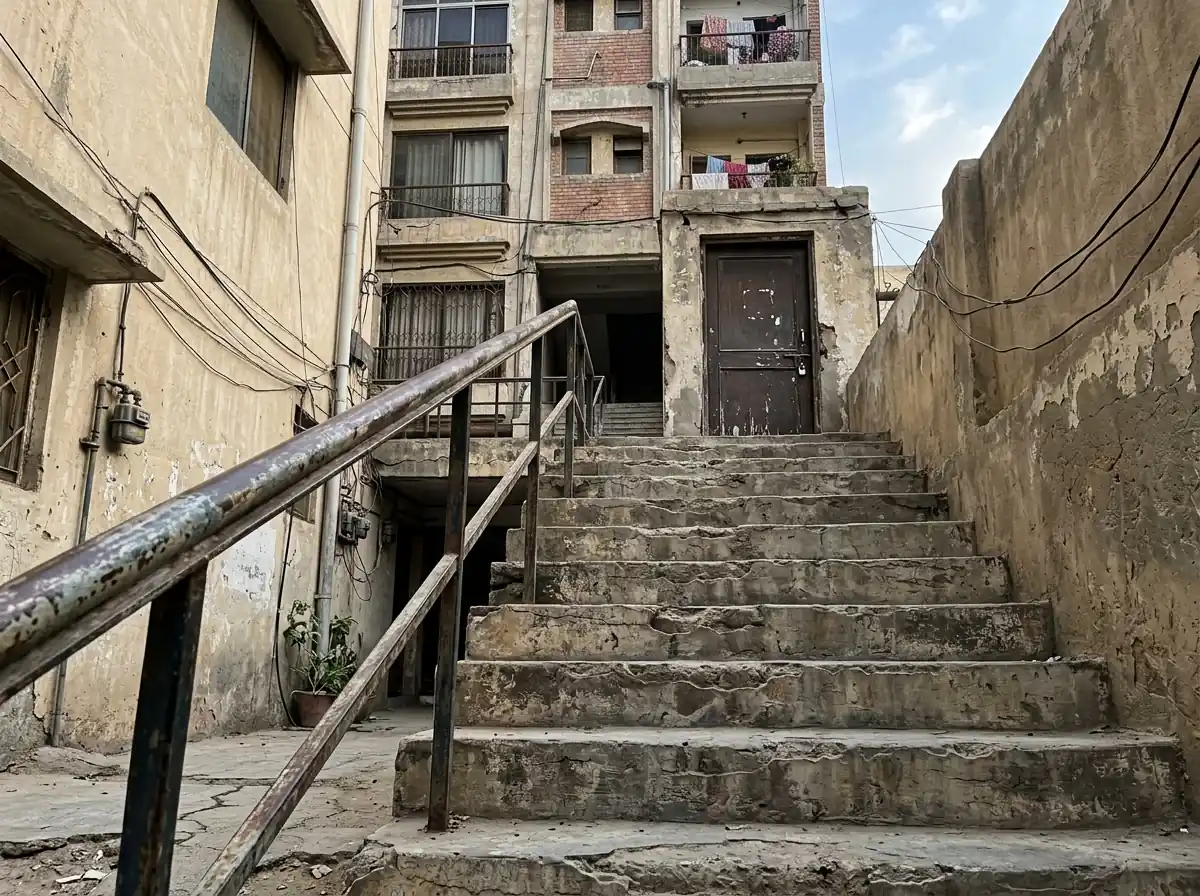
Stairs, slopes and rough ground
In the clinic the floor is level and the bars are beside you. Outside there are broken slabs, open drains, steep ramps without rails, and wet marble at every masjid entrance. Each of these has a technique, and techniques can be learned.
How do you climb stairs with an artificial leg?
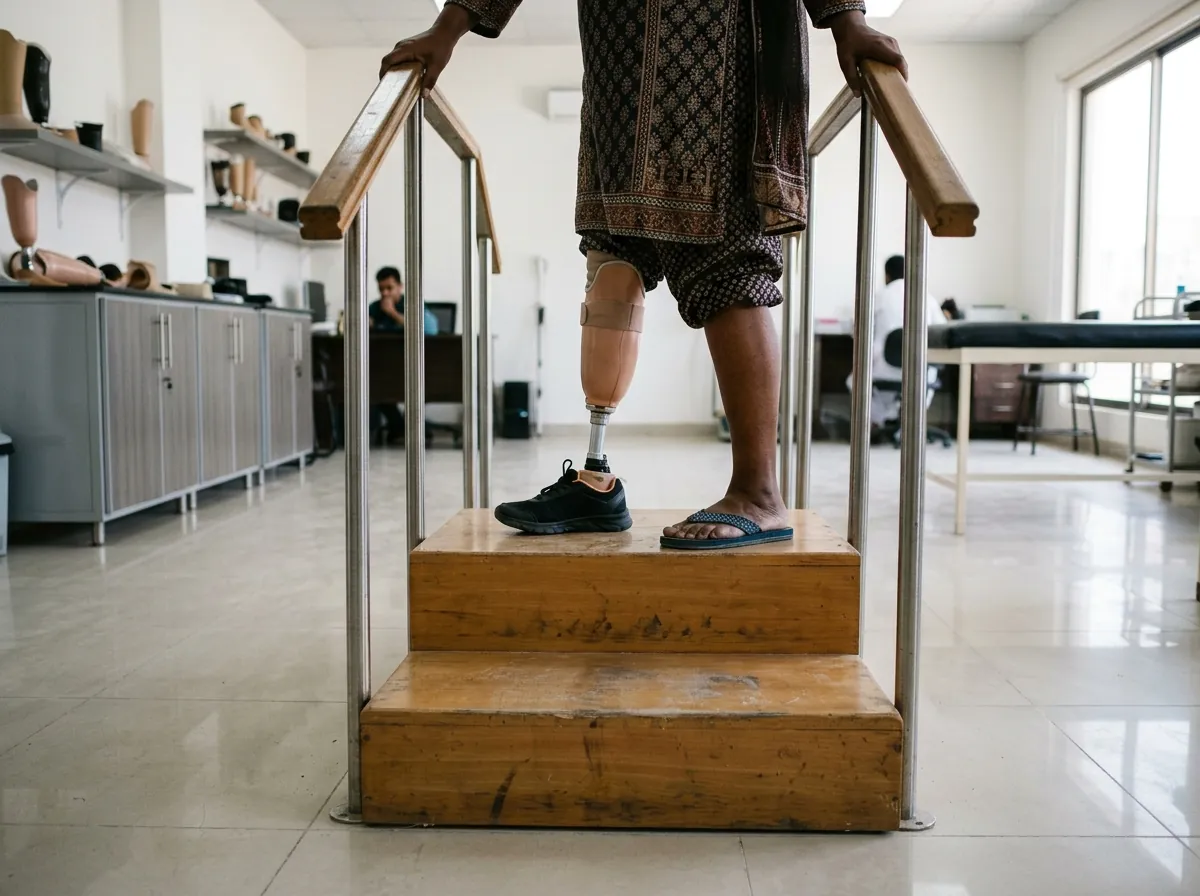
Going up, lead with your good leg, then bring the artificial leg up to the same step. Going down, lead with the artificial leg, then bring the good leg down. Hold the rail, and keep a stick in the other hand if you use one. People remember it as: up with the good, down with the bad. Some hydraulic knees allow step over step descent after training.
Stairs, in detail
Going up
Stand close to the step. Hold the rail. Step up with the good leg and straighten it, lifting your body. Bring the prosthesis up beside it. One step at a time.
Going down
Place the prosthetic foot on the step below, with the heel well back on the tread. Bend the good knee to lower yourself. Bring the good foot down beside it.
Without a rail
Use a stick in the hand opposite the prosthesis, or put a hand on the wall. If a staircase has no rail and you use it daily, fitting one is the single best safety improvement you can make at home.
Above knee users
Never place only the toe of the prosthesis on a step going down. The knee will fold. Step over step descent is for yielding hydraulic or electronic knees only, and only after you have been taught.
Ramps, flyover approaches and sloping lanes
| Situation | Below knee | Above knee |
|---|---|---|
| Gentle slope, going up | Lean slightly forward. Longer step with the good leg, shorter with the prosthesis. | Same, and push the stump back firmly in the socket as weight comes onto it. |
| Gentle slope, going down | Short steps. Prosthesis first. Keep weight back on the heel. | Short steps, prosthesis first. Keep the knee straight until your weight has passed over it. |
| Steep slope, up or down | Turn sideways and sidestep, with the good leg on the uphill side. | Always sidestep. Prosthesis on the downhill side, good leg uphill doing the work. |
| Ramp with a rail | Use it. | Use it, always. |
A prosthetic ankle does not bend the way yours did. On a slope the foot cannot lie flat and the knee is pushed forward or back. Sidestepping removes the problem.
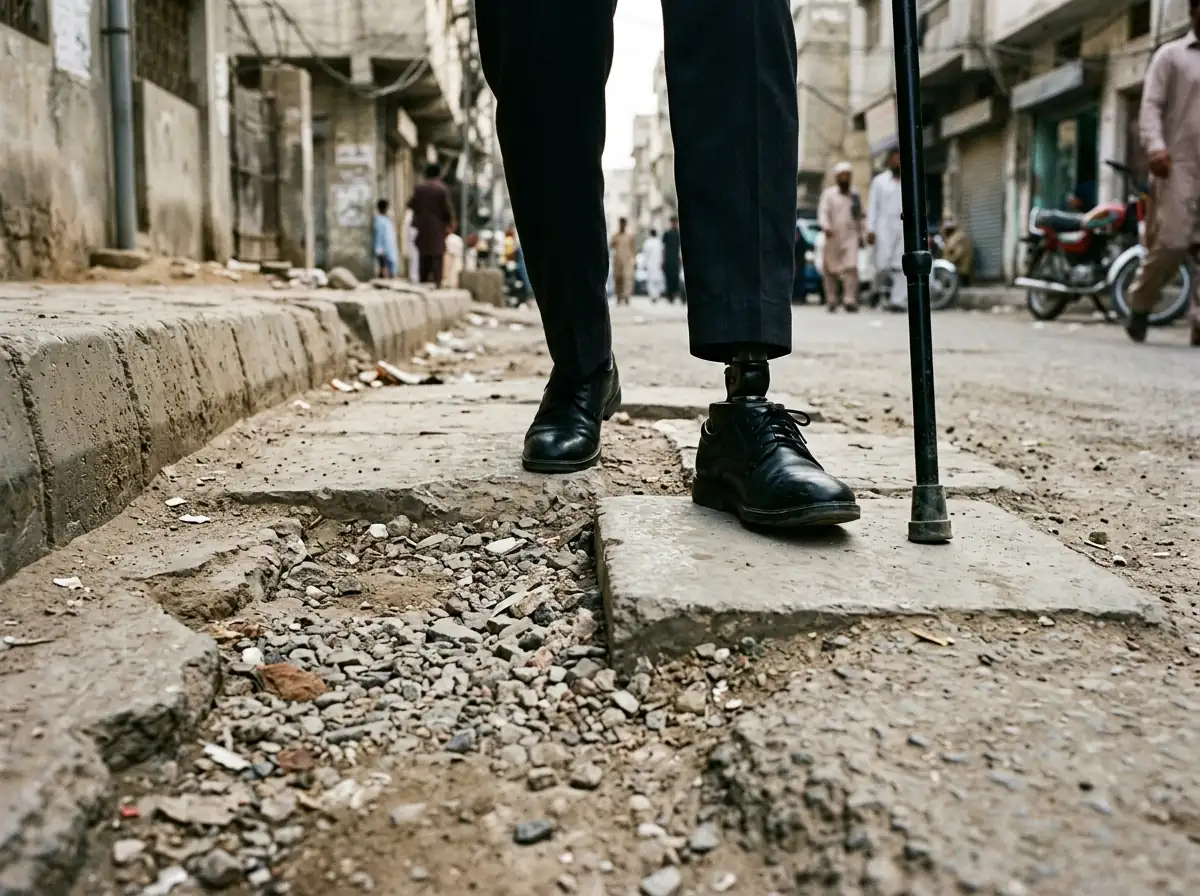
Broken footpaths, katchi lanes and open drains
You cannot feel the ground through a prosthetic foot. Your eyes must do the work your sole used to do.
- Look three or four steps ahead, not at your feet. Plan the path.
- Shorten your steps and widen your stance slightly. Slow down without stopping.
- Step over a gap with the good leg first, so the good leg lands and balances you.
- Step onto a kerb with the good leg, off it with the prosthesis. The same rule as stairs.
- Carry a stick outdoors even if you do not need it indoors. It is a third point of contact on a bad surface.
- Choose the road edge over a broken footpath only where traffic allows. Often the tarmac is the safer surface.
Wet marble, wudu areas and the monsoon
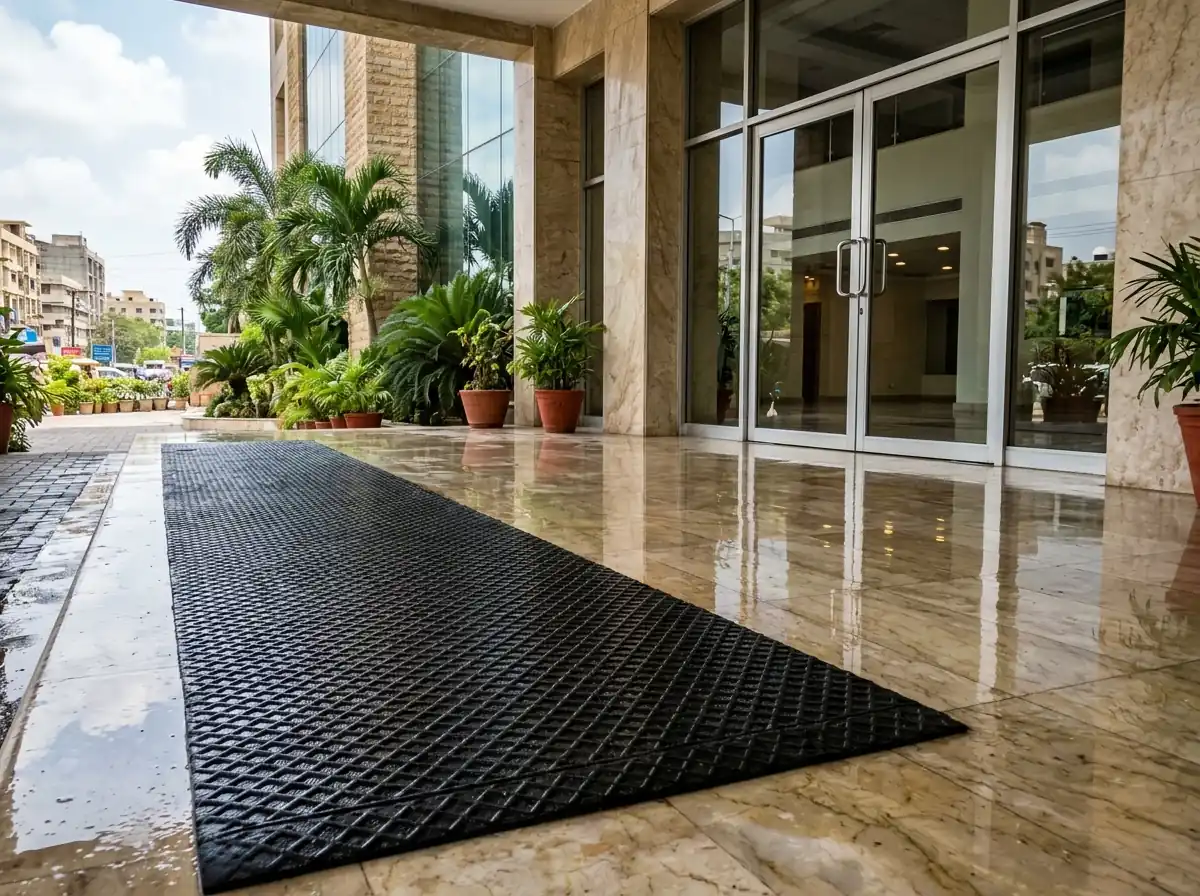
Polished marble and chips flooring are everywhere in Karachi: homes, masjids, hospitals, banks. Wet, they are the most dangerous surface you will meet, because a rubber soled prosthetic foot gives no warning before it slides.
At the masjid, use the stool at the wudu area, dry your good foot fully before you stand, and walk on the mat, not the wet marble. At home, put a rubber mat in the bathroom and outside its door.
In the rains, wear a shoe with a deep tread. Avoid smooth soled chappals. Assume every tiled entrance is slippery. Take the stick.
Bazaars, buses, lifts and escalators
Crowded bazaars
Keep the prosthesis on the side away from the crowd where you can, walk with someone on that side, and stop against a wall to rest, not in the flow.
Buses and rickshaws
High steps: good leg up first, hold the frame, take your time. Sit near the door. Stand up only after the vehicle has stopped.
Lifts and escalators
Take the lift when there is one. On an escalator, hold the rail, step on with the good leg and bring the prosthesis beside it at once. Step off with the good leg.
Five inexpensive changes that prevent most falls
- A handrail on every staircase you use, on at least one side
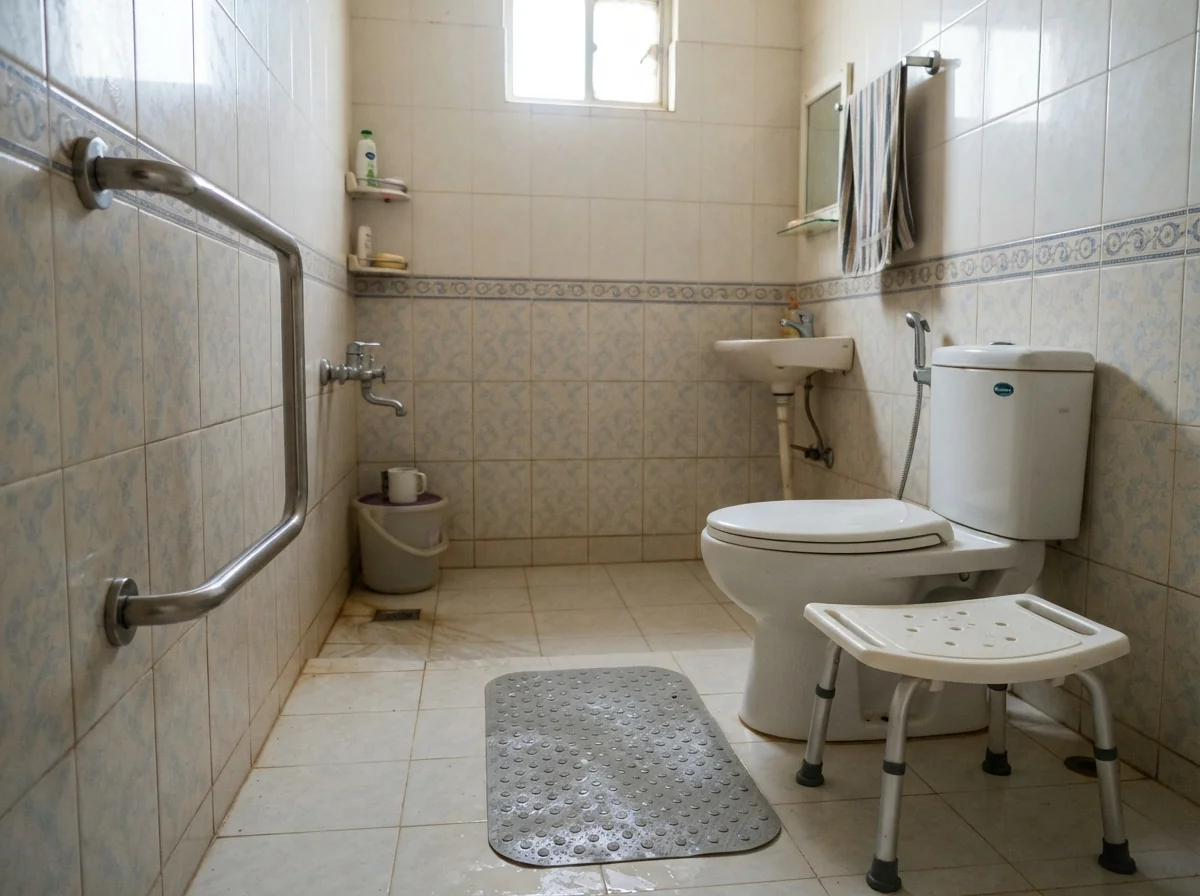
- A grab bar beside the commode and in the bathing area, and a plastic stool to bathe on
- Rubber mats wherever the floor gets wet
- Loose rugs removed, and wires kept off the floor
- A light you can switch on from the bed, and crutches within reach for night visits to the bathroom
Most serious falls happen at night, in the bathroom, without the leg on. Hopping on a wet floor is the single riskiest thing a new amputee does.
Which leg goes first on stairs?
Good leg first going up. Artificial leg first going down. The good leg always does the lifting and the lowering.
Can I walk on sand at the beach?
Yes, with care. Soft sand is tiring and unstable, so use a stick and stay on the firm wet sand near the water line. Afterwards brush all sand from the foot, ankle and knee, because grit destroys moving parts. Keep the leg out of sea water.
Is a special foot needed for rough ground?
A multi axis foot, which tilts side to side, makes uneven ground noticeably easier and is a sensible choice for most people in Karachi. It is not essential, and technique matters more.
I am afraid of stairs since a fall. What should I do?
Come in and practise on the training steps with rails on both sides until the movement is automatic again. Fear after a fall is reasonable, and it goes with repetition in a safe place.
Should I use a stick forever?
Indoors, most below knee users do not need one. Outdoors in Karachi, many sensible people carry one for the surfaces, not because they walk poorly. It also signals to others to give you room.
Start with a free assessment
Tell us the amputation level and the city. We reply with honest guidance and a price range, on the phone or on WhatsApp, at any hour.
- Answered on WhatsApp, 24/7
- First assessment free, no obligation
- Nothing is stored on this website