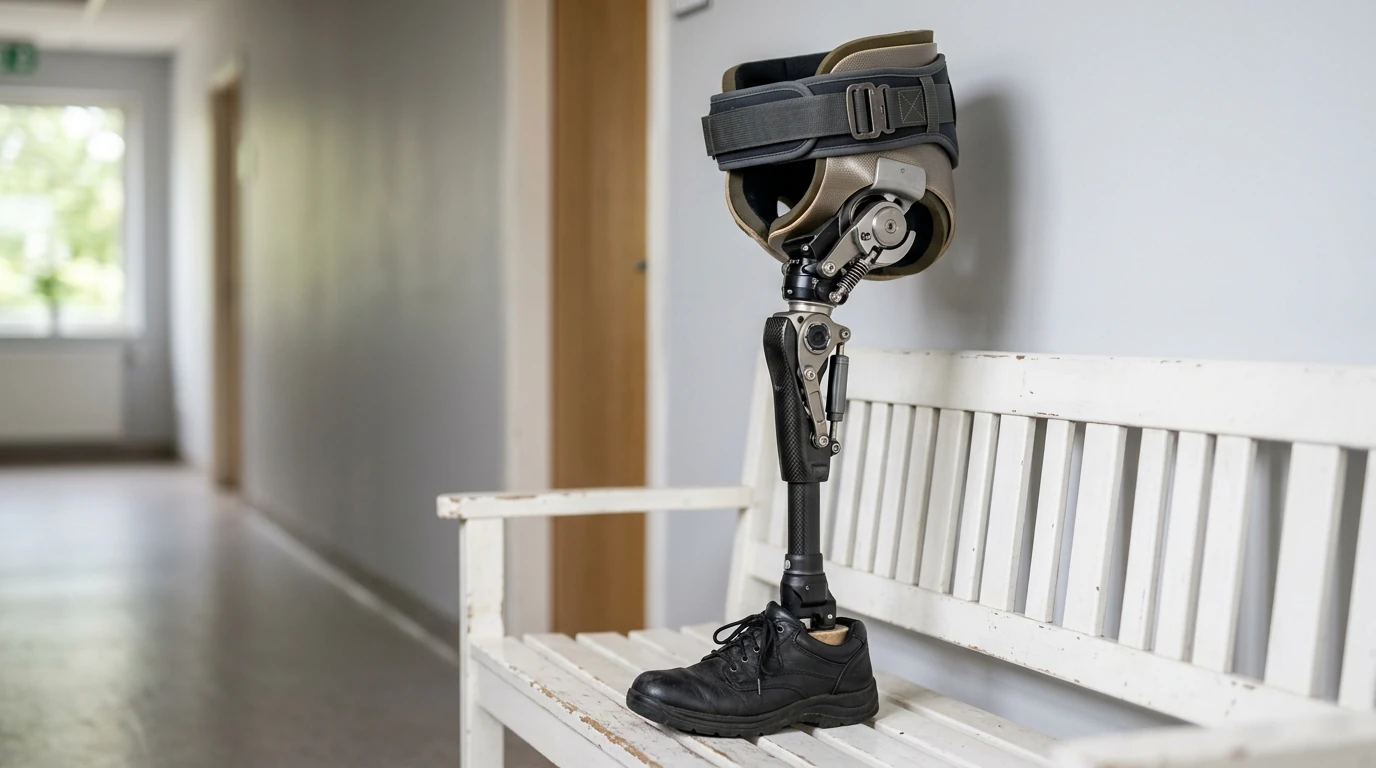
Hip disarticulation artificial leg in Karachi
At hip level there is no stump to move the leg. The prosthesis hangs from a socket around the pelvis and is swung by the body itself. It can be done, and done well, but you deserve to know the effort involved before you spend.
What is a hip disarticulation leg?
It is a prosthesis for an amputation through the hip joint or the pelvis. A moulded socket wraps around the pelvis and carries weight on the sitting bone. Below it are three joints: hip, knee and ankle. The user moves the leg by tilting the pelvis, so walking takes far more energy than at any other level.
What this leg can do, and what it cannot
What it gives you
- standing on two legs, with both hands free for work in the kitchen or at a counter
- walking inside the home, the office and short distances outside
- better sitting balance, because the socket fills the missing side
- a normal outline under clothes, which matters to many people
What it will not give you
- speed. Most users are faster on crutches without the leg, and that remains true for life.
- easy long distances. Energy use is commonly reported at close to double that of normal walking.
- a cool fit. The socket covers the pelvis, and Karachi summers make this hard.
- quick learning. Expect two to three months of training before it feels natural.
Around the world, many people with a hip level amputation choose not to wear a leg every day. They use it for work, weddings and outings, and use crutches at other times. That is a sensible pattern, not a failure. We would rather you know this now than discover it after paying.
A socket around the pelvis, and stability by alignment
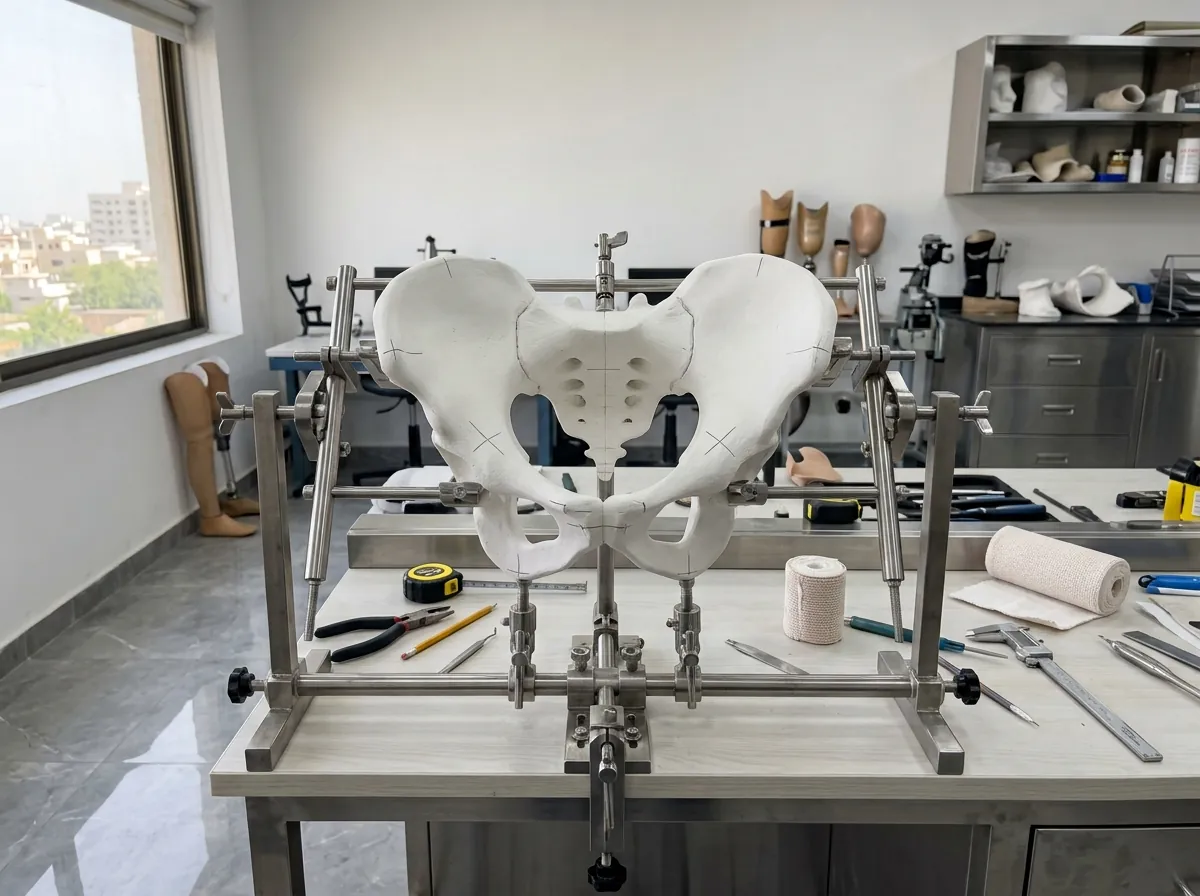
The socket is cast around the whole pelvis with you standing in a frame. It takes weight on the sitting bone of the amputated side, and grips over the crests of the pelvis so it does not slide down.
The hip joint is fixed to the front of the socket, not underneath it. This placement means your body weight falls behind the hip and in front of the knee when you stand, which locks both joints straight without any effort from you. It is geometry, not strength, that keeps you upright.
To step, you tuck the pelvis under and the leg swings forward like a pendulum. To sit, you release the hip. Every centimetre of joint position matters, so alignment at this level takes several sessions.
Who should consider this leg
It is worth trying if
- you are in good general health with a strong heart and lungs
- your other leg and both arms are strong
- you have a clear purpose for it: a standing job, teaching, a shop counter
- you can give two to three months to training
We may advise crutches or a wheelchair instead if
- you are frail, or breathless on light effort
- the skin over the pelvis or the scar is fragile or still tender
- there is a colostomy or urostomy that the socket would press on. A cut out is sometimes possible.
- your main aim is long distance walking. This leg will disappoint you.
See your doctor before a fitting if
- the wound has not closed fully, or there is discharge, spreading redness or a bad smell
- the stump hurts at rest, is very swollen, or has changed colour
- you are diabetic and your sugar has been out of control in recent weeks
- there is a new sore on your other foot
A leg fitted over an unhealthy stump causes harm. We will wait, and we will tell you so.
What the first twelve weeks usually look like
- Weeks 1 to 2
Wearing and standing
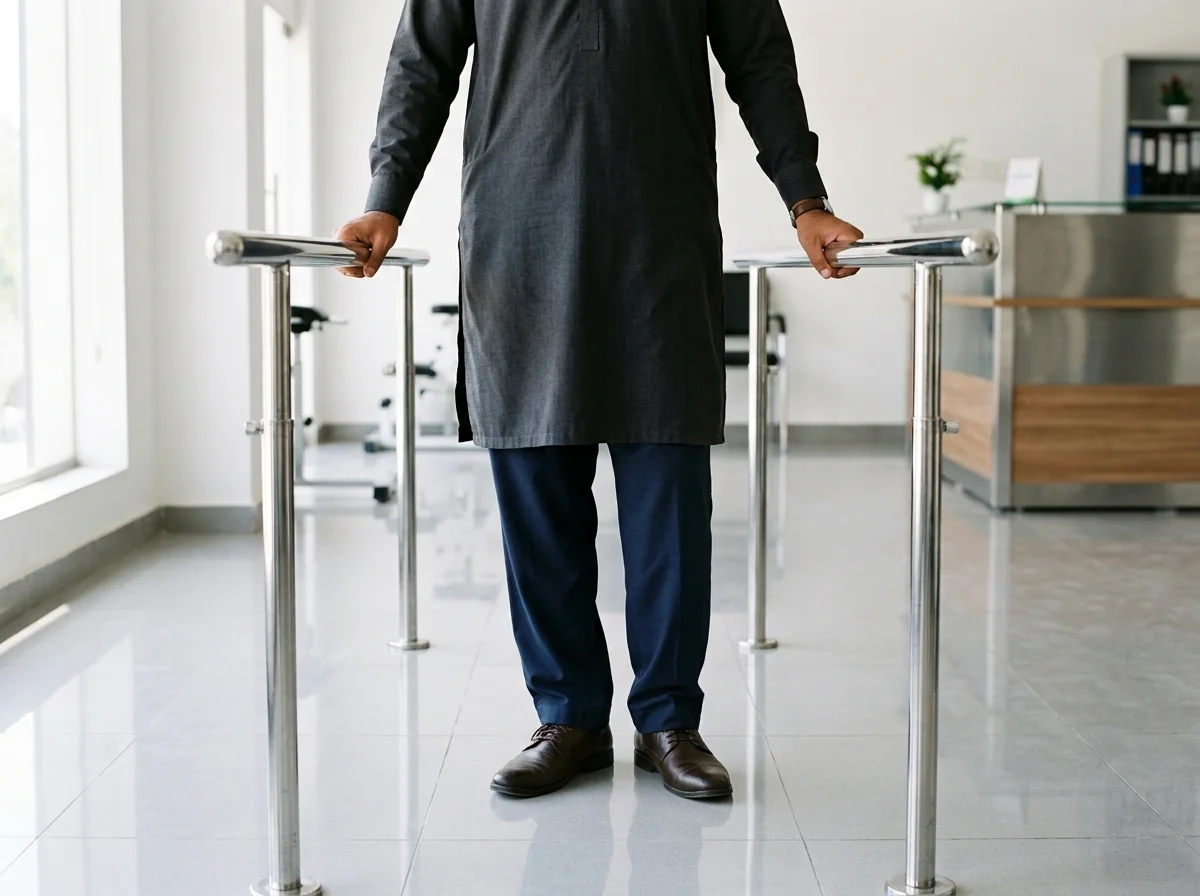
Putting the socket on correctly, building wearing time from one hour to four, and standing balanced between the bars with both joints locked by your posture.
- Weeks 3 to 5
The pelvic tuck
Learning the small backward tilt of the pelvis that swings the leg forward. Short steps in the bars, then with a walker.
- Weeks 6 to 8
Sitting, standing, turning
Releasing the hip to sit, standing without the knee folding, and turning toward the sound side.
- Weeks 9 to 12
Real ground
One stick, doorways, a few stairs with a rail, and the car. We agree together how far it is sensible to go.
Hip disarticulation leg price in Karachi
This is the most labour heavy leg to make. The socket alone takes more hours than a complete below knee leg.
| Build | What it usually includes | Indicative range (PKR) |
|---|---|---|
| Standard | Laminated pelvic socket, single axis hip joint, locked or four bar knee, SACH or multi axis foot | 300,000 to 900,000 |
| Imported high activity | Imported hip joint with swing control, hydraulic or microprocessor knee, carbon foot | 900,000 to 3,500,000 and above |
We suggest starting with a standard build. Upgrade only after you have worn the leg daily for several months and know you will keep using it.
Can a person with a hip level amputation really walk?
Yes. With a well aligned leg and proper training, people walk indoors and for short distances outside, usually with one stick. It is slower and more tiring than crutches, so most people use it for chosen parts of the day.
How long does it take to make and learn?
Making the leg takes four to six weeks because of the pelvic cast and several alignment sessions. Learning to use it takes another two to three months of regular training.
Is it comfortable to sit in?
It can be, if the socket is trimmed carefully and the hip joint is set to lie flat when bent. You will sit slightly higher on that side. A thin cushion under the other side levels you out.
How do I manage the heat?
Wear a thin, close fitting cotton vest or a purpose made sock under the socket, change it at midday in summer, and take the leg off for a short break if you can. Ventilation holes can be added in safe areas of the socket.
Should I buy an expensive hip joint?
Not at first. Far too many costly hip level legs end up unused. Prove to yourself that you will wear a standard leg every day, then consider upgrading the joints. The socket can stay.
Send a photo of the stump for a free opinion
Three clear photos on WhatsApp, front, side and end, with the date of surgery. The prosthetist replies with whether it is the right time, the kind of leg that suits, and a price range.
- Answered on WhatsApp, 24/7
- First assessment free, no obligation
- Nothing is stored on this website