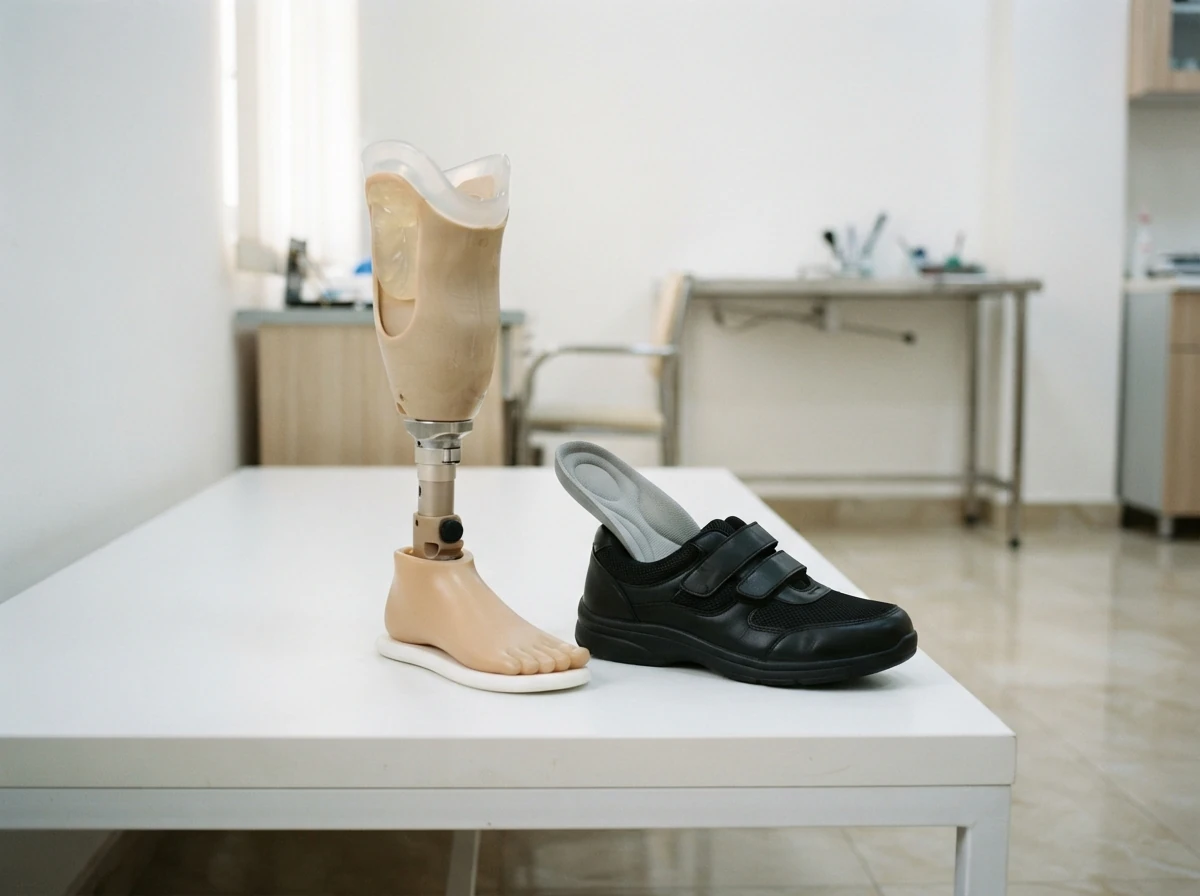
Artificial leg after a diabetic amputation
Diabetes is the most common reason for amputation in Karachi. A leg can give your father or mother their independence back. But the leg must be built for skin that cannot feel, and the foot that remains must be guarded like treasure.
Can a diabetic patient use an artificial leg?
Yes. Most people who lose a leg to diabetes can walk again with a prosthesis, provided the wound has fully healed, blood sugar is under reasonable control, and the heart can manage the effort. The socket is made with extra cushioning because the skin often has reduced feeling, and the remaining foot is given protective footwear at the same time.
Four ways diabetes changes the plan
Healing takes longer
Six to eight weeks is normal for an accident. After diabetes, ten to sixteen weeks is common. We cast only when your surgeon confirms the wound is closed.
The skin cannot warn you
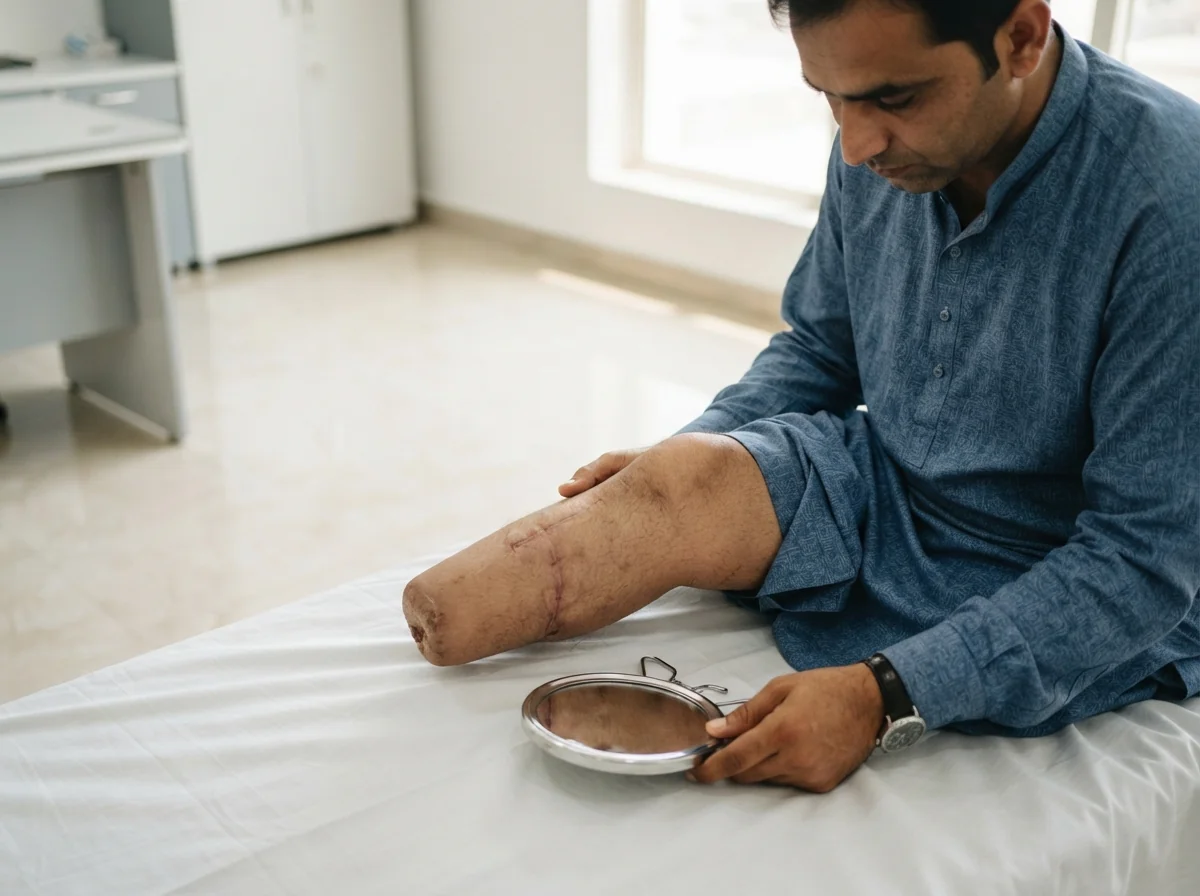
Reduced feeling means a socket can rub a sore without any pain. Your eyes, and a hand mirror, replace the missing alarm.
The stump changes size
Fluid shifts with kidney function, medicines and dialysis days. The socket must allow socks to be added and removed through the day.
The other foot is at risk
It now carries more load than ever. Many second amputations begin with a small, avoidable sore on the remaining foot.
A socket made for skin without feeling
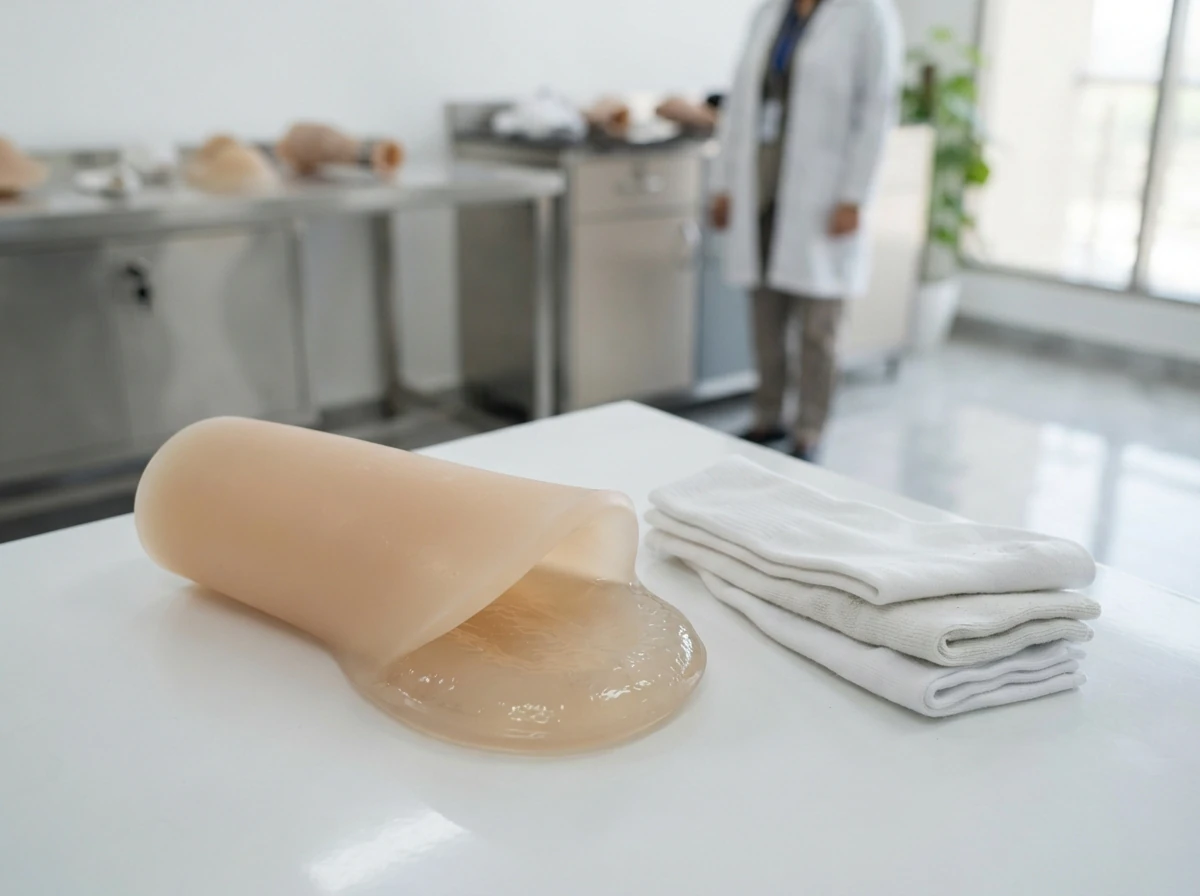
For a diabetic stump we avoid designs that concentrate pressure in a few places. The load is spread over the whole surface, with a thick gel liner between skin and socket.
- Total surface bearing socket with a cushioned gel liner, to keep pressure low everywhere.
- No tight straps around the thigh or knee that could reduce circulation.
- A pin lock or simple sleeve that can be managed with weak eyesight and numb fingers.
- Light parts. Every hundred grams matters to a tired heart.
- A stable, forgiving foot in place of a springy one.
The test socket stage is never skipped. After ten minutes of standing we remove it and study the skin together, because you may not feel what we can see.
The five minute skin check that saves legs
This routine matters more than any part we can sell you. Do it every evening when the leg comes off. If eyesight is poor, a family member does it.
- Look at the whole stump, including the back and the end, using a hand mirror in good light.
- Look for redness that does not fade in twenty minutes, blisters, broken skin or dark patches.
- Feel for heat with the back of your hand, comparing one area with another.
- Wash the stump with mild soap, rinse, and dry completely, especially in skin folds.
- Do the same for the other foot: top, sole, heel and between every toe.
Protect the foot you still have
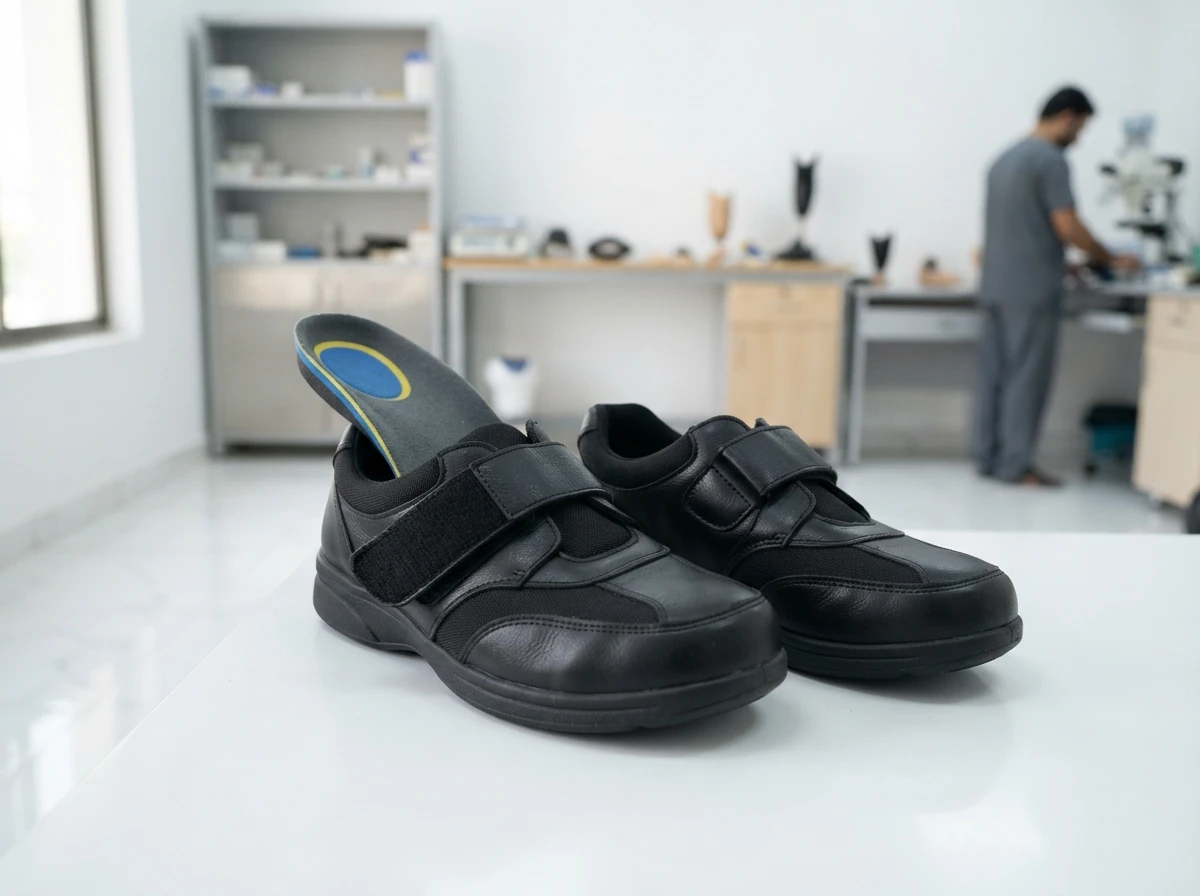
We will ask to examine your remaining foot at the first visit, even though you came about the missing one. This is not an attempt to sell you more. It is the most useful thing we can do for you.
That foot should never touch the ground bare, not even on the way to the bathroom at night. It needs a shoe with extra depth and a soft, custom insole that takes pressure off the ball of the foot and the big toe. New shoes are worn for an hour on the first day, then checked, then a little longer each day.
Cut nails straight across or have them cut for you. Never use a blade on a corn. See a doctor about any sore, however small, on the same day you find it.
Ready, or not yet
Usually ready when
- the surgeon confirms the wound is fully closed, with no scab or discharge
- blood sugar has been reasonably steady for several weeks
- the stump has been bandaged or in a shrinker sock and has a smooth cone shape
- the knee straightens and the patient can stand with a walker
Not yet, if
- any part of the wound is open. A socket over an open wound risks a higher amputation.
- sugar is running very high. Healing skin and high sugar do not go together.
- the other foot has an active sore. That is treated first.
- the patient is breathless on standing. The physician should review the heart first.
Go to your doctor the same day if
- any new sore, blister or dark patch appears on the stump or the other foot
- the stump or foot becomes red, warm or swollen, or you develop a fever
- there is discharge or a smell from under a sock or dressing
With diabetes, a small sore can become a serious infection in days. Stop wearing the leg and have it seen. We will adjust the socket after your doctor has treated the skin.
How soon after a diabetic amputation can a leg be fitted?
Commonly ten to sixteen weeks after surgery, which is slower than after an accident. The date is decided by healing, not by the calendar. Use the waiting weeks for stump bandaging, knee straightening and arm strengthening.
My father is 70 and diabetic. Is he too old?
Age alone is not the limit. Heart health, the strength of the other leg, eyesight and motivation matter more. Many people in their seventies walk indoors and to the car on a light below knee leg. For some, a safe transfer leg and a wheelchair is the honest answer, and we will say so.
Does the leg cost more for a diabetic patient?
The cushioned liner adds to the cost compared with a basic sock fit leg, so most diabetic below knee legs fall in the mid range, roughly PKR 150,000 to 350,000 as an indicative 2026 figure. We do not recommend costly high activity feet for most diabetic users.
He is on dialysis. Can he still wear a leg?
Yes, with planning. The stump is larger before dialysis and smaller after it. We fit the socket on a post dialysis day and teach the family to add or remove socks through the week.
Can he do wudu and pray with the leg?
The leg should be kept dry, so it is wiped and not washed. For the prayer itself, many older users pray seated on a chair, which is widely accepted for those who cannot manage the postures. Please confirm the details with a scholar you trust.
Send a photo of the stump for a free opinion
Three clear photos on WhatsApp, front, side and end, with the date of surgery. The prosthetist replies with whether it is the right time, the kind of leg that suits, and a price range.
- Answered on WhatsApp, 24/7
- First assessment free, no obligation
- Nothing is stored on this website