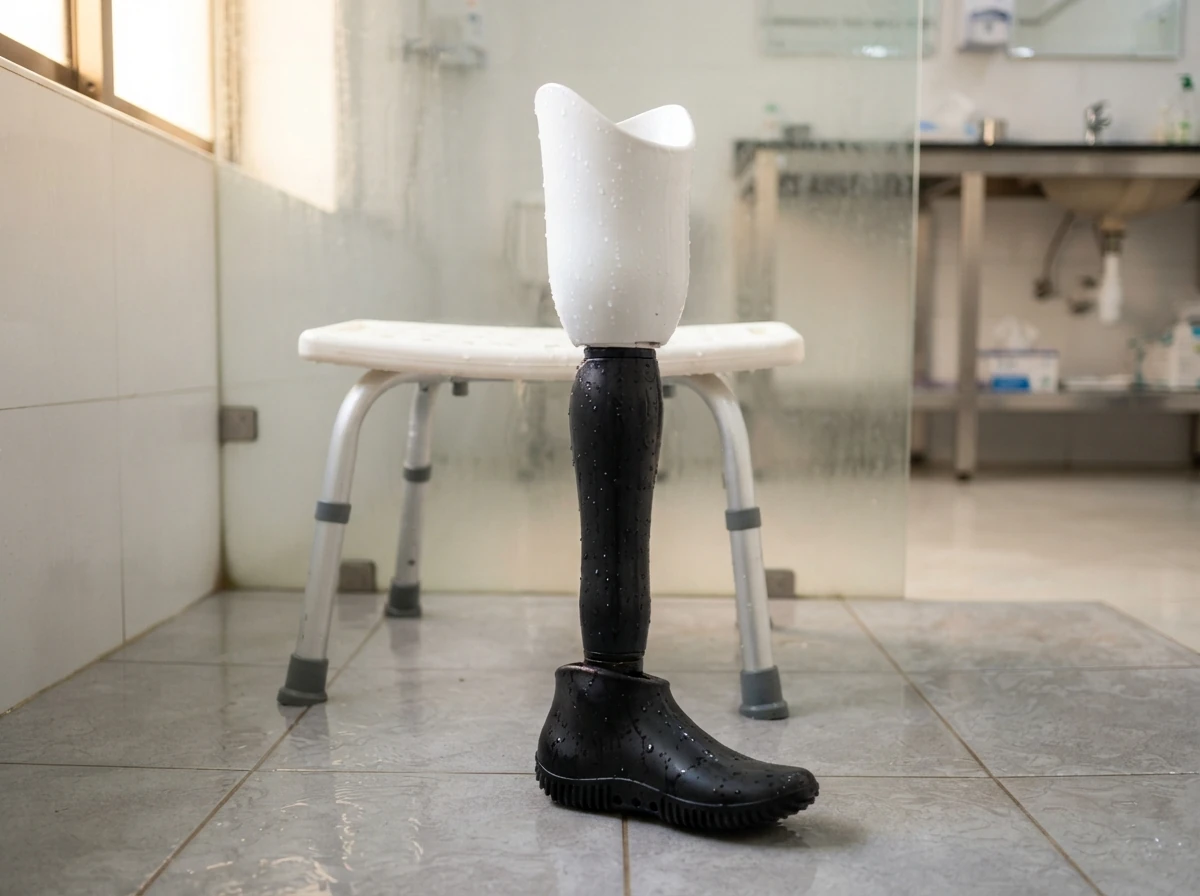
Waterproof and shower legs
An everyday artificial leg and water do not mix. Bolts rust, foam rots, locks seize and the foot fails from the inside. For people whose life or work is wet, there are legs and parts made for it. For everyone else, a plastic stool is the better answer.
Can you get an artificial leg wet?
A standard artificial leg should not get wet. Water enters the foot shell, the adapters and the lock, where it causes rust and rot that weaken the leg from inside. A water leg is built differently: a plastic or sealed socket, rust proof or sealed structure, and a waterproof foot with a non slip sole and drain holes. It is used for bathing, wet work and the beach, then rinsed and dried.
Why the everyday leg must stay dry
The foot
Water runs into the shell and sits against the keel and its steel bolt. Months later the bolt shears without warning.
Knee and lock
Bearings and pin locks corrode and seize. Hydraulic and electronic units can be ruined outright unless rated for water.
Cover and socket
Foam covers soak like a sponge, smell and crumble. Water between liner and skin softens the skin and breeds fungus.
Four ways to deal with water, from cheapest up
| Option | What it is | Good for | Indicative PKR, 2026 |
|---|---|---|---|
| Stool, grab bar and mat | Bathe seated without the leg | Most people. The safest way to bathe. | 3,000 to 12,000 |
| Waterproof protective cover | A sealed rubber sleeve pulled over the everyday leg, gripping the thigh | Occasional showers, rain, a short paddle. Not for swimming. | 15,000 to 40,000 |
| Dedicated shower or water leg | A second, simple leg made entirely of water safe materials | Daily standing showers, wudu, wet work, fishing, the beach | 60,000 to 180,000 below knee. 120,000 to 300,000 above knee. |
| Waterproof everyday components | An imported foot, and in some cases a knee, rated by the maker for fresh and salt water | Active users who want one leg for everything | 150,000 to 450,000 for a foot. Knees considerably more. |
Ranges are wide on purpose. A water leg often reuses the shape of your existing socket, which reduces its cost.
How a dedicated water leg is built
- Socket: thermoplastic or laminated, with no fabric or leather. Often copied from your current socket shape.
- Suspension: a rubber sleeve or a simple strap. Pin locks are avoided because they trap water and corrode.
- Structure: a sealed plastic or stainless shank. Above the knee, a simple locking knee of rust proof material.
- Foot: solid rubber or sealed composite, a ridged non slip sole, and drain holes so water runs out.
- No cosmetic foam. It would hold water.
- Buoyancy: hollow legs float. Holes are placed so that water fills the shank in a pool and drains on leaving.
It is not a walking leg. The foot is basic and the alignment is simple. It gets you safely across a wet floor and lets you stand to bathe with both hands free.
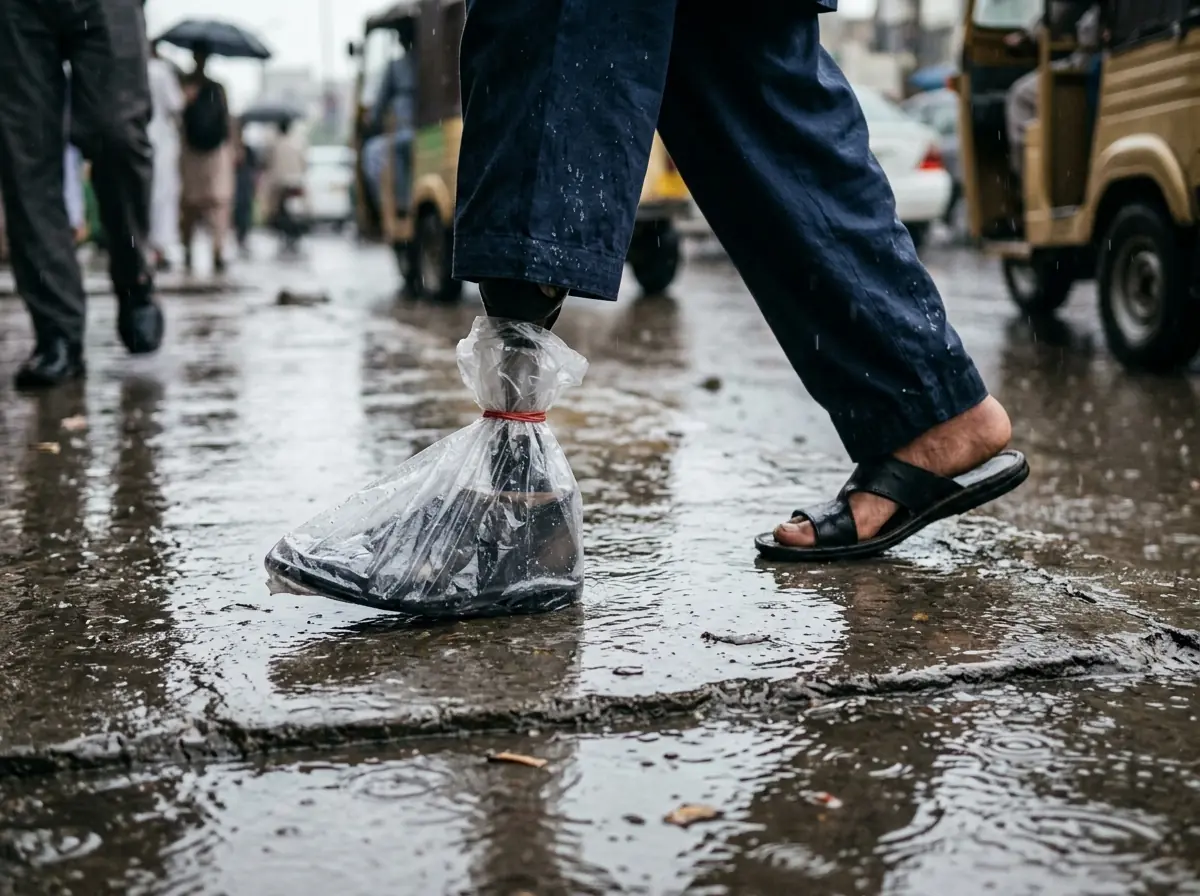
Who asks us for water legs
Wudu five times a day
People who pray at work or the masjid and find wiping impractical. A water leg, or a quick change, removes the daily worry.
Wet work
Fishermen, car wash and laundry workers, kitchen staff, farmers at irrigation time. Street water and brine destroy a standard leg within a season.
Beach and pool
Hawke's Bay, Sandspit, a hotel pool, children who want a parent in the water with them.
Those who cannot sit to bathe
Bathrooms too small for a stool, or a user who simply wants to stand. A water leg with a grab bar is the safe way.
After the water
- Rinse with fresh tap water after the sea or a pool. Salt and chlorine attack rubber and metal.
- Tip the leg to drain, remove any sleeve, and stand it in moving air in the shade.
- Dry your stump completely before putting on your everyday leg. Wet skin blisters.
- Check the sole for wear. A smooth sole on a wet floor is a fall.
- Sand is an abrasive. Brush it out of every joint and from inside the sleeve.
- Never wear the water leg for a long walk. It is not aligned for that.
Do I really need a water leg?
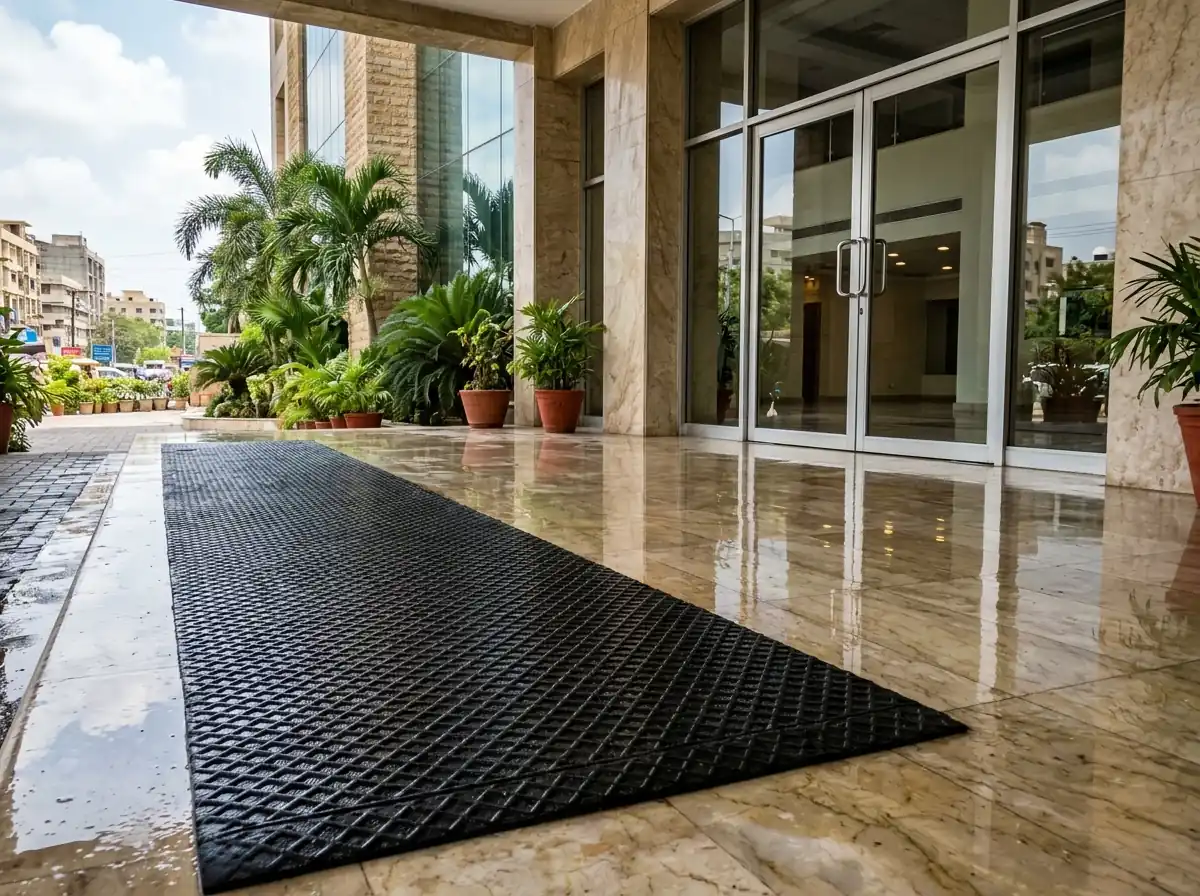
Most people do not. Bathing seated on a stool with a grab bar is safer than standing on any prosthesis on a wet floor. A water leg earns its cost for daily standing showers, wet jobs, frequent wudu away from home, and swimming.
Can I swim with an artificial leg?
Many people swim without a leg, which is simplest. A water leg gets you across the wet poolside and into the water safely. Swim fins that fit a below knee stump also exist. Standard legs must never go in a pool or the sea.
My leg got soaked in the rain. What should I do?
Dry it at once. Wipe everything, remove the foot shell if you have been shown how, and stand it under a fan overnight. Do not use a heater or the sun. If it was standing water or a deep soaking, bring it in to be opened and dried before rust starts.
Are any knees waterproof?
Some imported mechanical, hydraulic and electronic knees are rated by their makers for splashes, fresh water or even salt water, to stated limits. Ratings differ by model, so we check the maker's document for the exact knee before promising anything.
Can the water leg use my existing socket shape?
Usually, yes. If your current socket fits well it can be duplicated in a water safe material, which avoids a new cast and lowers the price.
Send a photo of the stump for a free opinion
Three clear photos on WhatsApp, front, side and end, with the date of surgery. The prosthetist replies with whether it is the right time, the kind of leg that suits, and a price range.
- Answered on WhatsApp, 24/7
- First assessment free, no obligation
- Nothing is stored on this website