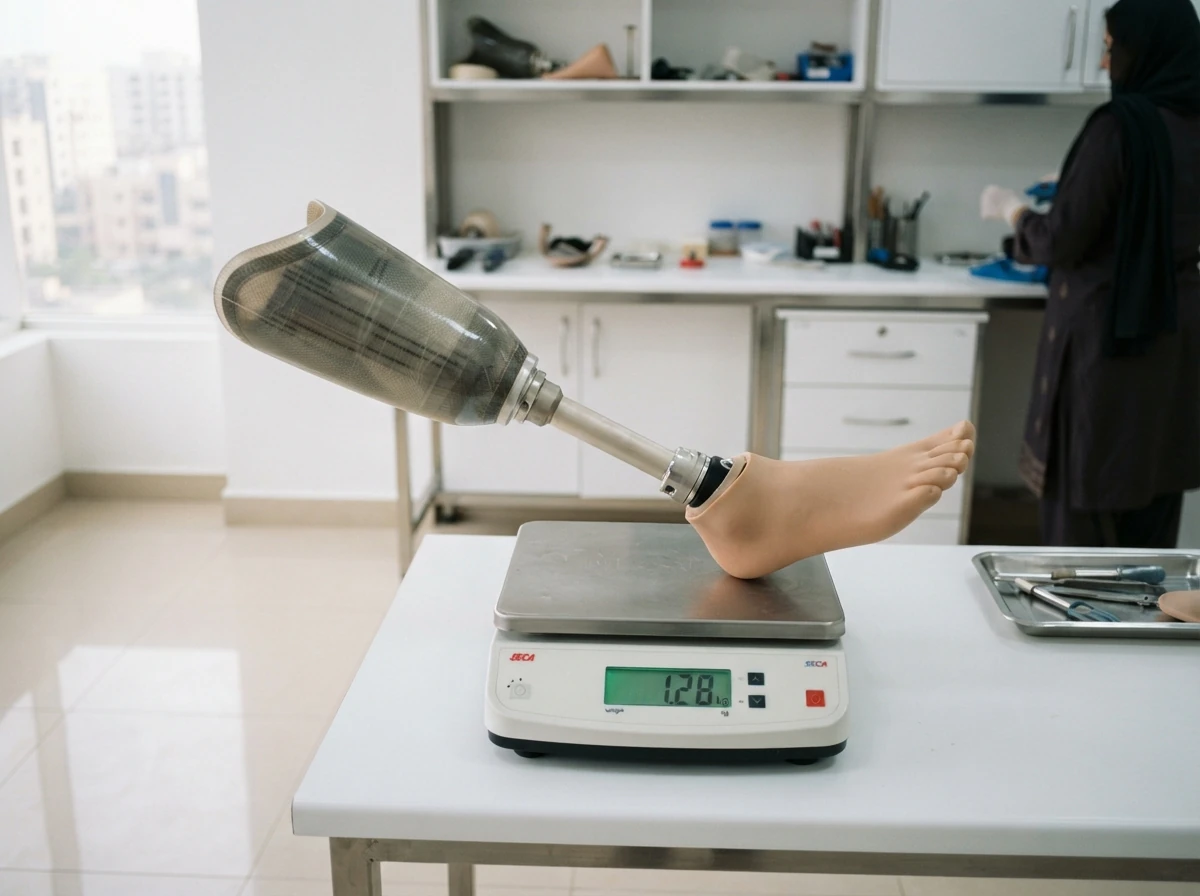
Artificial leg after a vascular amputation
When a leg is lost because blood could not reach it, the same disease is usually present elsewhere: in the stump, in the other leg and in the heart. A leg is still possible for most people. It has to be gentle, light and matched to the effort the heart can give.
Can you wear an artificial leg after a vascular amputation?
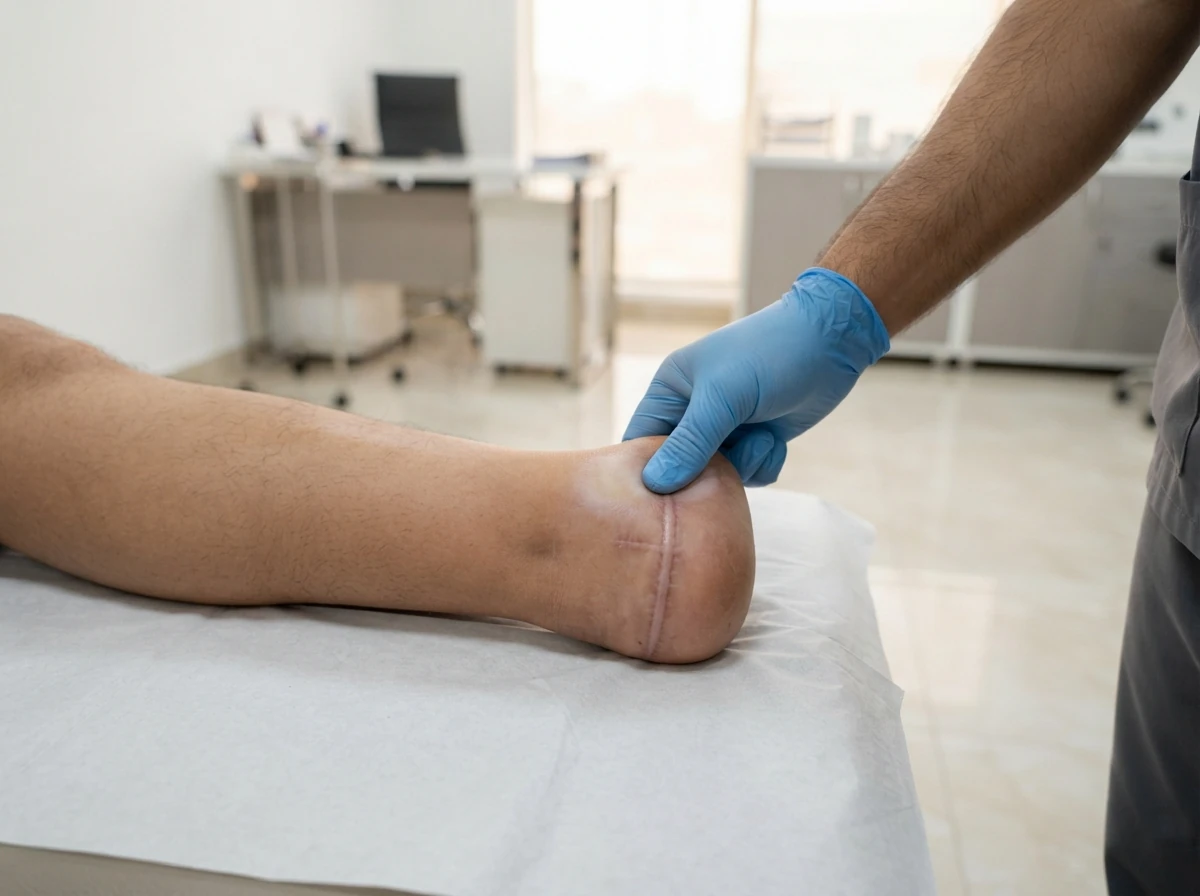
In most cases, yes. The wound must be fully healed, which often takes three to four months when circulation is poor. The socket is made to spread pressure gently, the parts are kept light, and walking goals are set with your physician, because the heart and the other leg usually share the same artery disease.
Why the leg was lost matters for the leg you are given
Arteries can narrow for years before a leg is in danger. The common causes we see in Karachi are long standing diabetes, smoking and chewing tobacco, high blood pressure and cholesterol, and Buerger disease, which affects younger men who smoke.
None of these stop at the amputation line. The skin of the stump has a weaker blood supply than normal skin, so it marks easily and heals slowly. The other leg may already cramp on walking. The heart has less reserve.
If you smoke or use naswar, gutka or paan with tobacco, stopping completely is the single most powerful thing you can do for the stump and for the other leg. No socket design can make up for it.
Gentle, light and easy to put on
Pressure spread wide
A total surface socket over a cushioned liner. No hard ridges, no tight brims, nothing that squeezes like a band.
Low weight
Thin wall lamination, an aluminium pylon and a light foot. A leg that is 400 grams lighter is noticeably easier on the heart.
Safety over spring
A stable foot, and above the knee, a locking or weight activated knee. Preventing one fall is worth more than a faster walk.
Wearing time built slowly
One hour twice a day in the first week, with skin checks each time, building to a full day over three to four weeks.
Setting goals the heart can afford
An artificial leg makes walking harder work than it used to be, and vascular patients start with less reserve. So we set goals in steps, and we are content to stop at the step that is safe.
- Step one: transfers. Standing to move from bed to chair to commode without being lifted. This alone changes a household.
- Step two: indoors. Walking from room to room with a walker or stick.
- Step three: the doorstep and the car. Short outdoor distances, a few stairs with a rail.
- Step four: the community. The masjid, the shop, a family function. Some reach this. Not everyone needs to.
Chest pain, unusual breathlessness or dizziness during training means we stop, and you see your physician before we continue.
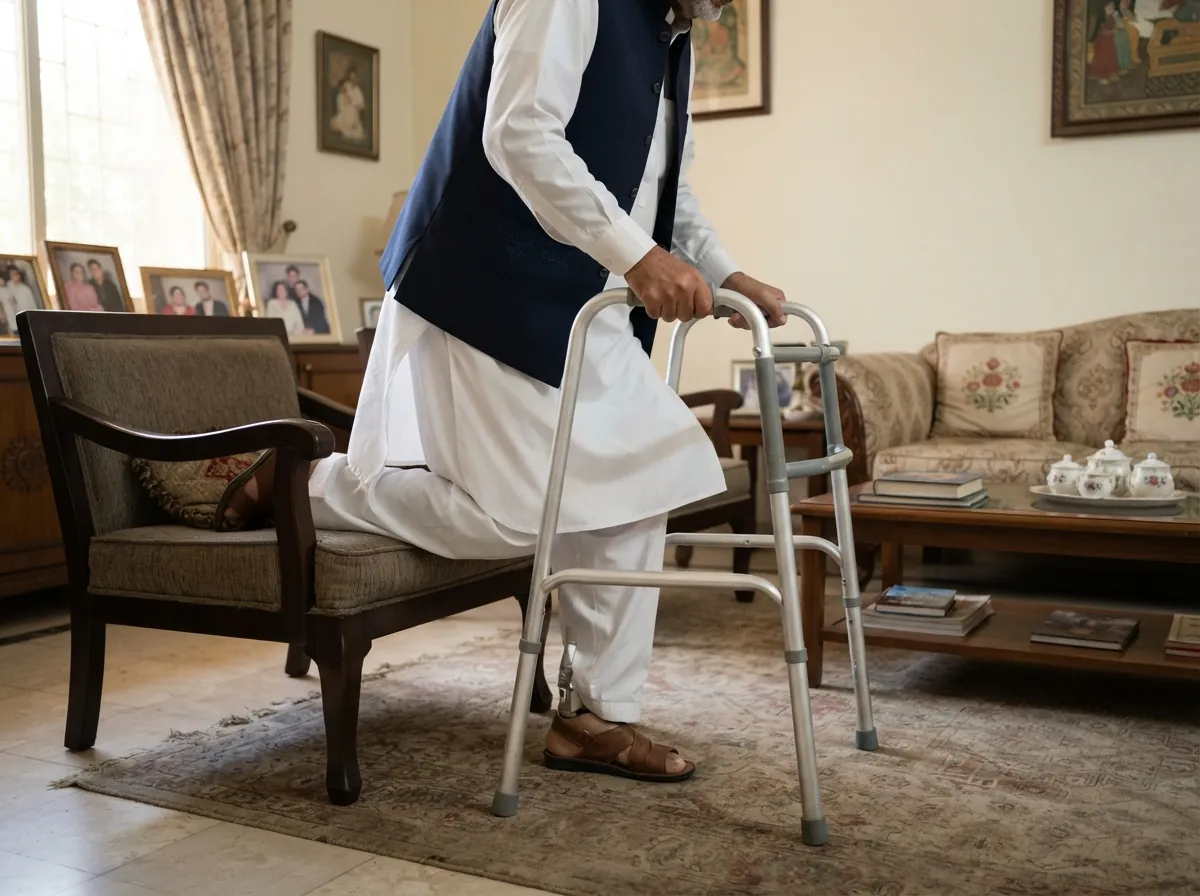
Walk to protect the other leg, and watch it closely
The remaining leg now does more work with the same narrowed arteries. Cramping in the calf that comes on with walking and settles with rest is a message from that leg. Tell your doctor about it. Do not push through it.
Wear a well fitting, cushioned closed shoe on that foot, indoors and out. Check the foot every evening, especially the heel, the toes and between them. Keep it warm in winter, but never with a hot water bottle or heater held close, because skin with poor circulation burns without warning.
Gentle, regular walking on the artificial leg is good for the other leg. It encourages small new vessels to open. Little and often is better than one long effort.
Ready, or not yet
Usually ready when
- the vascular or general surgeon confirms full healing
- the stump is warm, a healthy colour and not painful at rest
- the physician is satisfied with heart and blood pressure control
- tobacco has been stopped, or a serious attempt is under way
Not yet, or not at all, if
- there is any black, blue or unhealed area on the stump
- there is rest pain in the stump or the other foot
- the patient cannot stand with a walker on the sound leg for a minute
- heart failure or severe breathlessness limits even sitting activity. A good wheelchair and a transfer plan will serve better.
Stop wearing the leg and see your doctor if
- the stump turns pale, blue or dusky, or becomes colder than usual
- pain in the stump comes on with walking and eases with rest
- a sore appears that does not improve within two or three days
- the other foot develops rest pain at night, a colour change or a sore
These can be signs that the blood supply is not keeping up. It is a matter for your vascular surgeon or physician, not a socket adjustment.
How long after a vascular amputation can a leg be made?
Usually three to four months, sometimes longer. Healing is slow when blood supply is poor, and a socket placed over fragile skin too early can undo the surgery. Your surgeon decides when the wound is ready.
Is walking with a leg safe for the heart?
For most people, yes, when built up slowly, and regular walking is good for the circulation. Because the effort is higher than normal walking, we ask for your physician to confirm you are fit for it, especially for above knee levels.
What is Buerger disease and can I get a leg after it?
It is an inflammation of small arteries linked strongly to tobacco, seen mostly in younger men. A leg can be fitted once the stump heals. The disease only stays quiet if tobacco in every form is stopped completely.
Which leg is best for an older vascular patient?
A light below knee leg with a cushioned liner, a simple secure suspension and a stable foot. Above the knee, a light leg with a locking knee. Imported high activity parts add weight and cost without benefit for this group.
What does it cost?
Most suitable builds sit in the basic to mid range: as an indicative 2026 figure, roughly PKR 120,000 to 350,000 below the knee and PKR 180,000 to 450,000 above it. You receive a written figure after the free assessment.
Send a photo of the stump for a free opinion
Three clear photos on WhatsApp, front, side and end, with the date of surgery. The prosthetist replies with whether it is the right time, the kind of leg that suits, and a price range.
- Answered on WhatsApp, 24/7
- First assessment free, no obligation
- Nothing is stored on this website